
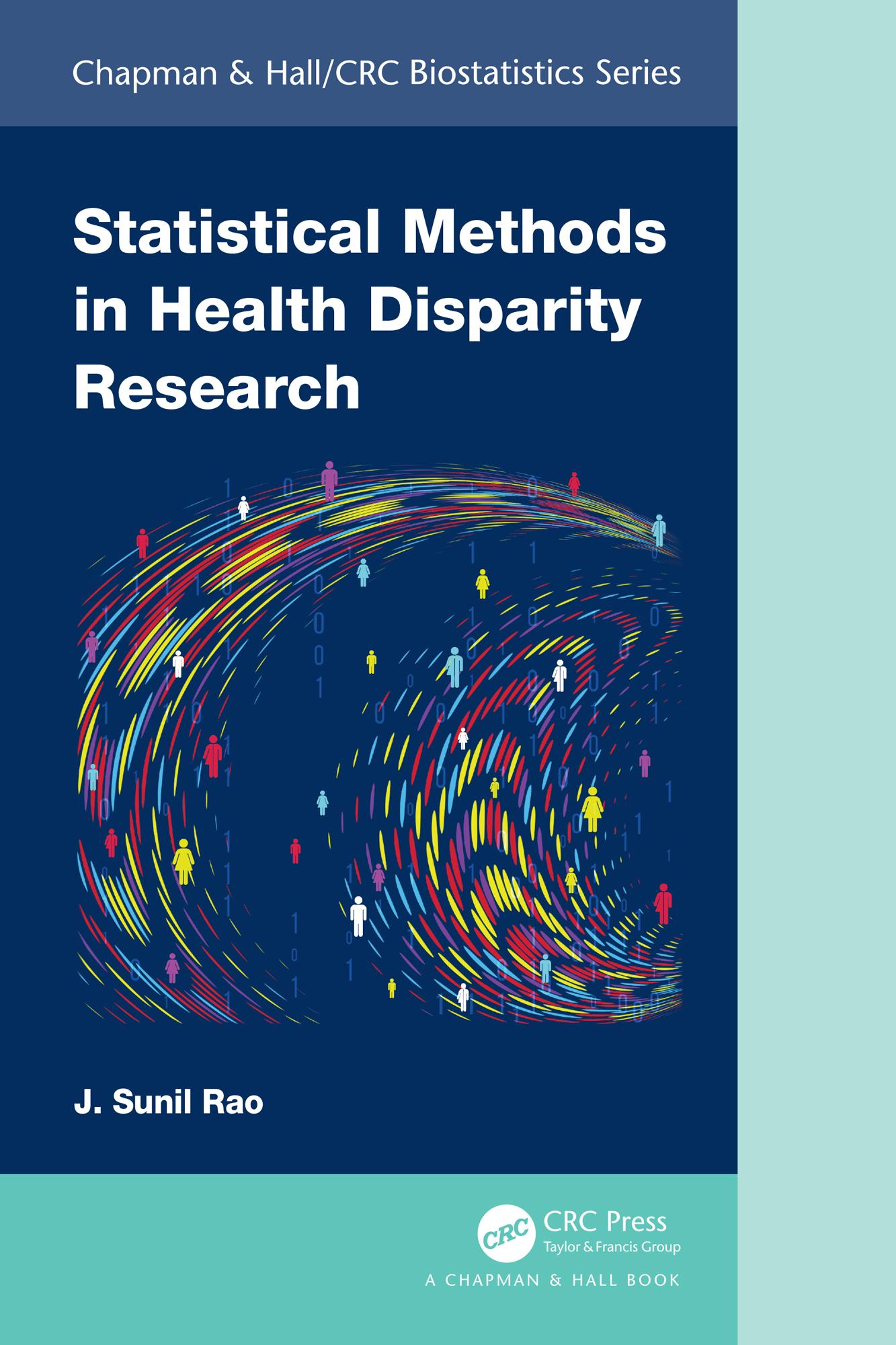
A health disparity refers to a higher burden of illness, injury, disability, or mortality experienced by one group relative to others attributable to multiple factors including socioeconomic status, environmental factors, insufficient access to health care, individual risk factors, and behaviors and inequalities in education. These disparities may be due to many factors including age, income, and race. Statistical Methods in Health Disparity Research will focus on their estimation, ranging from classical approaches including the quantification of a disparity, to more formal modeling, to modern approaches involving more flexible computational approaches.
Features:
- Presents an overview of methods and applications of health disparity estimation
- First book to synthesize research in this field in a unified statistical framework
- Covers classical approaches, and builds to more modern computational techniques
- Includes many worked examples and case studies using real data
- Discusses available software for estimation
The book is designed primarily for researchers and graduate students in biostatistics, data science, and computer science. It will also be useful to many quantitative modelers in genetics, biology, sociology, and epidemiology.
Betal enkelt med kort, Klarna, Apple Pay eller Google Pay. Ikke fornøyd? Du har alltid 14 dagers angrerett. Les mer i våre vilkår. Har du spørsmål, send oss en e-post på hello@memmo.org.
Memmo gjør det enklere å studere – uansett hvor du er i verden. Hos oss samler du pensumbøker og smarte studieverktøy på ett og samme sted: sammendrag, quizer, podkaster og flashcards. Og så Ted, din studiekompis som svarer på alt du lurer på. Over 50 000 studenter studerer allerede her – bygget for at du skal lære raskere og stresse mindre.