
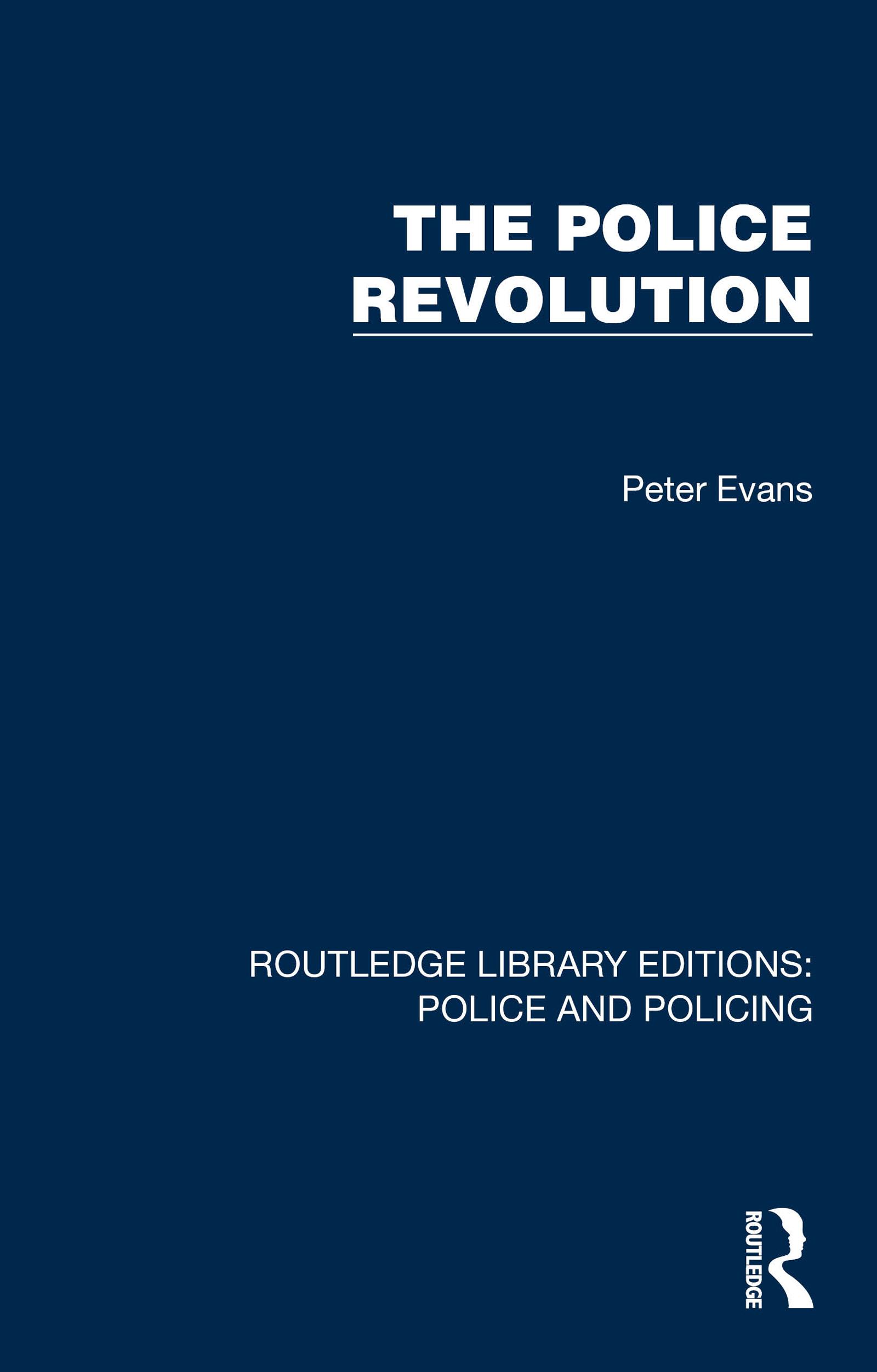
Where are the police going? Originally published in 1974, Peter Evans argues that their traditional relationship with the public was being dangerously threatened, a situation neither the police themselves nor the public wanted to see worsen.
In his analysis of the pressures and influences that were leading many policemen to question their role in society, Mr Evans looks first at the immense problems created for the police by increasingly violent and sophisticated crime, protest and terrorism. The attitudes of the police, he says, are in keeping with their nature. They are a minority, a semi-closed community, with astonishing records of long-serving families, giving police forces something of a tribal flavour. They have their own slang. Like miners, dockers or railwaymen, their jobs were established in Victorian times and are now faced with a rapid technological change – for the police, a ‘revolution’. Yet there is one important difference: the police must remain manpower intensive, otherwise precious contact with the public is lost. They must also remain craftsmen, not become merely technicians.
Mr Evans concludes that successive governments are to blame for not giving the police the sort of backing they deserve – finance, for example, and not merely pious expressions of support. This failure has widened the gap between police and public because of shortage of men, has left London in particular dangerously under-patrolled, and has contributed towards those pressures that tempt some officers to err.
There is nothing wrong with the traditions of the police, although some policemen sometimes do not live up to them. The police need more resources and more opportunity to apply these traditions, so that the unique character of British policing is not lost. The author felt there was both time and need for reform in the decade before 1984. Today it can be read in its historical context.
Betal enkelt med kort, Klarna, Apple Pay eller Google Pay. Ikke fornøyd? Du har alltid 14 dagers angrerett. Les mer i våre vilkår. Har du spørsmål, send oss en e-post på hello@memmo.org.
Memmo gjør det enklere å studere – uansett hvor du er i verden. Hos oss samler du pensumbøker og smarte studieverktøy på ett og samme sted: sammendrag, quizer, podkaster og flashcards. Og så Ted, din studiekompis som svarer på alt du lurer på. Over 50 000 studenter studerer allerede her – bygget for at du skal lære raskere og stresse mindre.