
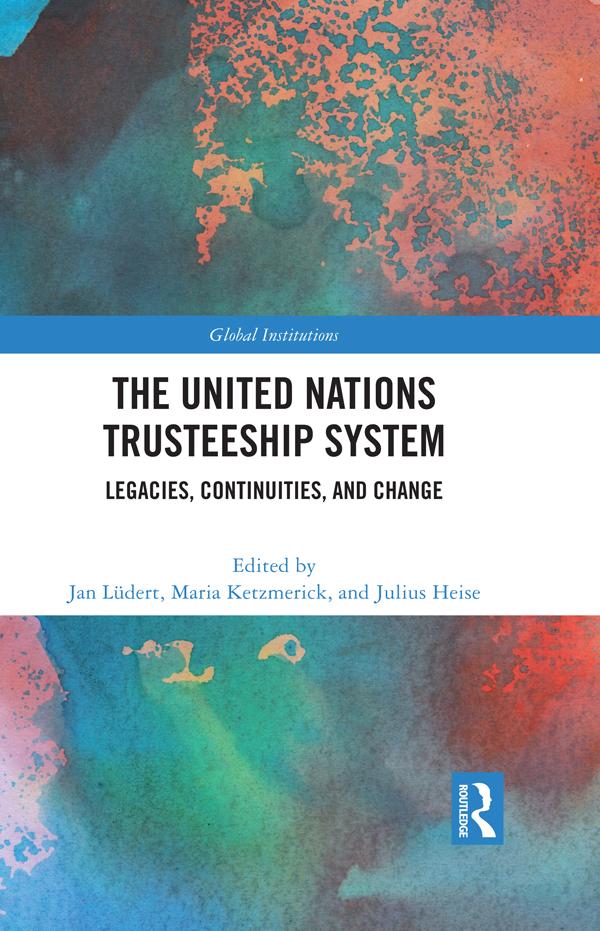
This book considers the past and present legacies, continuities and change of the United Nations Trusteeship System by assessing consequences and legacies of decolonization in contemporary society, international organizations and international politics. International contributors address the UN Trusteeship System as a venue for multiple state and non- state actors and its effect on the international system. Rather than viewing UN trusteeship as a bygone phenomenon, the volume underscores its current relevance, particularly in view of the recent resurgence of trusteeship models such as in Kosovo and East Timor. Offering a novel and robust, yet simple and intuitive analytical framework through which to understand a broad range of cases related to the Trusteeship System and its impact on the international system, the book places emphasis on the agency of states in the Global South and highlights the importance of multiple actors in global governance. It will be of interest to scholars of international relations theory and history in a variety of fields, ranging from African Politics to Intergovernmental Organizations and Comparative Politics.
Betal enkelt med kort, Klarna, Apple Pay eller Google Pay. Ikke fornøyd? Du har alltid 14 dagers angrerett. Les mer i våre vilkår. Har du spørsmål, send oss en e-post på hello@memmo.org.
Memmo gjør det enklere å studere – uansett hvor du er i verden. Hos oss samler du pensumbøker og smarte studieverktøy på ett og samme sted: sammendrag, quizer, podkaster og flashcards. Og så Ted, din studiekompis som svarer på alt du lurer på. Over 50 000 studenter studerer allerede her – bygget for at du skal lære raskere og stresse mindre.