
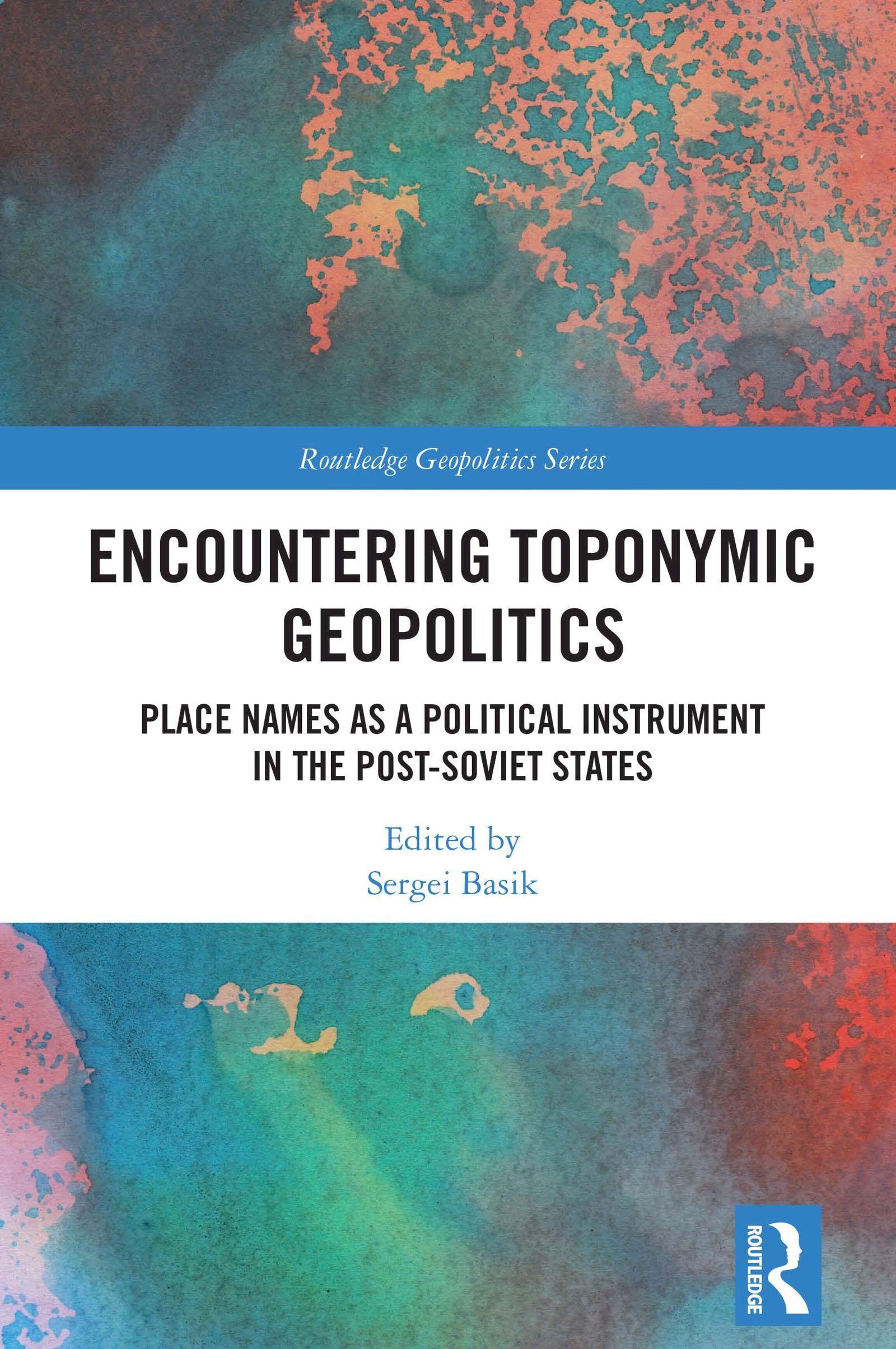
This book provides cutting-edge insights on contemporary geopolitical toponymic policy and practice in post-Soviet countries. It examines the political features of place naming as a reflection of contemporary political discourse.
With multidisciplinary insights from leading scholars, chapters explore a range of topics drawing on critical political toponymy and traditional methods. Contributions examine how the toponymic system can act as a symbol of national identity, the regional geopolitics of toponymy, and geopolitical patterns in contemporary renaming. The historical roots of toponymic decolonization are analyzed, as well as indigenous toponymy and politics, and toponymic aspects of people's daily lives. The book explores a wide range of processes in the post-Soviet realm, including power, identity, economy, social order, and how political power is changing/transforming. It considers how these processes are distributed through various geopolitical and political-economic technologies.
Offering empirically rich research from a variety of regions to give insights beyond "Western" perspectives, this book is the first to provide an in-depth exploration of post-Soviet place naming. It will appeal to students and researchers in human geography, politics, sociology, Eastern European studies, onomastics and cultural studies.
Betal enkelt med kort, Klarna, Apple Pay eller Google Pay. Ikke fornøyd? Du har alltid 14 dagers angrerett. Les mer i våre vilkår. Har du spørsmål, send oss en e-post på hello@memmo.org.
Memmo gjør det enklere å studere – uansett hvor du er i verden. Hos oss samler du pensumbøker og smarte studieverktøy på ett og samme sted: sammendrag, quizer, podkaster og flashcards. Og så Ted, din studiekompis som svarer på alt du lurer på. Over 50 000 studenter studerer allerede her – bygget for at du skal lære raskere og stresse mindre.