
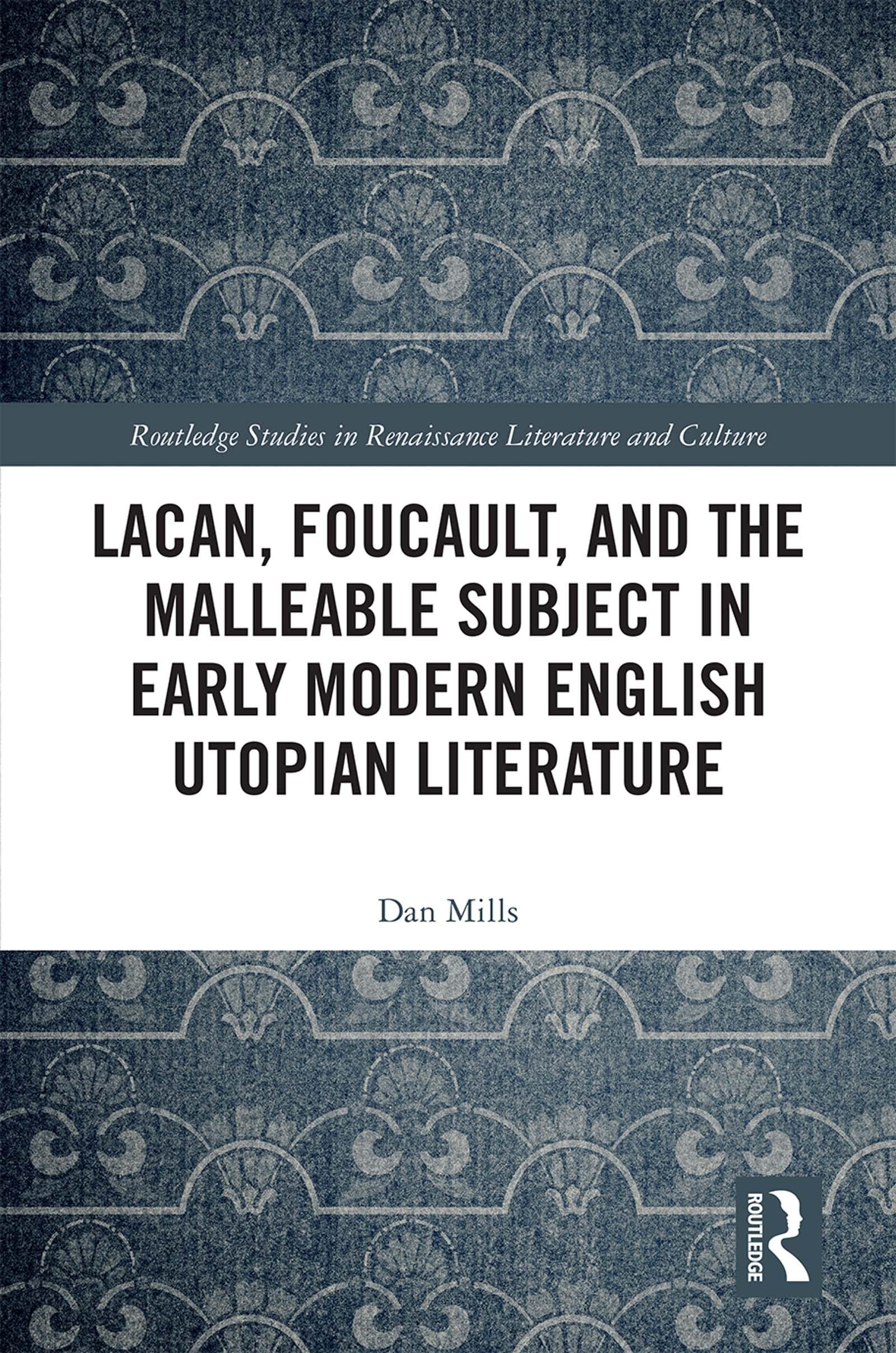
Theoretically informed scholarship on early modern English utopian literature has largely focused on Marxist interpretation of these texts in an attempt to characterize them as proto- Marxist. The present volume instead focuses on subjectivity in early modern English utopian writing by using these texts as case studies to explore intersections of the thought of Jacques Lacan and Michel Foucault. Both Lacan and Foucault moved back and forth between structuralist and post-structuralist intellectual trends and ultimately both defy strict categorization into either camp. Although numerous studies have appeared that compare Lacan’s and Foucault’s thought, there have been relatively few applications of their thought together onto literature. By applying the thought of both theorists, who were not literary critics, to readings of early modern English utopian literature, this study will, on the one hand, describe the formation of utopian subjectivity that is both psychoanalytically (Oedipal and pre-Oedipal) and socially constructed, and, on the other hand, demonstrate new ways in which the thought of Lacan and Foucault inform and complement each other when applied to literary texts. The utopian subject is a malleable subject, a subject whose linguistic, psychoanalytical subjectivity determines the extent to which environmental and social factors manifest in an identity that moves among Lacan’s Symbolic, Imaginary, and Real.
Betal enkelt med kort, Klarna, Apple Pay eller Google Pay. Ikke fornøyd? Du har alltid 14 dagers angrerett. Les mer i våre vilkår. Har du spørsmål, send oss en e-post på hello@memmo.org.
Memmo gjør det enklere å studere – uansett hvor du er i verden. Hos oss samler du pensumbøker og smarte studieverktøy på ett og samme sted: sammendrag, quizer, podkaster og flashcards. Og så Ted, din studiekompis som svarer på alt du lurer på. Over 50 000 studenter studerer allerede her – bygget for at du skal lære raskere og stresse mindre.