
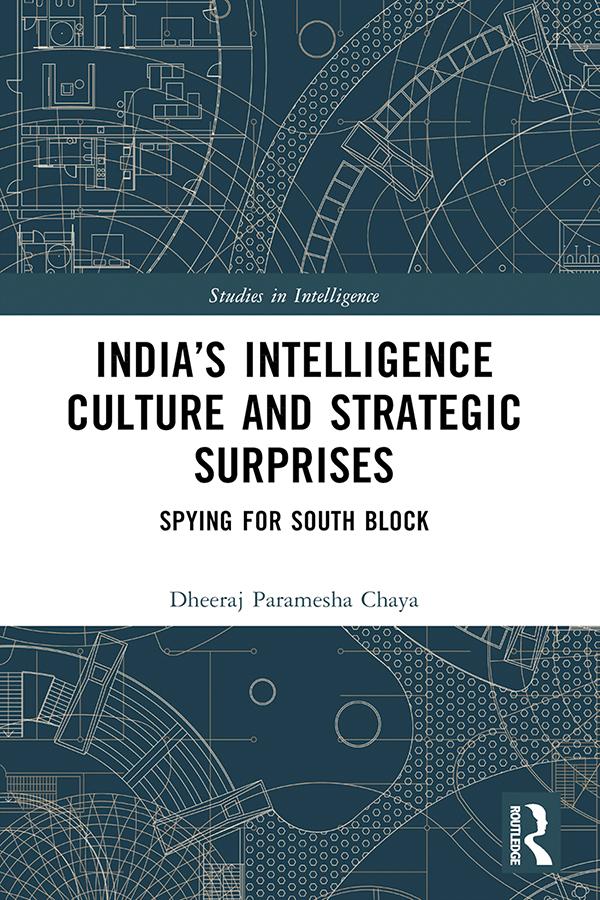
This book examines India’s foreign intelligence culture and strategic surprises in the 20th century.
The work looks at whether there is a distinct way in which India ‘thinks about’ and ‘does’ intelligence, and, by extension, whether this affects the prospects of it being surprised. Drawing on a combination of archival data, secondary source information and interviews with members of the Indian security and intelligence community, the book provides a comprehensive analysis of the evolution of Indian intelligence culture from the ancient period to colonial times and, subsequently, the post-colonial era. This evolutionary culture has played a significant role in explaining the India’s foreign intelligence failure during the occurrences of strategic surprises, such as the 1962 Sino-Indian War and the 1999 Kargil War, while it successfully prepared for surprise attacks like Operation Chenghiz Khan by Pakistan in 1971. The result is that the book argues that the strategic culture of a nation and its interplay with intelligence organisations and operations is important to understanding the conditions for intelligence failures and strategic surprises.
This book will be of much interest to students of intelligence studies, strategic studies, Asian politics and International Relations.
Betal enkelt med kort, Klarna, Apple Pay eller Google Pay. Ikke fornøyd? Du har alltid 14 dagers angrerett. Les mer i våre vilkår. Har du spørsmål, send oss en e-post på hello@memmo.org.
Memmo gjør det enklere å studere – uansett hvor du er i verden. Hos oss samler du pensumbøker og smarte studieverktøy på ett og samme sted: sammendrag, quizer, podkaster og flashcards. Og så Ted, din studiekompis som svarer på alt du lurer på. Over 50 000 studenter studerer allerede her – bygget for at du skal lære raskere og stresse mindre.