
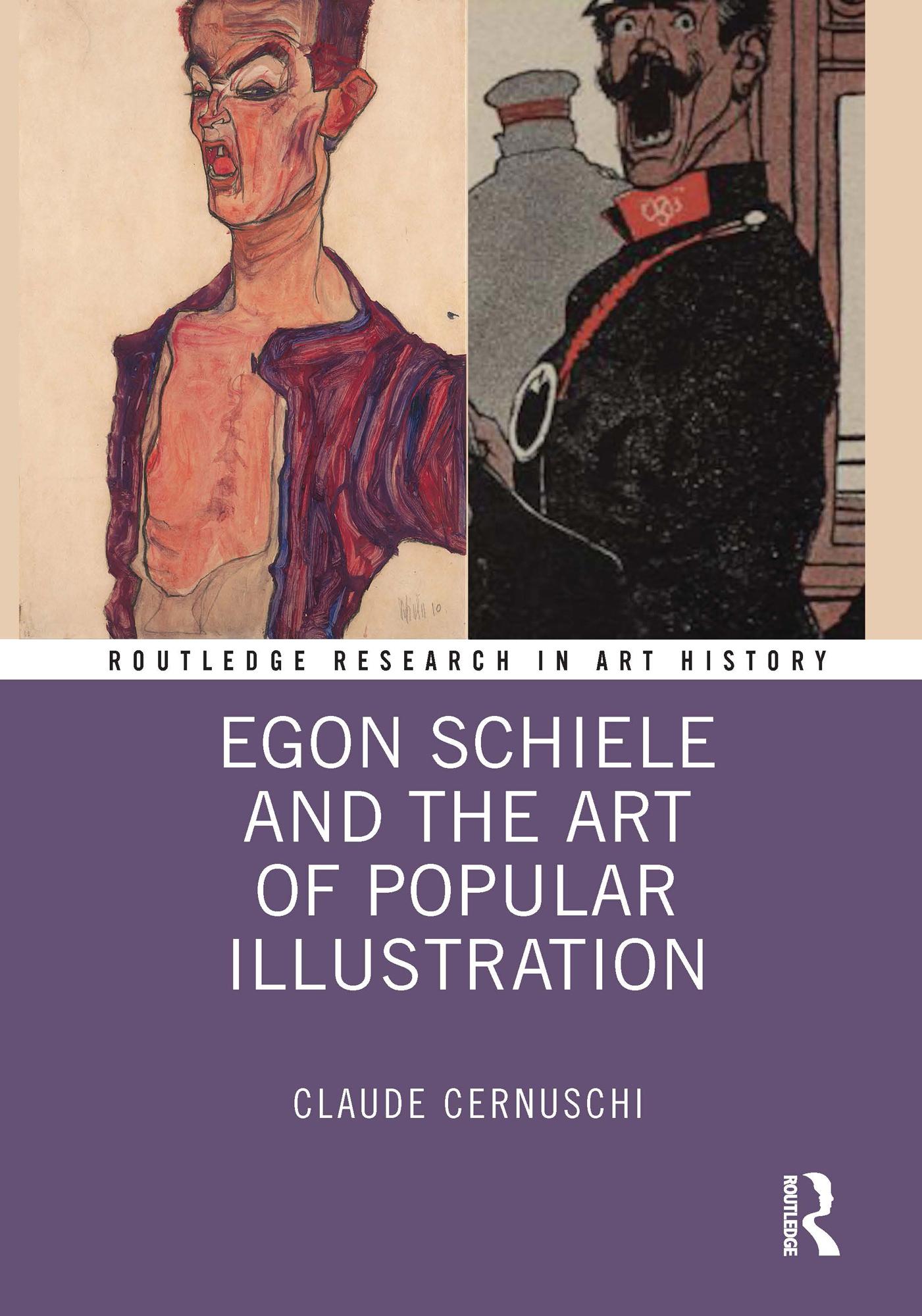
Presenting a radically different picture of Egon Schiele’s work, this study documents (in one-to-one comparisons) the extent of the artist’s visual borrowings from the Viennese humoristic journal, Die Muskete.
Claude Cernuschi analyzes each comparison on a case-by-case basis, primarily because the interpretation of cartoons and caricatures is highly contingent on their specific historical and cultural context. Although this connection has gone unnoticed in the literature, in retrospect, this correlation makes perfect sense. Not only was Schiele’s artistic production frequently compared to caricature (and derided for being “grotesque”), but Expressionism and caricature are natural allies. One may belong to “high” art and the other to “popular” culture, yet both presuppose similar assumptions and deploy a similar rhetorical position: namely, that the exaggeration of human physiognomy allows deeper psychological “truths” to emerge.
The book will be of interest to scholars working in art history, visual culture, popular culture, and politics.
Betal enkelt med kort, Klarna, Apple Pay eller Google Pay. Ikke fornøyd? Du har alltid 14 dagers angrerett. Les mer i våre vilkår. Har du spørsmål, send oss en e-post på hello@memmo.org.
Memmo gjør det enklere å studere – uansett hvor du er i verden. Hos oss samler du pensumbøker og smarte studieverktøy på ett og samme sted: sammendrag, quizer, podkaster og flashcards. Og så Ted, din studiekompis som svarer på alt du lurer på. Over 50 000 studenter studerer allerede her – bygget for at du skal lære raskere og stresse mindre.