
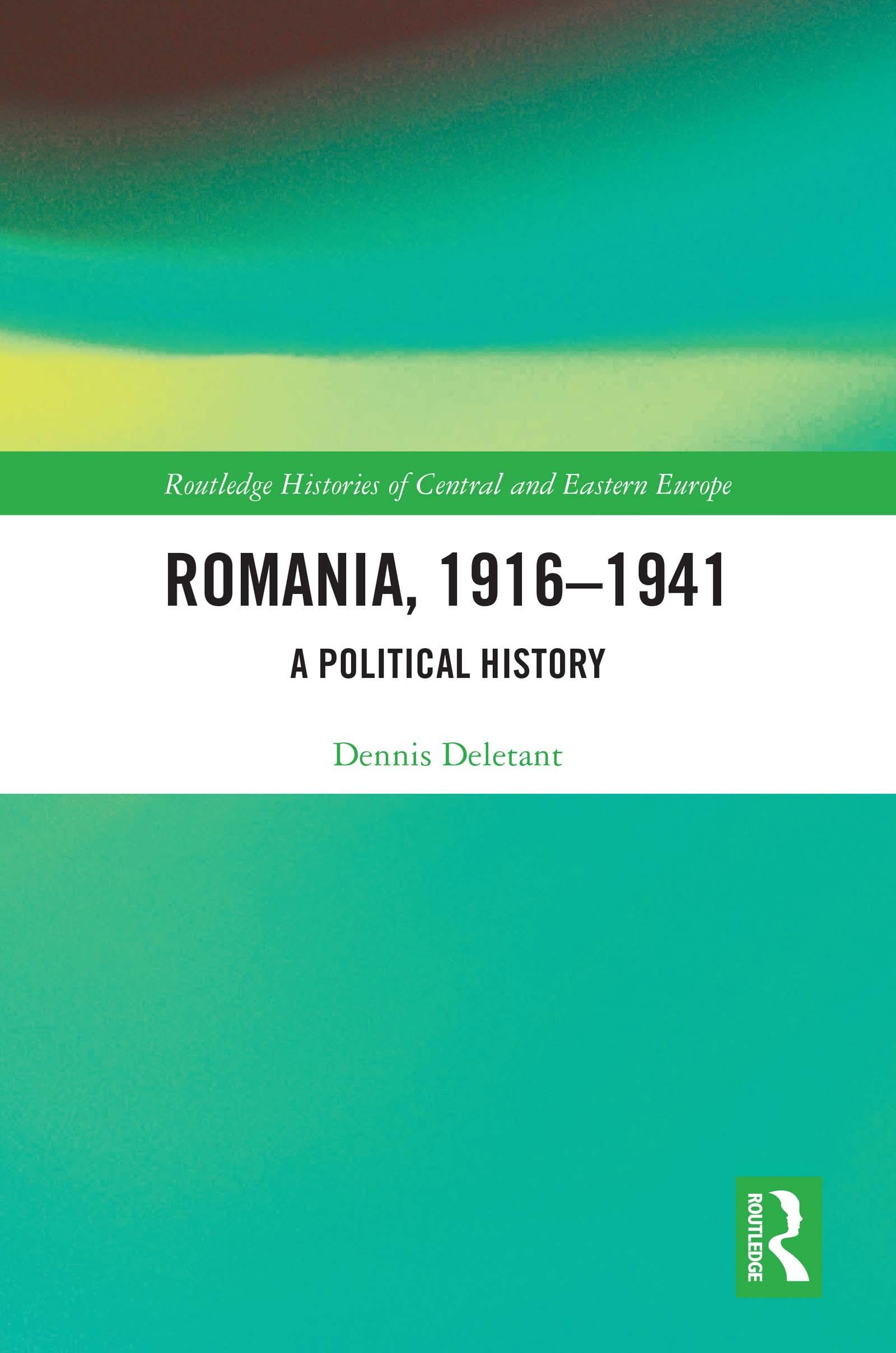
This study challenges the rose-tinted view of the interwar period in Romanian history, which is often judged against the darkness of almost five decades of Communist rule.
Romania, like several of the states of Eastern Europe, emerged from the First World War as it had entered it, as a predominantly agricultural country, and one of its major problems was the condition of the peasantry. This volume’s focus is the drive to improve that condition, on the collapse of democracy, and the search by Romania’s leaders for strategies to secure the state, to assert the country’s independence, and to maintain its territorial integrity in the face of the threat to the European order posed by two totalitarian systems, represented by Nazi Germany and the Soviet Union. By examining recent scholarship, this volume provides the most up-to-date account of Romania’s predicament in the interwar years.
Romania, 1916–1941 is a useful resource for upper-level undergraduates, postgraduates and scholars interested in foreign policy, politics, society, internationalization and late development in interwar Central and Eastern Europe.
Betal enkelt med kort, Klarna, Apple Pay eller Google Pay. Ikke fornøyd? Du har alltid 14 dagers angrerett. Les mer i våre vilkår. Har du spørsmål, send oss en e-post på hello@memmo.org.
Memmo gjør det enklere å studere – uansett hvor du er i verden. Hos oss samler du pensumbøker og smarte studieverktøy på ett og samme sted: sammendrag, quizer, podkaster og flashcards. Og så Ted, din studiekompis som svarer på alt du lurer på. Over 50 000 studenter studerer allerede her – bygget for at du skal lære raskere og stresse mindre.