
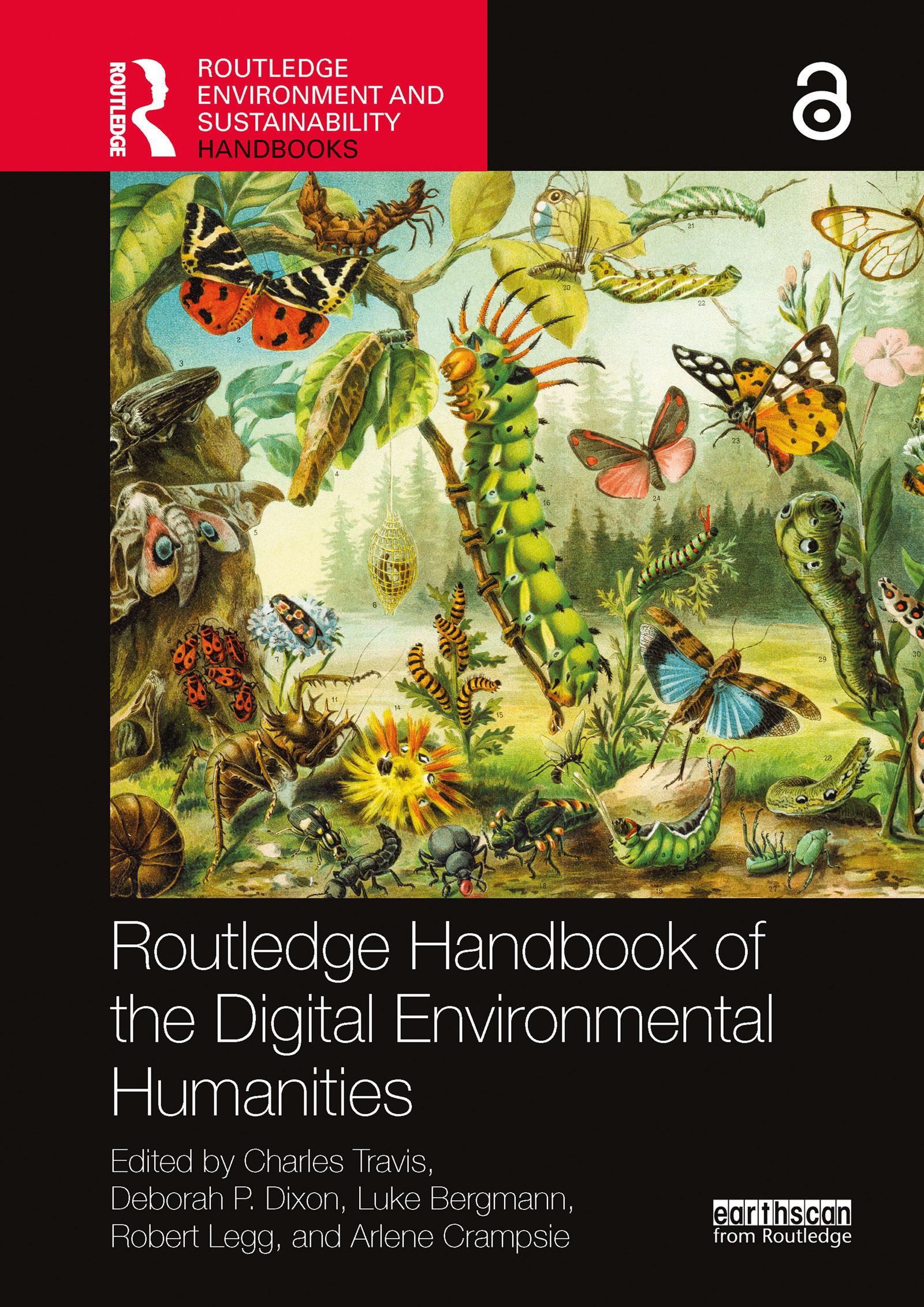
The Routledge Handbook of the Digital Environmental Humanities explores the digital methods and tools scholars use to observe, interpret, and manage nature in several different academic fields.
Employing historical, philosophical, linguistic, literary, and cultural lenses, this handbook explores how the digital environmental humanities (DEH), as an emerging field, recognises its convergence with the environmental humanities. As such, it is empirically, critically, and ethically engaged in exploring digitally mediated, visualised, and parsed framings of past, present, and future environments, landscapes, and cultures. Currently, humanities, geographical, cartographical, informatic, and computing disciplines are finding a common space in the DEH and are bringing the use of digital applications, coding, and software into league with literary and cultural studies and the visual, film, and performing arts. In doing so, the DEH facilitates transdisciplinary encounters between fields as diverse as human cognition, gaming, bioinformatics and linguistics, social media, literature and history, music, painting, philology, philosophy, and the earth and environmental sciences.
This handbook will be essential reading for those interested in the use of digital tools in the study of the environment from a wide range of disciplines and for those working in the environmental humanities more generally.
Betal enkelt med kort, Klarna, Apple Pay eller Google Pay. Ikke fornøyd? Du har alltid 14 dagers angrerett. Les mer i våre vilkår. Har du spørsmål, send oss en e-post på hello@memmo.org.
Memmo gjør det enklere å studere – uansett hvor du er i verden. Hos oss samler du pensumbøker og smarte studieverktøy på ett og samme sted: sammendrag, quizer, podkaster og flashcards. Og så Ted, din studiekompis som svarer på alt du lurer på. Over 50 000 studenter studerer allerede her – bygget for at du skal lære raskere og stresse mindre.