
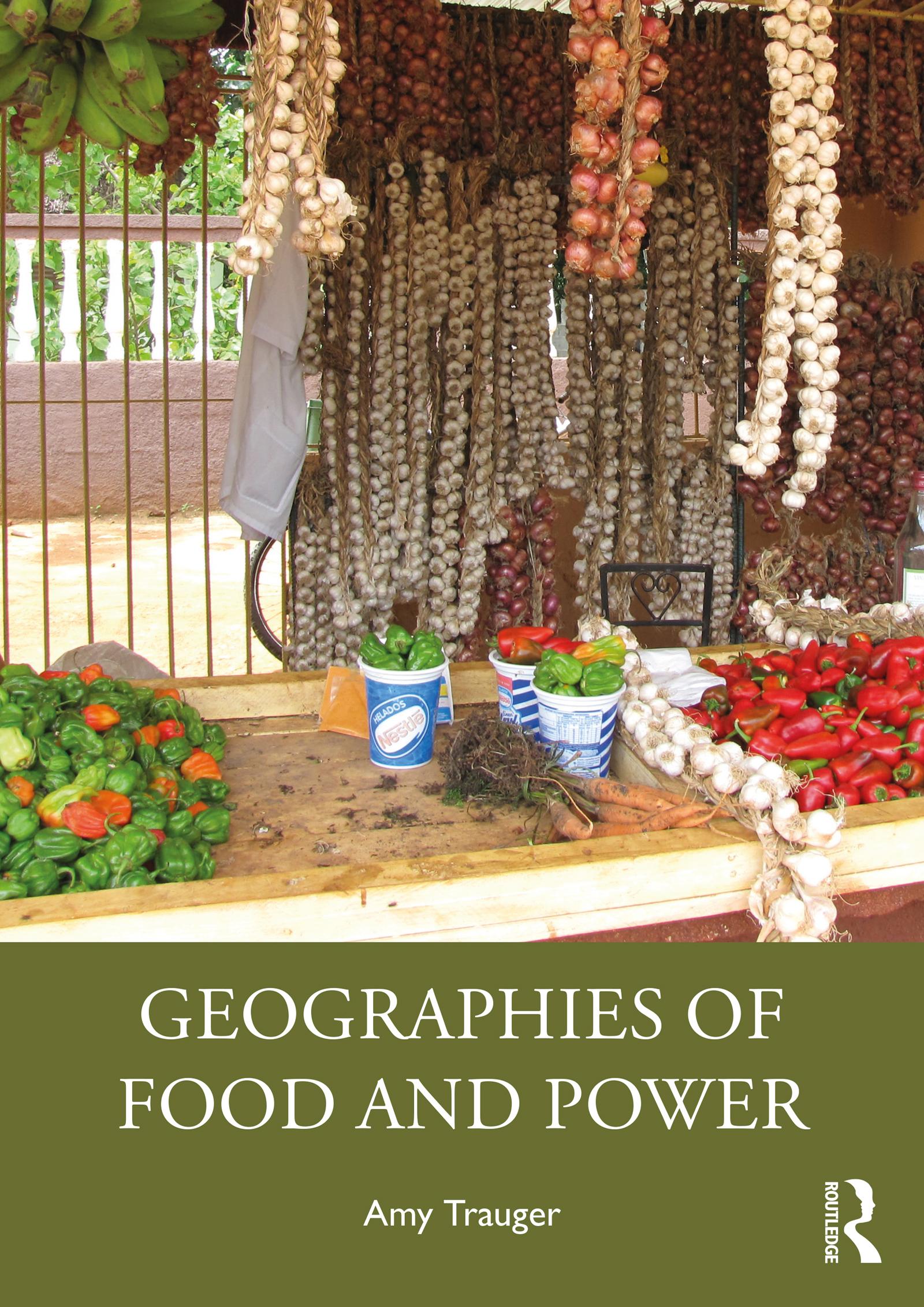
This book provides a comprehensive overview of the production and consumption of food, suitable for use in undergraduate classrooms, either at the intermediate or advanced level.
It takes an intersectional approach to difference and power and approaches standard subjects in the geography of food with a fresh perspective focusing on inequality, uneven production and legacies of colonialism. The book also focuses on places and regions often overlooked in conventional narratives, such as the Americas in the domestication of plants. The topics covered in the textbook include:
- descriptions and analyses of food systems
- histories of agricultural development with a focus on the roles of different regions
- major commodities such as meat, grains and produce with a focus on the place of production
- contemporary challenges in the food system, including labor, disasters/conflict and climate change
- recent and emerging trends in food and agriculture such as lab-grown meat and vertical urban farms
Geographies of Food and Power takes a synthetic approach by discussing food as something produced within an interconnected system, in which labor, food quality and the environment are considered together. It will be a valuable resource for students of human geography, environmental geography, economic geography, food studies and development.
Betal enkelt med kort, Klarna, Apple Pay eller Google Pay. Ikke fornøyd? Du har alltid 14 dagers angrerett. Les mer i våre vilkår. Har du spørsmål, send oss en e-post på hello@memmo.org.
Memmo gjør det enklere å studere – uansett hvor du er i verden. Hos oss samler du pensumbøker og smarte studieverktøy på ett og samme sted: sammendrag, quizer, podkaster og flashcards. Og så Ted, din studiekompis som svarer på alt du lurer på. Over 50 000 studenter studerer allerede her – bygget for at du skal lære raskere og stresse mindre.