
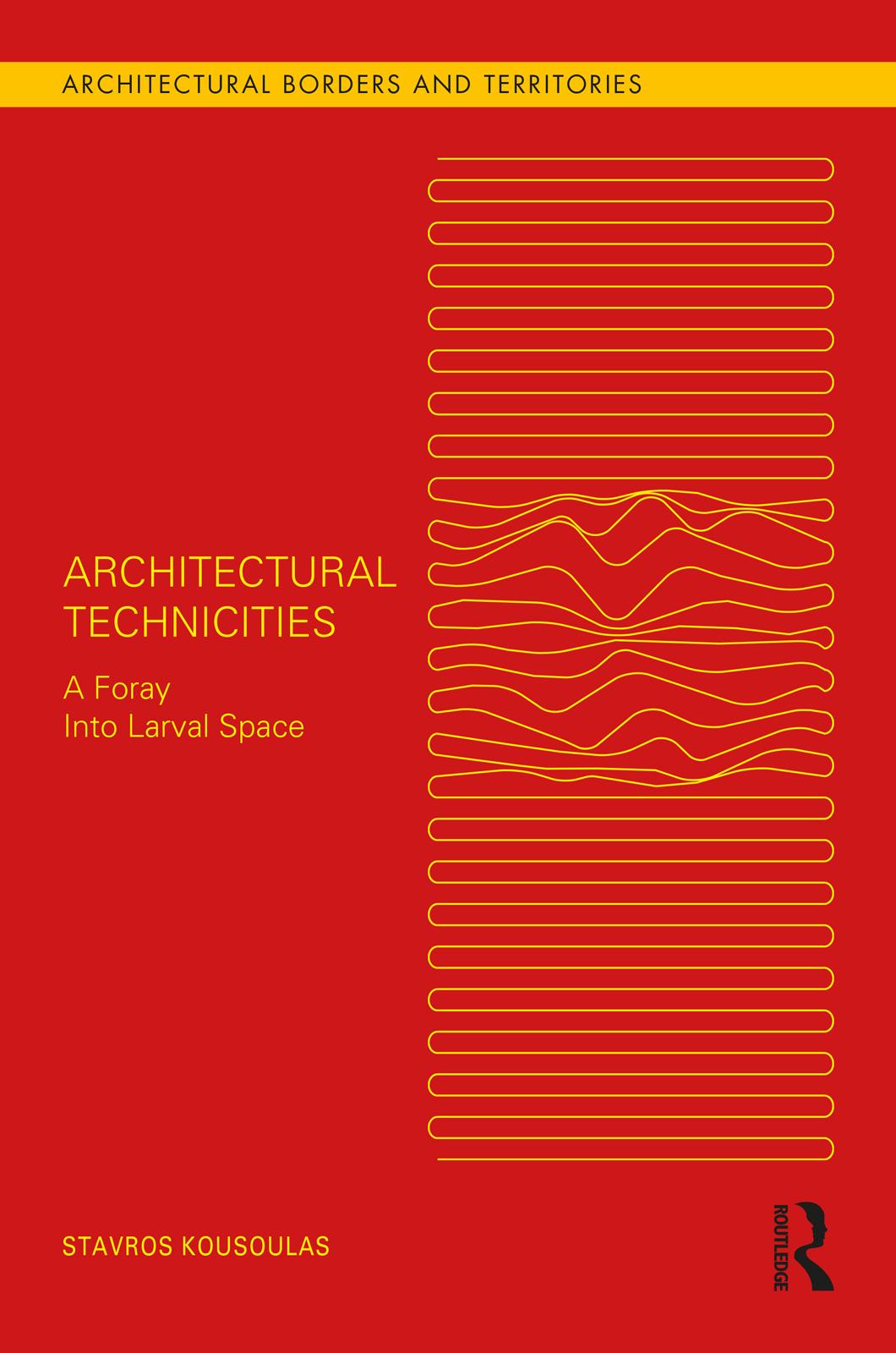
This book poses a simple question: how is this architecture possible? To respond, it will embark on a captivating journey through many singular architectural concepts. The entasis of Doric columns, Ulysses and desert islands will outline an architectural act that moves beyond representation. A ferryman who stutters will present two different types of architectural minds. A stilus and a theory of signs will reconsider the ways architects can develop a particular kind of intuition, while architectural technicities will bring forth a membranic and territorial understanding of architecture. Finally, as a melody that sings itself, a larval architecture will be introduced, bringing space and time together.
Assisting this endeavour, the thought of philosophers like Gilles Deleuze, Felix Guattari, Gilbert Simondon and Raymond Ruyer will meet the latest developments in fields like affect theory, cognitive sciences, environmental studies and neuroanthropology. Eventually, by the end of this book, the readers – from architecture students and researchers to academics and practitioners with an interest in theory – will have been exposed to a comprehensive and original philosophy of architecture and the built environment.
Betal enkelt med kort, Klarna, Apple Pay eller Google Pay. Ikke fornøyd? Du har alltid 14 dagers angrerett. Les mer i våre vilkår. Har du spørsmål, send oss en e-post på hello@memmo.org.
Memmo gjør det enklere å studere – uansett hvor du er i verden. Hos oss samler du pensumbøker og smarte studieverktøy på ett og samme sted: sammendrag, quizer, podkaster og flashcards. Og så Ted, din studiekompis som svarer på alt du lurer på. Over 50 000 studenter studerer allerede her – bygget for at du skal lære raskere og stresse mindre.