
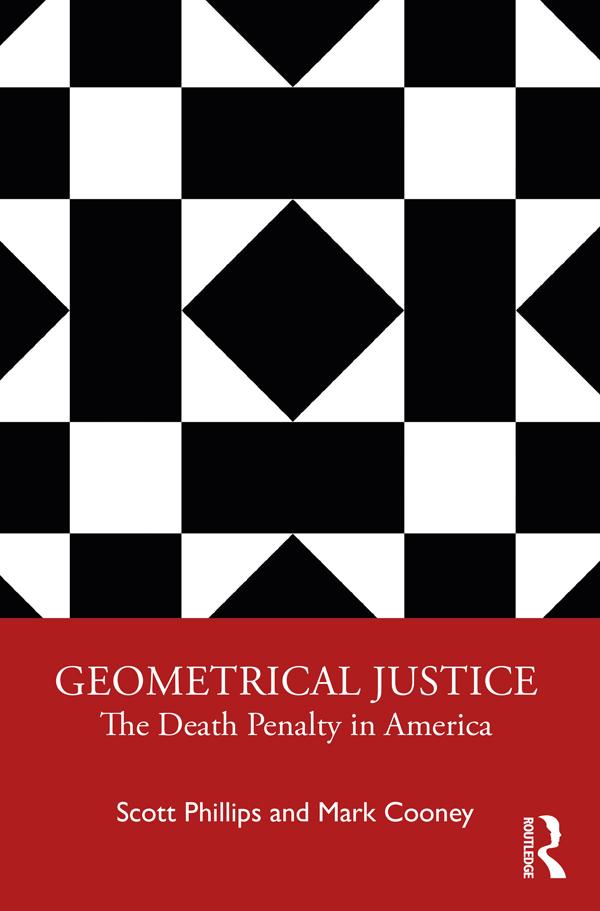
Legal decisions continue to mystify: why was this person sentenced to 20 years in prison, but that person to just 10 years for the same crime? Why did one person sue for civil damages, but another let the matter drop? Legal rules are supposed to answer these questions, but their answers are radically incomplete. Wouldn’t it be wonderful to have a theory that predicted and explained legal decisions?
Drawing on Donald Black’s theoretical ideas, Geometrical Justice: The Death Penalty in America addresses these issues, focusing specifi cally on who is sentenced to death and executed in the United States. The book explains why some murders are more serious than others and how the social characteristics of defendants, victims, and jurors aff ect case outcomes. Building on the most rigorous data in the field, the authors reveal wide discrepancies in capital punishment – why one person lives, but another person dies.
Geometrical Justice will be of interest to those engaged in criminal justice, criminology, and socio- legal studies, as well as students taking courses on sentencing, corrections, and capital punishment.
Betal enkelt med kort, Klarna, Apple Pay eller Google Pay. Ikke fornøyd? Du har alltid 14 dagers angrerett. Les mer i våre vilkår. Har du spørsmål, send oss en e-post på hello@memmo.org.
Memmo gjør det enklere å studere – uansett hvor du er i verden. Hos oss samler du pensumbøker og smarte studieverktøy på ett og samme sted: sammendrag, quizer, podkaster og flashcards. Og så Ted, din studiekompis som svarer på alt du lurer på. Over 50 000 studenter studerer allerede her – bygget for at du skal lære raskere og stresse mindre.