
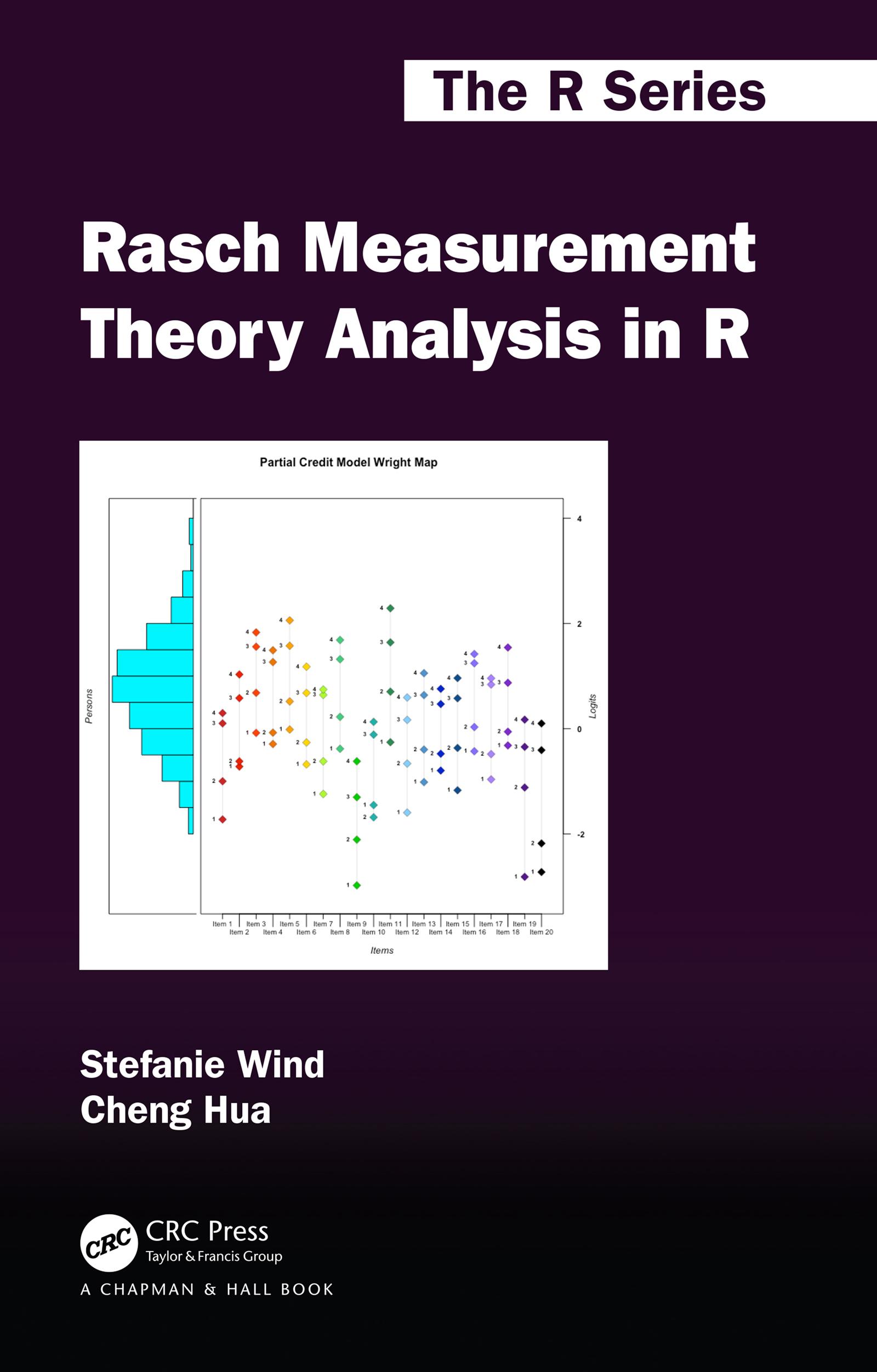
Rasch Measurement Theory Analysis in R provides researchers and practitioners with a step-by-step guide for conducting Rasch measurement theory analyses using R. It includes theoretical introductions to major Rasch measurement principles and techniques, demonstrations of analyses using several R packages that contain Rasch measurement functions, and sample interpretations of results.
Features:
- Accessible to users with relatively little experience with R programming
- Reproducible data analysis examples that can be modified to accommodate users’ own data
- Accompanying book website with links to additional resources and R code updates as needed
- Features dichotomous and polytomous (rating scale) Rasch models that can be applied to data from a wide range of disciplines
This book is designed for graduate students, researchers, and practitioners across the social, health, and behavioral sciences who have a basic familiarity with Rasch measurement theory and with R. Readers will learn how to use existing R packages to conduct a variety of analyses related to Rasch measurement theory, including evaluating data for adherence to measurement requirements, applying the dichotomous, Rating Scale, Partial Credit, and Many-Facet Rasch models, examining data for evidence of differential item functioning, and considering potential interpretations of results from such analyses.
Betal enkelt med kort, Klarna, Apple Pay eller Google Pay. Ikke fornøyd? Du har alltid 14 dagers angrerett. Les mer i våre vilkår. Har du spørsmål, send oss en e-post på hello@memmo.org.
Memmo gjør det enklere å studere – uansett hvor du er i verden. Hos oss samler du pensumbøker og smarte studieverktøy på ett og samme sted: sammendrag, quizer, podkaster og flashcards. Og så Ted, din studiekompis som svarer på alt du lurer på. Over 50 000 studenter studerer allerede her – bygget for at du skal lære raskere og stresse mindre.