
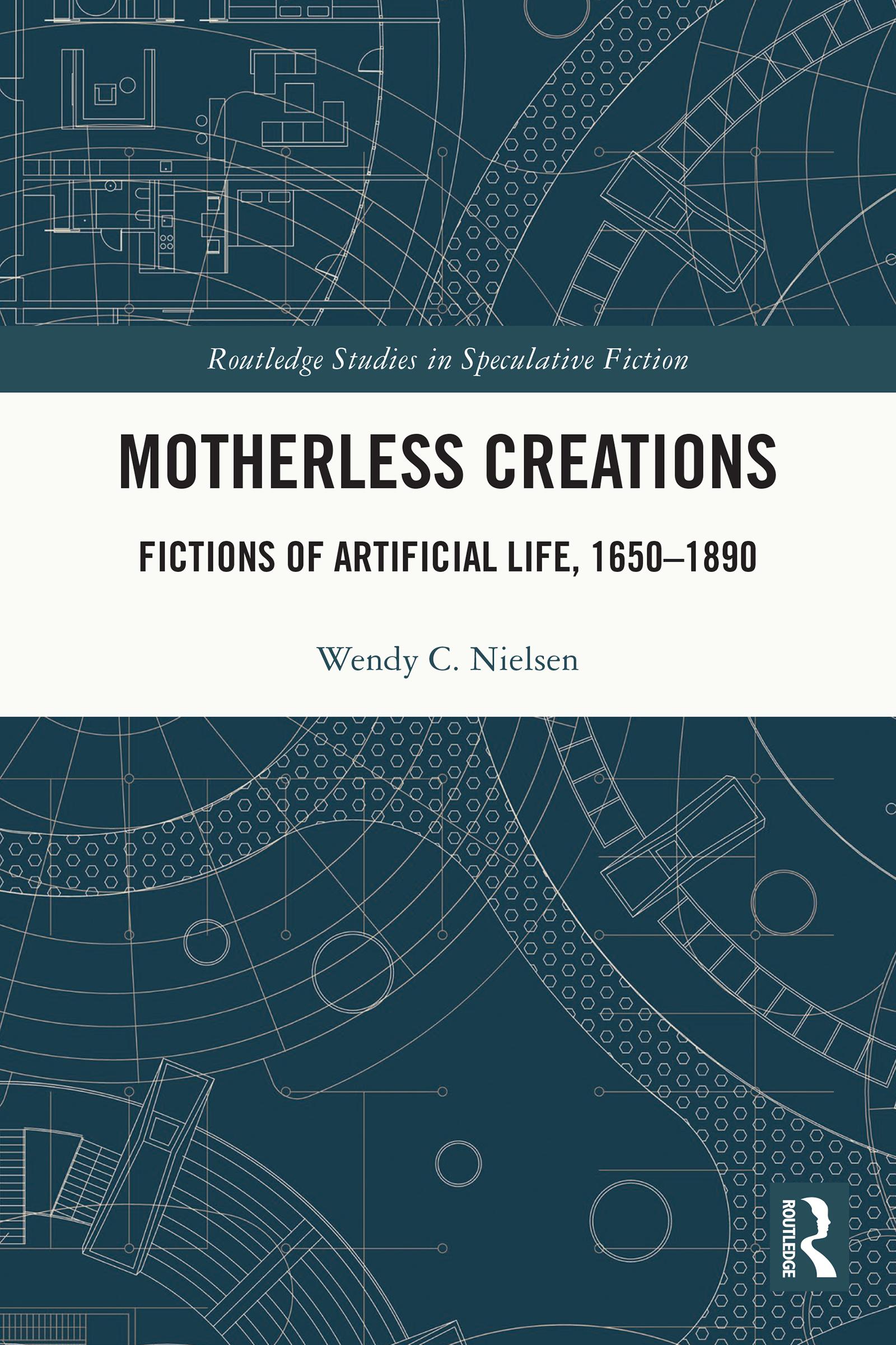
This book explains the elimination of maternal characters in American, British, French, and German literature before 1890 by examining motherless creations: Pygmalion’s statue, Frankenstein’s creature, homunculi, automata, androids, golems, and steam men. These beings typify what is now called artificial life, living systems made through manufactured means. Fantasies about creating life ex-utero were built upon misconceptions about how life began, sustaining pseudoscientific beliefs about the birthing body. Physicians, inventors, and authors of literature imagined generating life without women to control the process of reproduction and generate perfect progeny. Thus, some speculative fiction before 1890 belongs to the literary genealogy of transhumanism, the belief that technology will someday transform some humans into superior, immortal beings. Female motherless creations tend to operate as sexual companions. Male ones often emerge as subaltern figures analogous to enslaved beings, illustrating that reproductive rights inform readers’ sense of who counts as human in fictions of artificial life.
Betal enkelt med kort, Klarna, Apple Pay eller Google Pay. Ikke fornøyd? Du har alltid 14 dagers angrerett. Les mer i våre vilkår. Har du spørsmål, send oss en e-post på hello@memmo.org.
Memmo gjør det enklere å studere – uansett hvor du er i verden. Hos oss samler du pensumbøker og smarte studieverktøy på ett og samme sted: sammendrag, quizer, podkaster og flashcards. Og så Ted, din studiekompis som svarer på alt du lurer på. Over 50 000 studenter studerer allerede her – bygget for at du skal lære raskere og stresse mindre.