
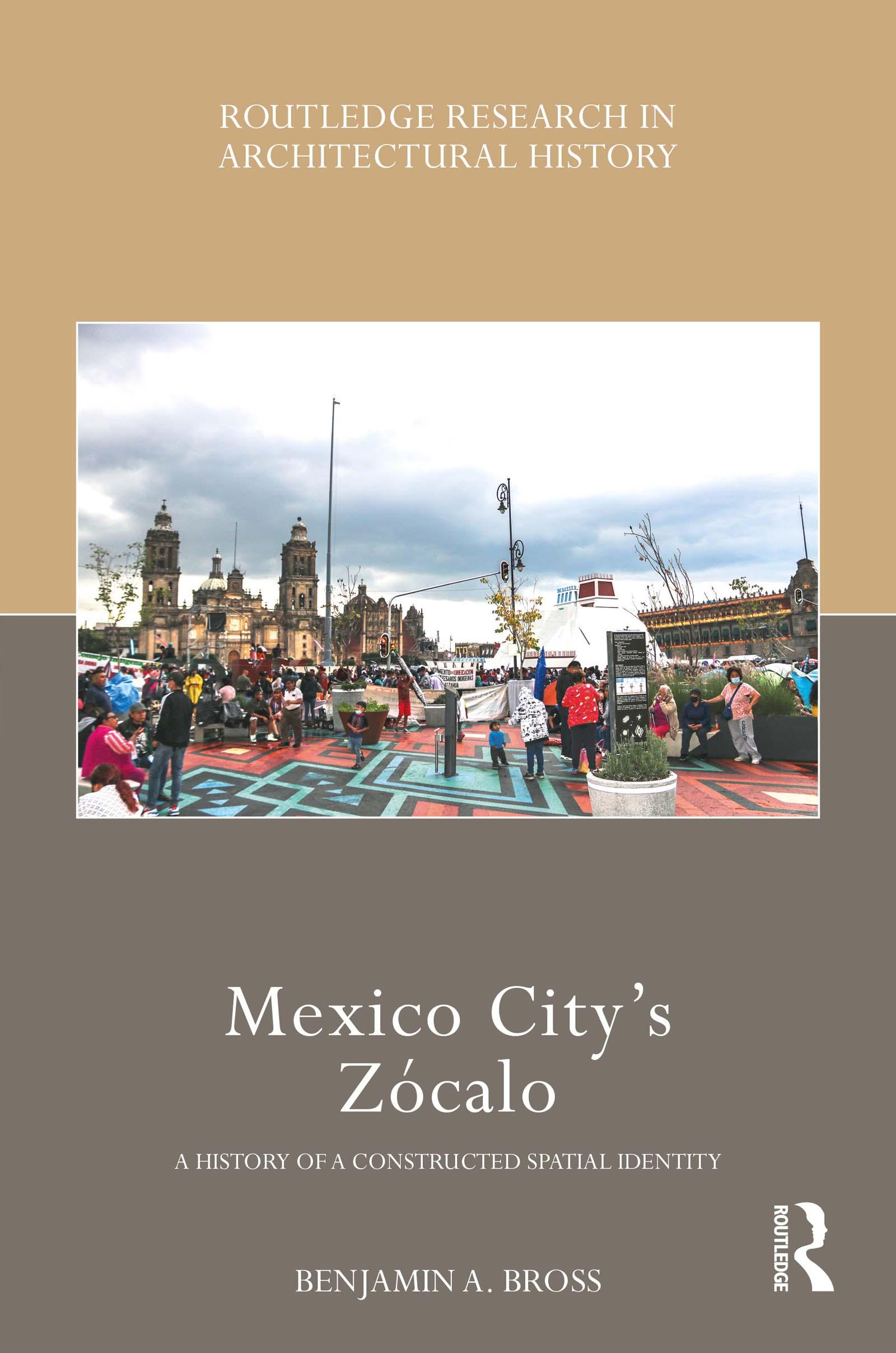
This book presents a case study of one of Latin America’s most important and symbolic spaces, the Zócalo in Mexico City, weaving together historic events and corresponding morphological changes in the urban environment. It poses questions about how the identity of a place emerges, how it evolves and, why does it change? Mexico City’s Zócalo: A History of a Constructed Spatial Identity utilizes the history of a specific place, the Zócalo (Plaza de la Constitución), to explain the emergence and evolution of Mexican identities over time.
Starting from the pre-Hispanic period to present day, the work illustrates how the Zócalo reveals spatial manifestations as part of the larger socio-cultural zeitgeist. By focusing on the history of changes in spatial production – what Henri Lefebvre calls society’s "secretions" – Bross traces how cultural, social, economic, and political forces shaped the Zócalo’s spatial identity and, in turn, how the Zócalo shaped and fostered new identities in return. It will be a fascinating read for architectural and urban historians investigating Latin America.
Betal enkelt med kort, Klarna, Apple Pay eller Google Pay. Ikke fornøyd? Du har alltid 14 dagers angrerett. Les mer i våre vilkår. Har du spørsmål, send oss en e-post på hello@memmo.org.
Memmo gjør det enklere å studere – uansett hvor du er i verden. Hos oss samler du pensumbøker og smarte studieverktøy på ett og samme sted: sammendrag, quizer, podkaster og flashcards. Og så Ted, din studiekompis som svarer på alt du lurer på. Over 50 000 studenter studerer allerede her – bygget for at du skal lære raskere og stresse mindre.