
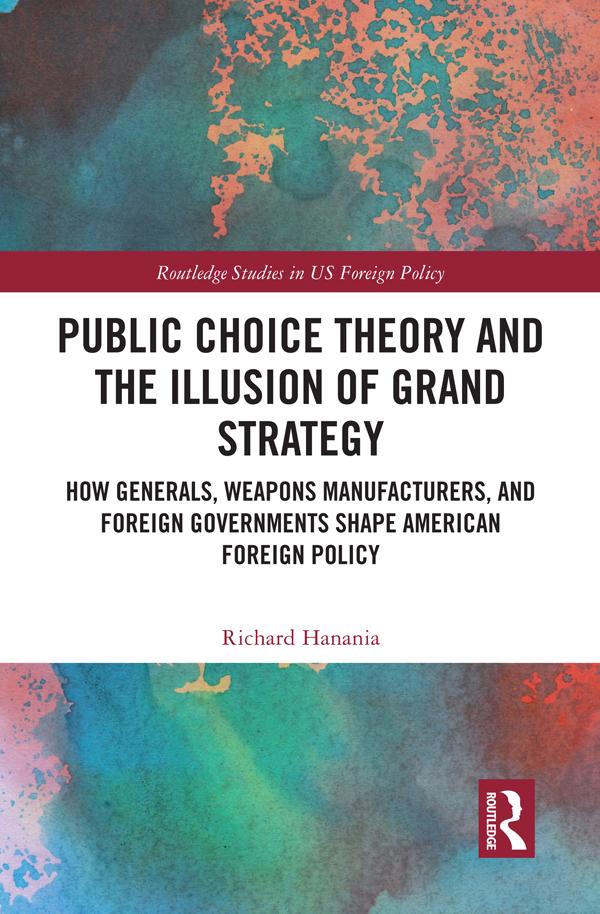
This book argues that while the US president makes foreign policy decisions based largely on political pressures, it is concentrated interests that shape the incentive structures in which he and other top officials operate.
The author identifies three groups most likely to be influential: government contractors, the national security bureaucracy, and foreign governments. This book shows that the public choice perspective is superior to a theory of grand strategy in explaining the most important aspects of American foreign policy, including the war on terror, policy toward China, and the distribution of US forces abroad. Arguing that American leaders are selected to respond to public opinion, not necessarily according to their ability to formulate and execute long-terms plans, the author shows how mass attitudes are easily malleable in the domain of foreign affairs due to ignorance with regard to the topic, the secrecy that surrounds national security issues, the inherent complexity of the issues involved, and most importantly, clear cases of concentrated interests.
The book will be of interest to students and scholars of American Studies, Foreign Policy Analysis and Global Governance.
Betal enkelt med kort, Klarna, Apple Pay eller Google Pay. Ikke fornøyd? Du har alltid 14 dagers angrerett. Les mer i våre vilkår. Har du spørsmål, send oss en e-post på hello@memmo.org.
Memmo gjør det enklere å studere – uansett hvor du er i verden. Hos oss samler du pensumbøker og smarte studieverktøy på ett og samme sted: sammendrag, quizer, podkaster og flashcards. Og så Ted, din studiekompis som svarer på alt du lurer på. Over 50 000 studenter studerer allerede her – bygget for at du skal lære raskere og stresse mindre.