
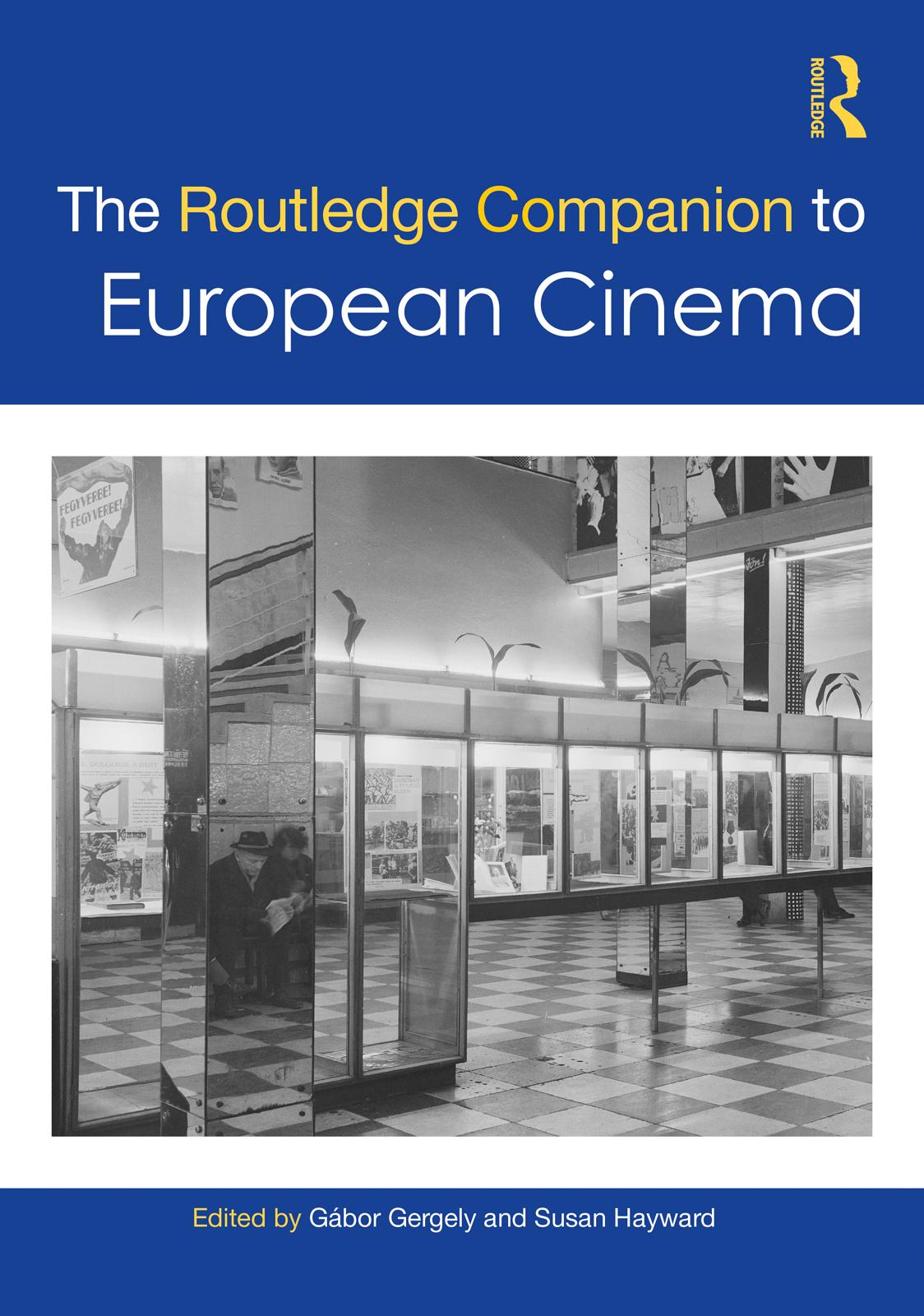
Presenting new and diverse scholarship, this wide-ranging collection of 43 original chapters asks what European cinema tells us about Europe.
The book engages with European cinema that attends to questions of European colonial, racialized and gendered power; seeks to decentre Europe itself (not merely its putative centres); and interrogate Europe’s various conceptualizations from a variety of viewpoints. It explores the broad, complex and heterogeneous community/ies produced in and by European films, taking in Kurdish, Hollywood and Singapore cinema as comfortably as the cinema of Poland, Spanish colonial films or the European gangster genre. Chapters cover numerous topics, including individual films, film movements, filmmakers, stars, scholarship, representations and identities, audiences, production practices, genres and more, all analysed in their context(s) so as to construct an image of Europe as it emerges from Europe’s film corpus.
The Companion opens the study of European cinema to a broad readership and is ideal for students and scholars in film, European studies, queer studies and cultural studies, as well as historians with an interest in audio-visual culture, nationalism and transnationalism, and those working in language-based area studies.
Betal enkelt med kort, Klarna, Apple Pay eller Google Pay. Ikke fornøyd? Du har alltid 14 dagers angrerett. Les mer i våre vilkår. Har du spørsmål, send oss en e-post på hello@memmo.org.
Memmo gjør det enklere å studere – uansett hvor du er i verden. Hos oss samler du pensumbøker og smarte studieverktøy på ett og samme sted: sammendrag, quizer, podkaster og flashcards. Og så Ted, din studiekompis som svarer på alt du lurer på. Over 50 000 studenter studerer allerede her – bygget for at du skal lære raskere og stresse mindre.