
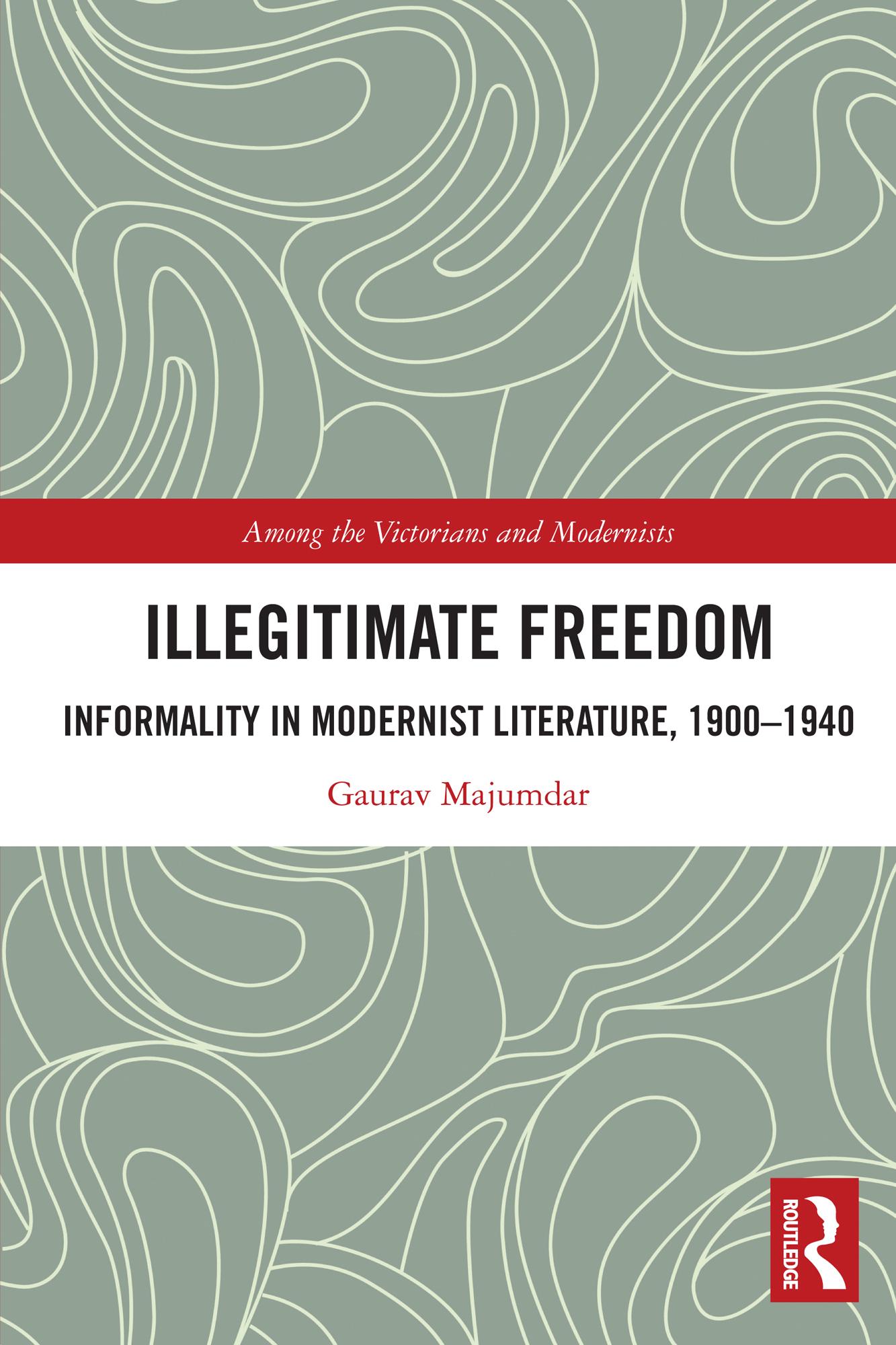
Illegitimate Freedom: Informality in Modernist Literature, 1900 - 1940 is the first study of informality in modernist literature. Differentiating informality from intimacy in its introduction, the book discusses the informal in relation with sensory experience, aesthetic presentation, ethical deliberation or action, and social attitudes within modernist works. It examines these works for particular nuances of the word "informality" in each of its chapters in the following thematic sequence: informality that offers humour, interpretive freedom, and promiscuity as counters to self-absorption in works by Virginia Woolf; rebuttals to male priorities in liberalism through "feminine informality" in several short stories by Katherine Mansfield; contempt for colloquialism and intimacy, tinged with class-anxieties and crises of attitude, in T. S. Eliot’s poetry; resistance to disgust in James Joyce’s novels; and the fusion of irreverence, protest, and praise in W. H. Auden’s writings before 1940. The book’s conclusion considers the risks of informality through a discussion of what it calls "inverted dignity." The theoretical aspects of the book offer insights into Lockean liberalism, the ethical dimensions of what Hélène Cixous termed "feminine writing," relations of sublimity and domesticity, Sigmund Freud’s arguments on humour and melancholia, and recent affect theory’s—as well as Immanuel Kant’s and Friedrich Nietzsche’s—views on disgust, linking these with modernism. This wide range of engagement makes this study relevant for those interested in literary studies, critical theory, and philosophy.
Betal enkelt med kort, Klarna, Apple Pay eller Google Pay. Ikke fornøyd? Du har alltid 14 dagers angrerett. Les mer i våre vilkår. Har du spørsmål, send oss en e-post på hello@memmo.org.
Memmo gjør det enklere å studere – uansett hvor du er i verden. Hos oss samler du pensumbøker og smarte studieverktøy på ett og samme sted: sammendrag, quizer, podkaster og flashcards. Og så Ted, din studiekompis som svarer på alt du lurer på. Over 50 000 studenter studerer allerede her – bygget for at du skal lære raskere og stresse mindre.