
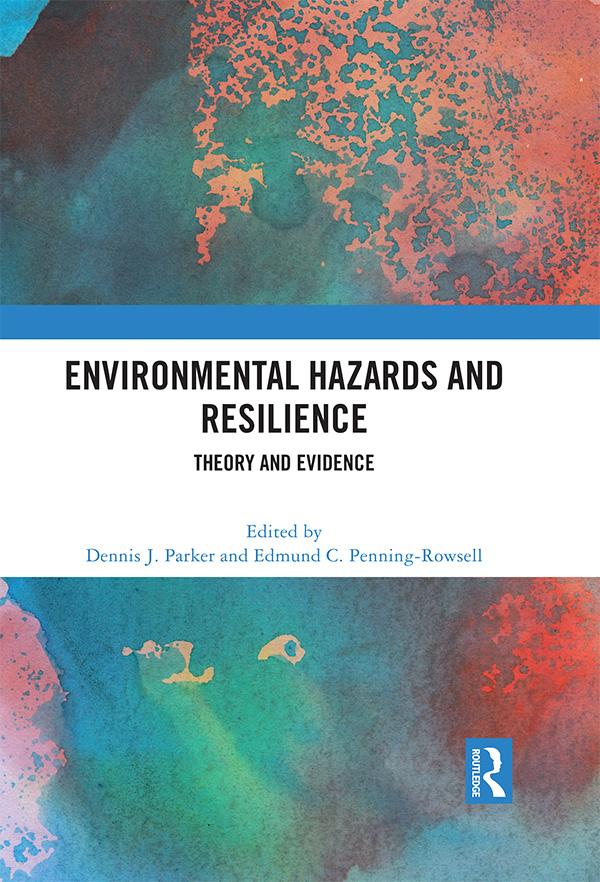
Building resilience to the world’s increasingly damaging environmental hazards has become a priority. This book considers the scientific advances which have been made around the world to enhance this resilience.
Although resilience is not new, it is through the idea of resilience that governments, organisations, and communities around the world are now seeking to address the rapidly increasing losses that environmental hazards cause so that fewer lives are lost, and damage is reduced. Alternative ideas and approaches have been helpful in reducing loss, but resilience offers a fresh and potentially effective means of reducing it further. Adopting a scientific approach and scientific evidence is important in applying the resilience idea in hazard mitigation. However, the science of resilience is at an immature stage of development with much discussion about the concept and how it should be understood and interpreted. Building useful theories remains a challenge although some of the building blocks of theory have been developed. More attention has been given to developing indicators and frameworks of resilience which are subsequently applied to measure resilience to hazards such as flooding, earthquake, and climate change.
Environmental Hazards and Resilience: Theory and Evidence considers the scientific and theoretical challenges of making progress in applying resilience to environmental hazard mitigation and provides examples from around the world – including the USA, New Zealand, China, Bangladesh and elsewhere.
The chapters in this book were originally published in the Environmental Hazards.
Betal enkelt med kort, Klarna, Apple Pay eller Google Pay. Ikke fornøyd? Du har alltid 14 dagers angrerett. Les mer i våre vilkår. Har du spørsmål, send oss en e-post på hello@memmo.org.
Memmo gjør det enklere å studere – uansett hvor du er i verden. Hos oss samler du pensumbøker og smarte studieverktøy på ett og samme sted: sammendrag, quizer, podkaster og flashcards. Og så Ted, din studiekompis som svarer på alt du lurer på. Over 50 000 studenter studerer allerede her – bygget for at du skal lære raskere og stresse mindre.