
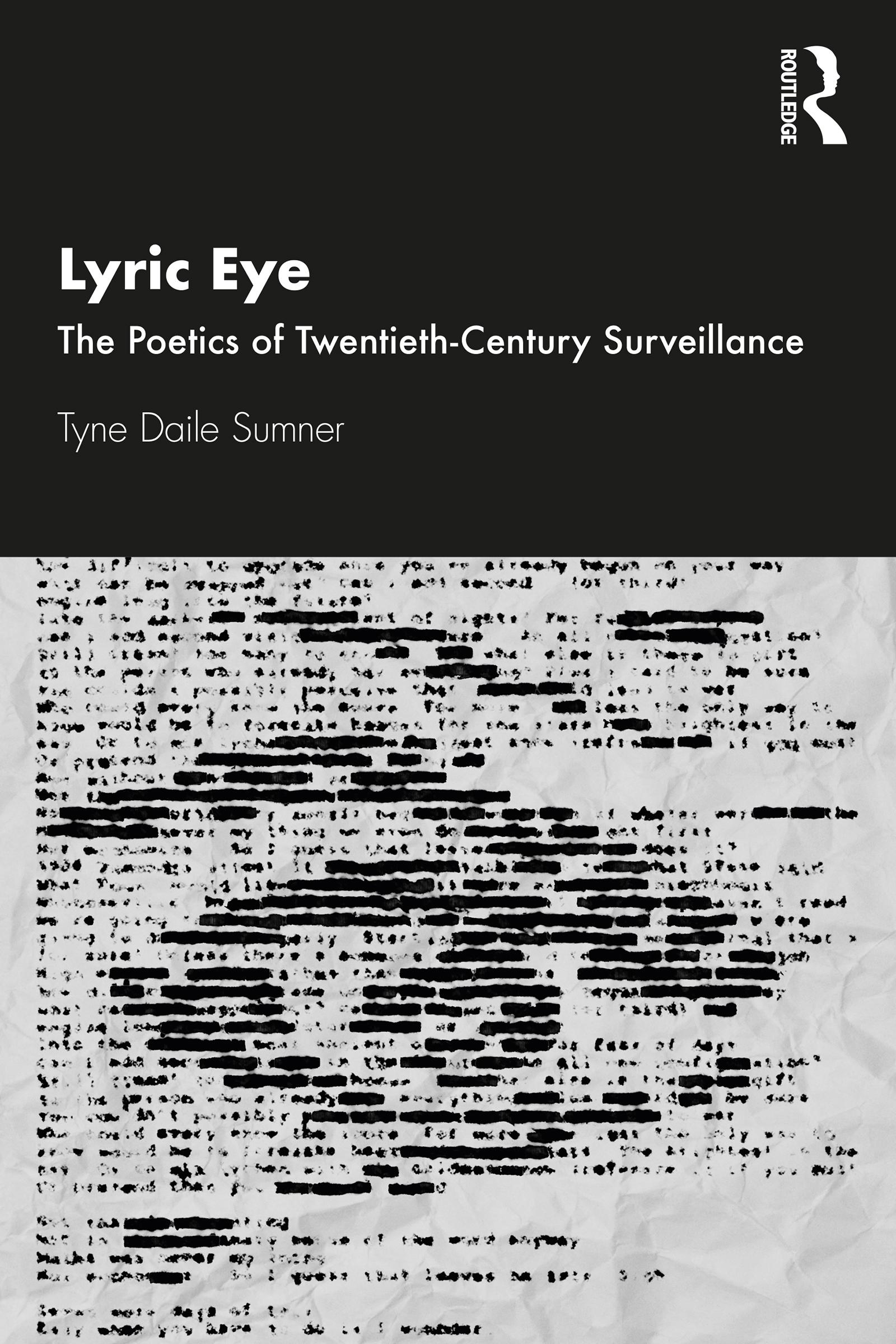
Lyric Eye: The Poetics of Twentieth-Century Surveillance presents the first detailed study of the relationship between poetry and surveillance. It critically examines the close connection between American lyric poetry and a burgeoning US state surveillance apparatus from 1920 to the 1960s. The book explores the myriad ways that poets—Ezra Pound, William Carlos Williams, W.H. Auden, Langston Hughes, James Baldwin, Sylvia Plath, Gertrude Stein, Robert Lowell, Allen Ginsberg and others—explored a developing and fraught environment in which the growing power of American investigative agencies, such as the FBI under J. Edgar Hoover, imposed new pressures on cultural discourse and personal identity. In analysing twentieth-century American poetry and its various ideas about "the self," Lyric Eye demonstrates the extent to which poetry and surveillance employ similar styles of information-gathering such as observation, overhearing, imitation, abstraction, repurposing of language, subversion, fragmentation and symbolism.
Ground-breaking and prescient, this book will be of great interest to scholars and researchers of literature, politics, surveillance and intelligence studies, and digital humanities.
Betal enkelt med kort, Klarna, Apple Pay eller Google Pay. Ikke fornøyd? Du har alltid 14 dagers angrerett. Les mer i våre vilkår. Har du spørsmål, send oss en e-post på hello@memmo.org.
Memmo gjør det enklere å studere – uansett hvor du er i verden. Hos oss samler du pensumbøker og smarte studieverktøy på ett og samme sted: sammendrag, quizer, podkaster og flashcards. Og så Ted, din studiekompis som svarer på alt du lurer på. Over 50 000 studenter studerer allerede her – bygget for at du skal lære raskere og stresse mindre.