
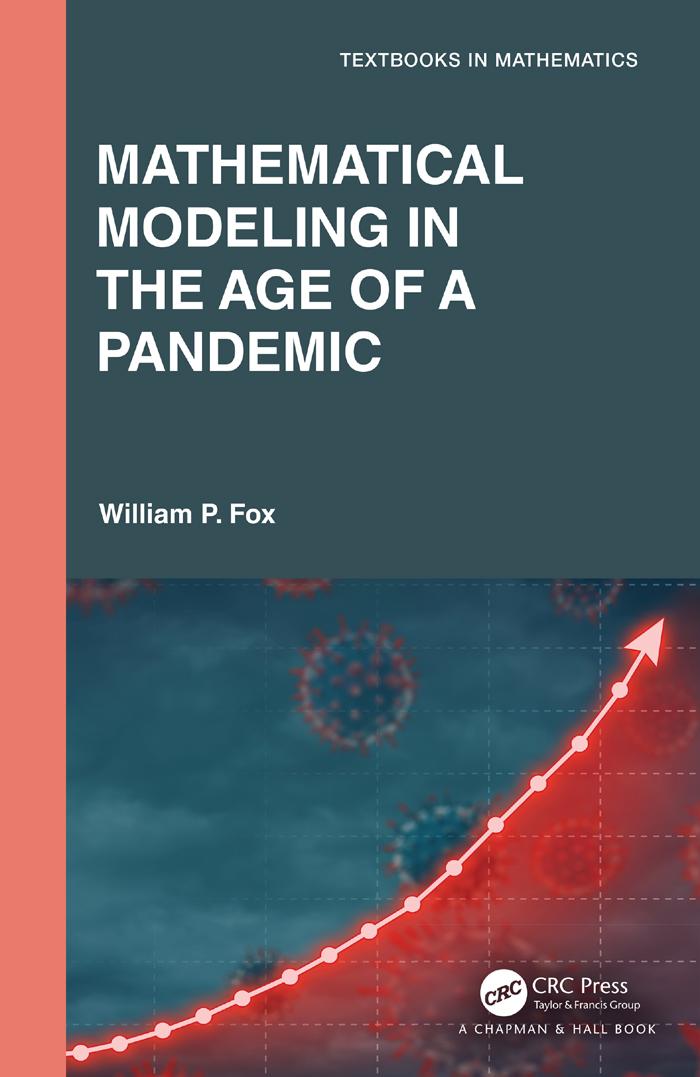
One cannot watch or read about the news these days without hearing about the models for COVID-19 or the testing that must occur to approve vaccines or treatments for the disease.
The purpose of Mathematical Modeling in the Age of a Pandemic is to shed some light on the meaning and interpretations of many of the types of models that are or might be used in the presentation of analysis. Understanding the concepts presented is essential in the entire modeling process of a pandemic.
From the virus itself and its infectious rates and deaths rates to explain the process for testing a vaccine or eventually a cure, the author builds, presents, and shows model testing.
This book is an attempt, based on available data, to add some validity to the models developed and used, showing how close to reality the models are to predicting "results" from previous pandemics such as the Spanish flu in 1918 and more recently the Hong Kong flu. Then the author applies those same models to Italy, New York City, and the United States as a whole.
Modeling is a process. It is essential to understand that there are many assumptions that go into the modeling of each type of model. The assumptions influence the interpretation of the results. Regardless of the modeling approach the results generally indicate approximately the same results. This book reveals how these interesting results are obtained.
Betal enkelt med kort, Klarna, Apple Pay eller Google Pay. Ikke fornøyd? Du har alltid 14 dagers angrerett. Les mer i våre vilkår. Har du spørsmål, send oss en e-post på hello@memmo.org.
Memmo gjør det enklere å studere – uansett hvor du er i verden. Hos oss samler du pensumbøker og smarte studieverktøy på ett og samme sted: sammendrag, quizer, podkaster og flashcards. Og så Ted, din studiekompis som svarer på alt du lurer på. Over 50 000 studenter studerer allerede her – bygget for at du skal lære raskere og stresse mindre.