
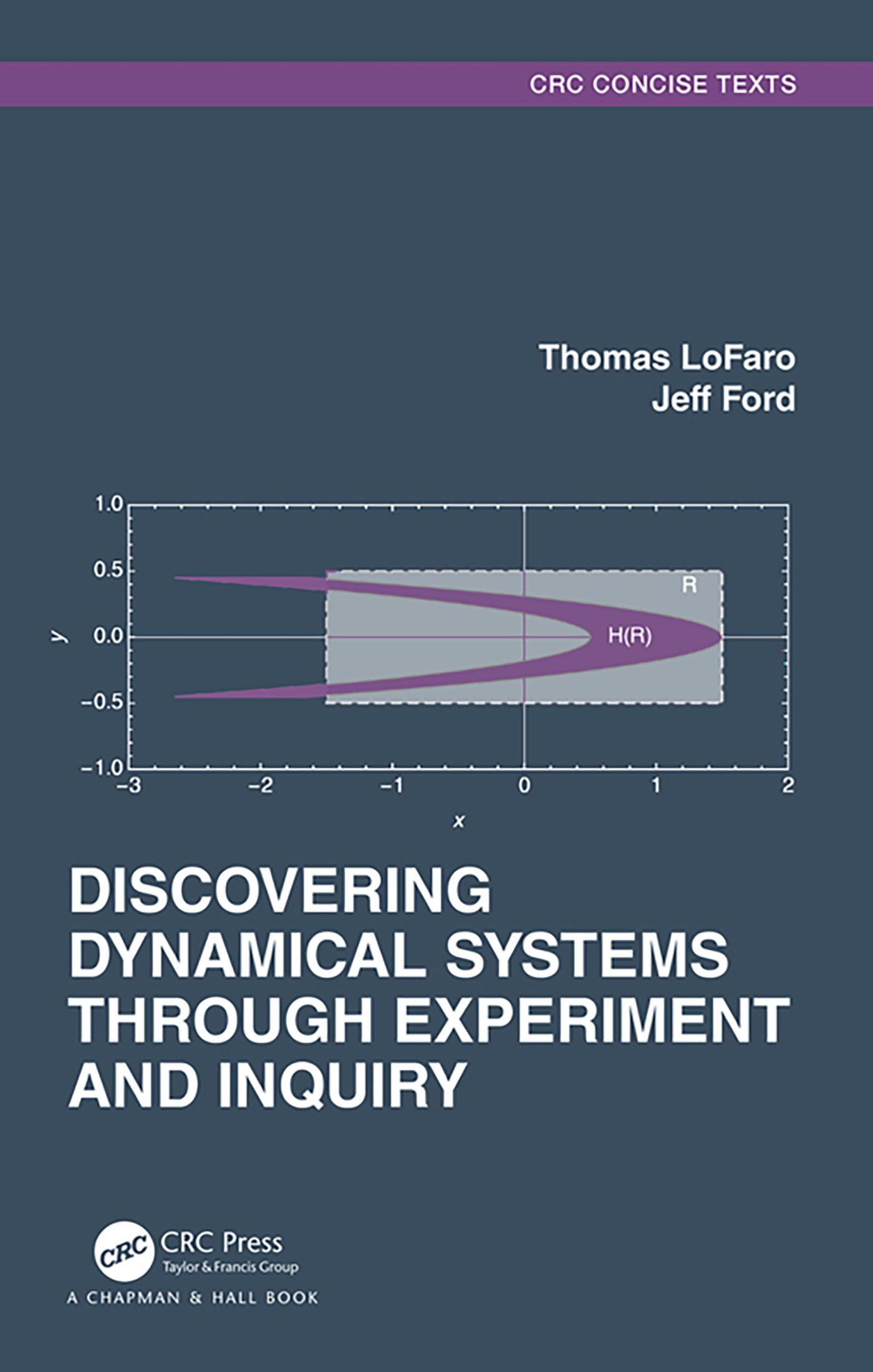
Discovering Dynamical Systems Through Experiment and Inquiry differs from most texts on dynamical systems by blending the use of computer simulations with inquiry-based learning (IBL). IBL is an excellent tool to move students from merely remembering the material to deeper understanding and analysis. This method relies on asking students questions first, rather than presenting the material in a lecture.
Another unique feature of this book is the use of computer simulations. Students can discover examples and counterexamples through manipulations built into the software. These tools have long been used in the study of dynamical systems to visualize chaotic behavior.
We refer to this unique approach to teaching mathematics as ECAP—Explore, Conjecture, Apply, and Prove. ECAP was developed to mimic the actual practice of mathematics in an effort to provide students with a more holistic mathematical experience. In general, each section begins with exercises guiding students through explorations of the featured concept and concludes with exercises that help the students formally prove the results.
While symbolic dynamics is a standard topic in an undergraduate dynamics text, we have tried to emphasize it in a way that is more detailed and inclusive than is typically the case. Finally, we have chosen to include multiple sections on important ideas from analysis and topology independent from their application to dynamics.
Betal enkelt med kort, Klarna, Apple Pay eller Google Pay. Ikke fornøyd? Du har alltid 14 dagers angrerett. Les mer i våre vilkår. Har du spørsmål, send oss en e-post på hello@memmo.org.
Memmo gjør det enklere å studere – uansett hvor du er i verden. Hos oss samler du pensumbøker og smarte studieverktøy på ett og samme sted: sammendrag, quizer, podkaster og flashcards. Og så Ted, din studiekompis som svarer på alt du lurer på. Over 50 000 studenter studerer allerede her – bygget for at du skal lære raskere og stresse mindre.