
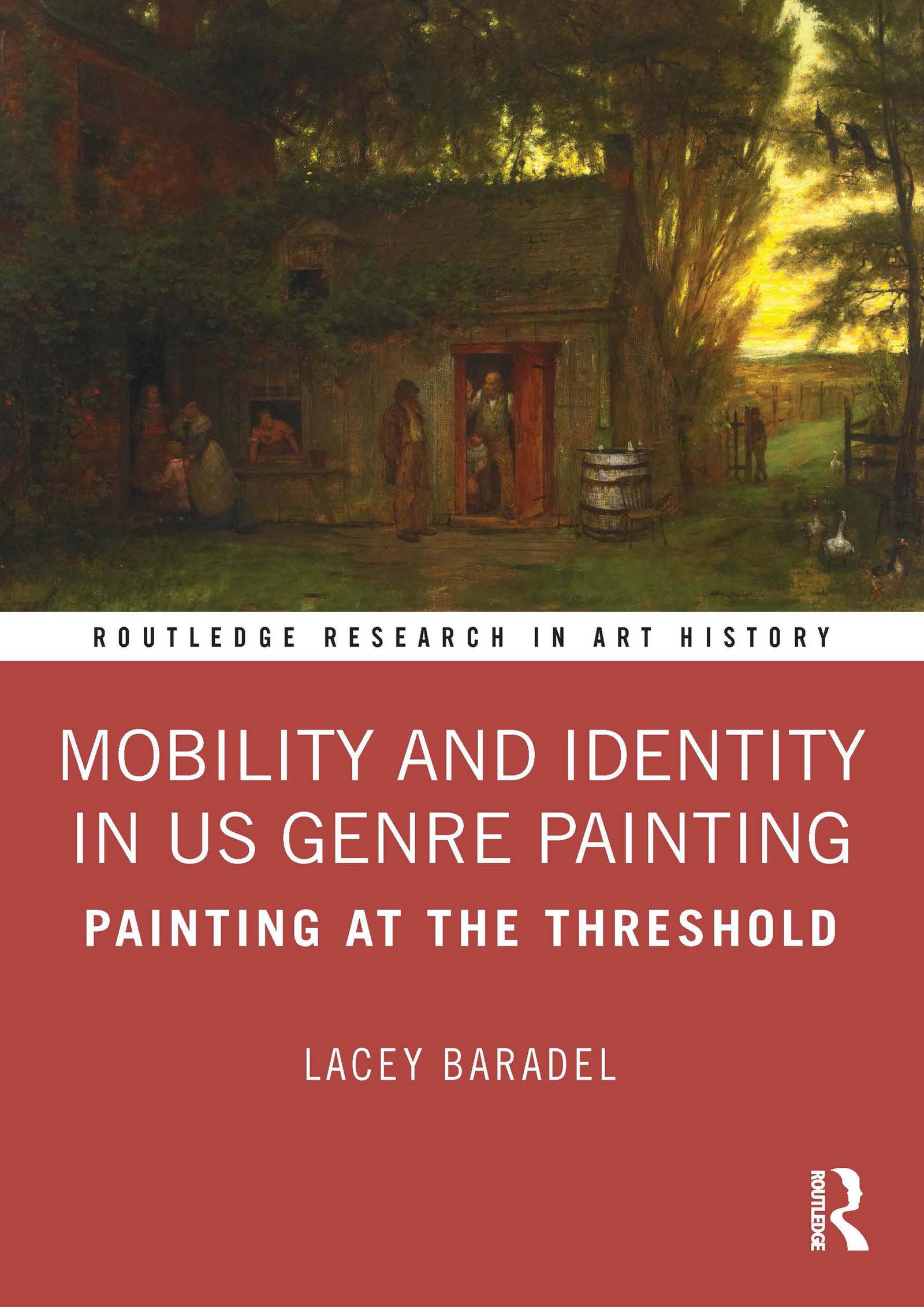
This book examines the portrayal of themes of boundary crossing, itinerancy, relocation, and displacement in US genre paintings during the second half of the long nineteenth century (c. 1860–1910).
Through four diachronic case studies, the book reveals how the high-stakes politics of mobility and identity during this period informed the production and reception of works of art by Eastman Johnson (1824–1906), Enoch Wood Perry, Jr. (1831–1915), Thomas Hovenden (1840–95), and John Sloan (1871–1951). It also complicates art history’s canonical understandings of genre painting as a category that seeks to reinforce social hierarchies and emphasize more rooted connections to place by, instead, privileging portrayals of social flux and geographic instability.
The book will be of interest to scholars working in art history, literature, American studies, and cultural geography.
Betal enkelt med kort, Klarna, Apple Pay eller Google Pay. Ikke fornøyd? Du har alltid 14 dagers angrerett. Les mer i våre vilkår. Har du spørsmål, send oss en e-post på hello@memmo.org.
Memmo gjør det enklere å studere – uansett hvor du er i verden. Hos oss samler du pensumbøker og smarte studieverktøy på ett og samme sted: sammendrag, quizer, podkaster og flashcards. Og så Ted, din studiekompis som svarer på alt du lurer på. Over 50 000 studenter studerer allerede her – bygget for at du skal lære raskere og stresse mindre.