
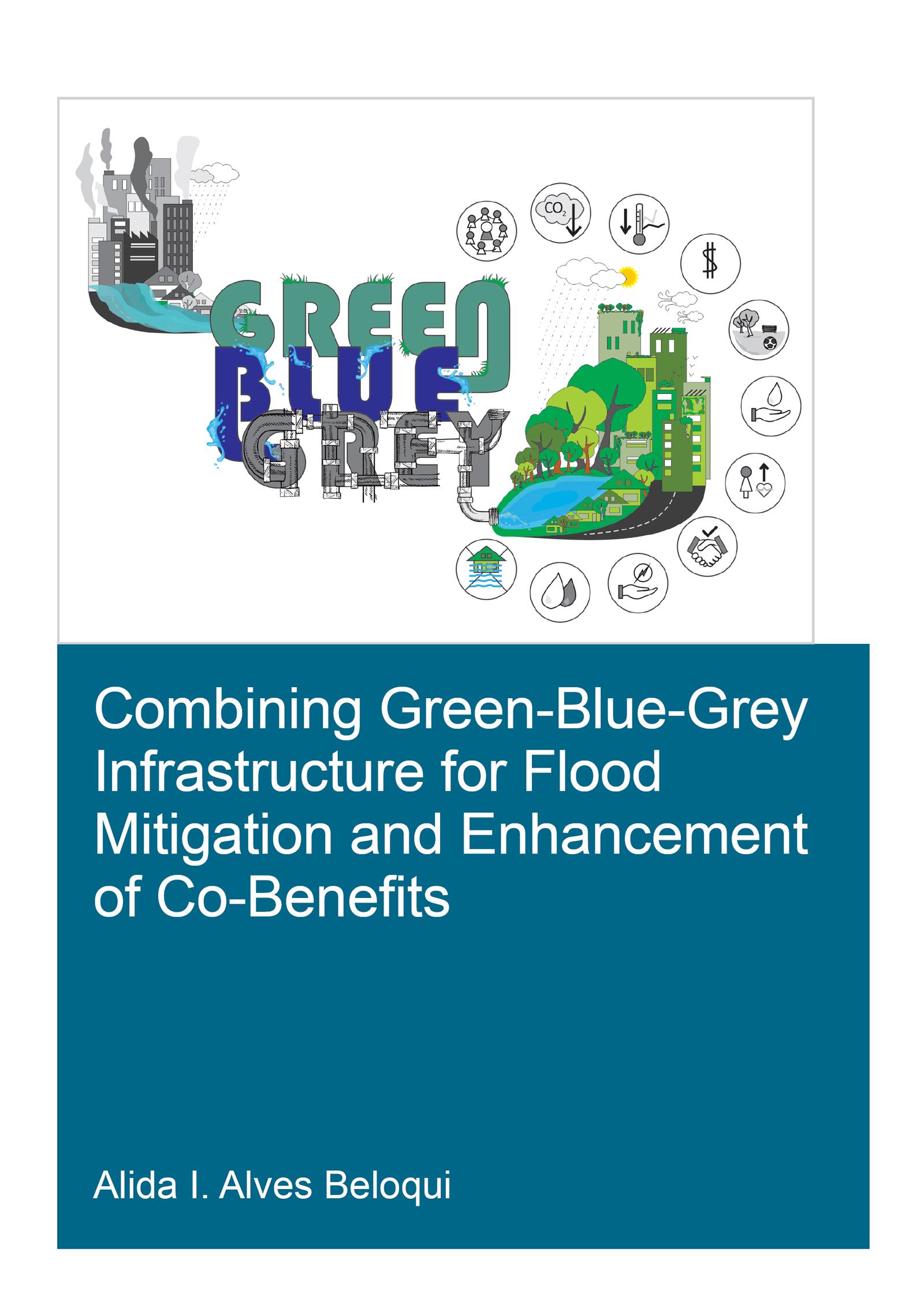
An increment of urban flood risk in many areas around the globe is expected, accentuated due to climate change and urbanisation. Thus, appropriate flood risk management is crucial. Conventional approaches focus on grey infrastructure, which frequently do not address the root causes of risk. A change of paradigm is needed to develop effective adaptation strategies. Green-blue infrastructure (GBI) is a central concept to achieve adaptation to climate change. Its main strength is the ability to deliver multiple benefits. Although strong evidence exists demonstrating that GBI is a sustainable solution to reduce flooding, its adoption is still slow. Therefore, the objective of this research is to help decision-makers to adopt adaptation strategies to cope with flood risk while achieving other benefits. This study provides a framework which introduces co-benefits into decision-making for stormwater infrastructure planning. Besides, the multiple benefits are quantified and their impact on helping GBI implementation are evaluated. Finally, the effects of including co-benefits on the selection of flood mitigation strategies and the trade-offs among cost and benefits are assessed. This work contributes to enhance planning processes for flood mitigation combining green-blue-grey measures. It provides tools and knowledge to facilitate holistic decision-making, in order to ensure safe and liveable urban spaces for current and future conditions.
Betal enkelt med kort, Klarna, Apple Pay eller Google Pay. Ikke fornøyd? Du har alltid 14 dagers angrerett. Les mer i våre vilkår. Har du spørsmål, send oss en e-post på hello@memmo.org.
Memmo gjør det enklere å studere – uansett hvor du er i verden. Hos oss samler du pensumbøker og smarte studieverktøy på ett og samme sted: sammendrag, quizer, podkaster og flashcards. Og så Ted, din studiekompis som svarer på alt du lurer på. Over 50 000 studenter studerer allerede her – bygget for at du skal lære raskere og stresse mindre.