
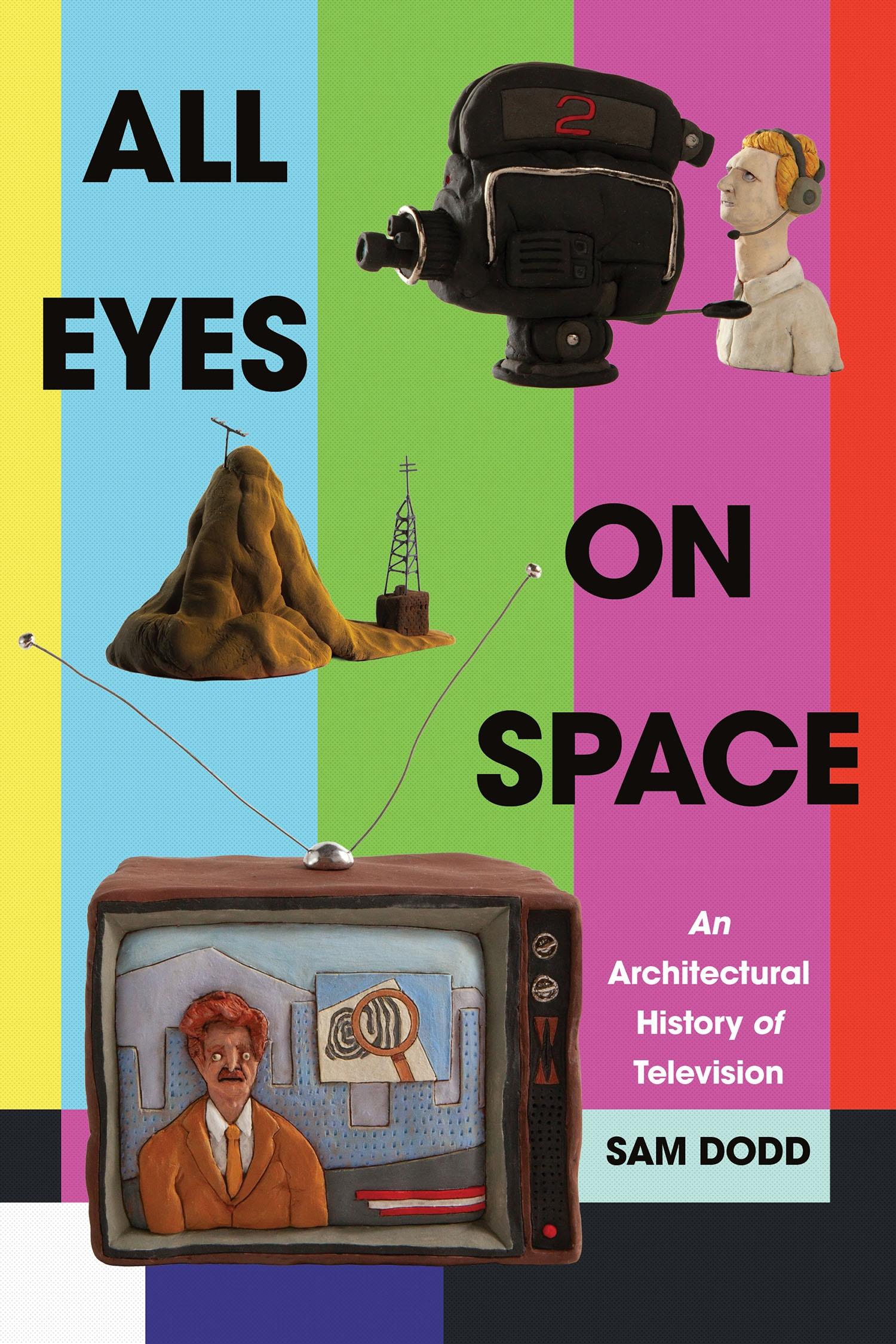
In All Eyes on Space, Sam Dodd looks at television and sees architecture: a dynamic system of spatial design, environmental planning, and bodily control operating behind and beyond the small screen. By transmitting images and sounds across vast distances, television brings faraway places into immediate view and, in the process, reshapes how space is imagined and inhabited. Yet, this seemingly effortless presentation of “distant sight” is only possible because of deliberate architectural investments made throughout the second half of the twentieth century. From the 1940s onward, American architects and planners designed stations, studios, towers, cables, and screens while also experimenting with television as a medium for public communication and engagement. Drawing on archival records, original broadcasts, and works of art and design, Dodd plots a history of television architecture in the United States to show how the medium produced a distinctly American spatial logic that tethered expansionist ambitions to the management of visibility and access. Ultimately, this book reveals how a ubiquitous medium commonly understood as immaterial—if not ephemeral—became one of the century’s most consequential built environments.
Kategori: Film- & Medievetenskap
e-ISBN: 9780822992134
Betal enkelt med kort, Klarna, Apple Pay eller Google Pay. Ikke fornøyd? Du har alltid 14 dagers angrerett. Les mer i våre vilkår. Har du spørsmål, send oss en e-post på hello@memmo.org.
Memmo gjør det enklere å studere – uansett hvor du er i verden. Hos oss samler du pensumbøker og smarte studieverktøy på ett og samme sted: sammendrag, quizer, podkaster og flashcards. Og så Ted, din studiekompis som svarer på alt du lurer på. Over 50 000 studenter studerer allerede her – bygget for at du skal lære raskere og stresse mindre.
Du vil kanskje også like
Kjøp boken0