
Winner, The Athenaeum of Philadelphia 2024 Literary Award for Nonfiction
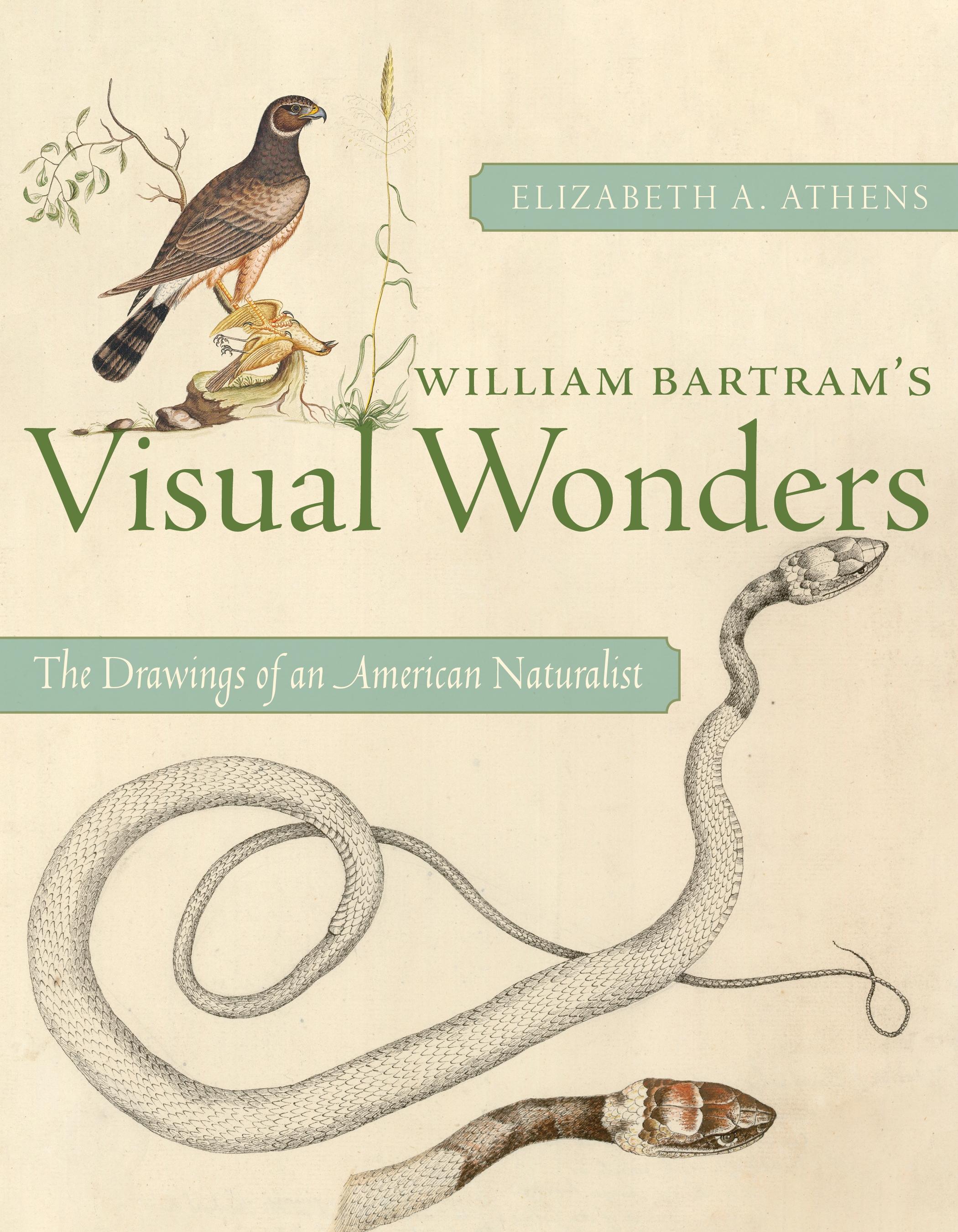
Pennsylvania naturalist William Bartram (1739–1823) is best known as the author of a travelogue describing his botanizing journey through the American South in the late eighteenth century. Writing was not, however, Bartram’s only or even preferred method of recording the natural world around him. His deeply unconventional drawings, depicting sentient plants and hybrid organic forms, lie at the heart of his understanding of nature. With this book, Elizabeth Athens considers the strangeness of Bartram’s graphic enterprise, exploring the essential role his renderings played in his natural history. For Bartram, the making and interpretation of figures on a surface was a dynamic and collaborative relationship between nature, the observing artist-naturalist, and the audience. This book offers the first in-depth investigation of Bartram’s drawing practice as central to his understanding of nature. Through an examination of Bartram’s approach to botanical and zoological representation, Athens highlights the struggle between different modes of seeing nature in eighteenth-century Enlightenment science.
Pennsylvania naturalist William Bartram (1739–1823) is best known as the author of a travelogue describing his botanizing journey through the American South in the late eighteenth century. Writing was not, however, Bartram’s only or even preferred method of recording the natural world around him. His deeply unconventional drawings, depicting sentient plants and hybrid organic forms, lie at the heart of his understanding of nature. With this book, Elizabeth Athens considers the strangeness of Bartram’s graphic enterprise, exploring the essential role his renderings played in his natural history. For Bartram, the making and interpretation of figures on a surface was a dynamic and collaborative relationship between nature, the observing artist-naturalist, and the audience. This book offers the first in-depth investigation of Bartram’s drawing practice as central to his understanding of nature. Through an examination of Bartram’s approach to botanical and zoological representation, Athens highlights the struggle between different modes of seeing nature in eighteenth-century Enlightenment science.
Kategori: Konst, Design & Fotografi
e-ISBN: 9780822991496
Betal enkelt med kort, Klarna, Apple Pay eller Google Pay. Ikke fornøyd? Du har alltid 14 dagers angrerett. Les mer i våre vilkår. Har du spørsmål, send oss en e-post på hello@memmo.org.
Memmo gjør det enklere å studere – uansett hvor du er i verden. Hos oss samler du pensumbøker og smarte studieverktøy på ett og samme sted: sammendrag, quizer, podkaster og flashcards. Og så Ted, din studiekompis som svarer på alt du lurer på. Over 50 000 studenter studerer allerede her – bygget for at du skal lære raskere og stresse mindre.
Du vil kanskje også like
Kjøp boken0