
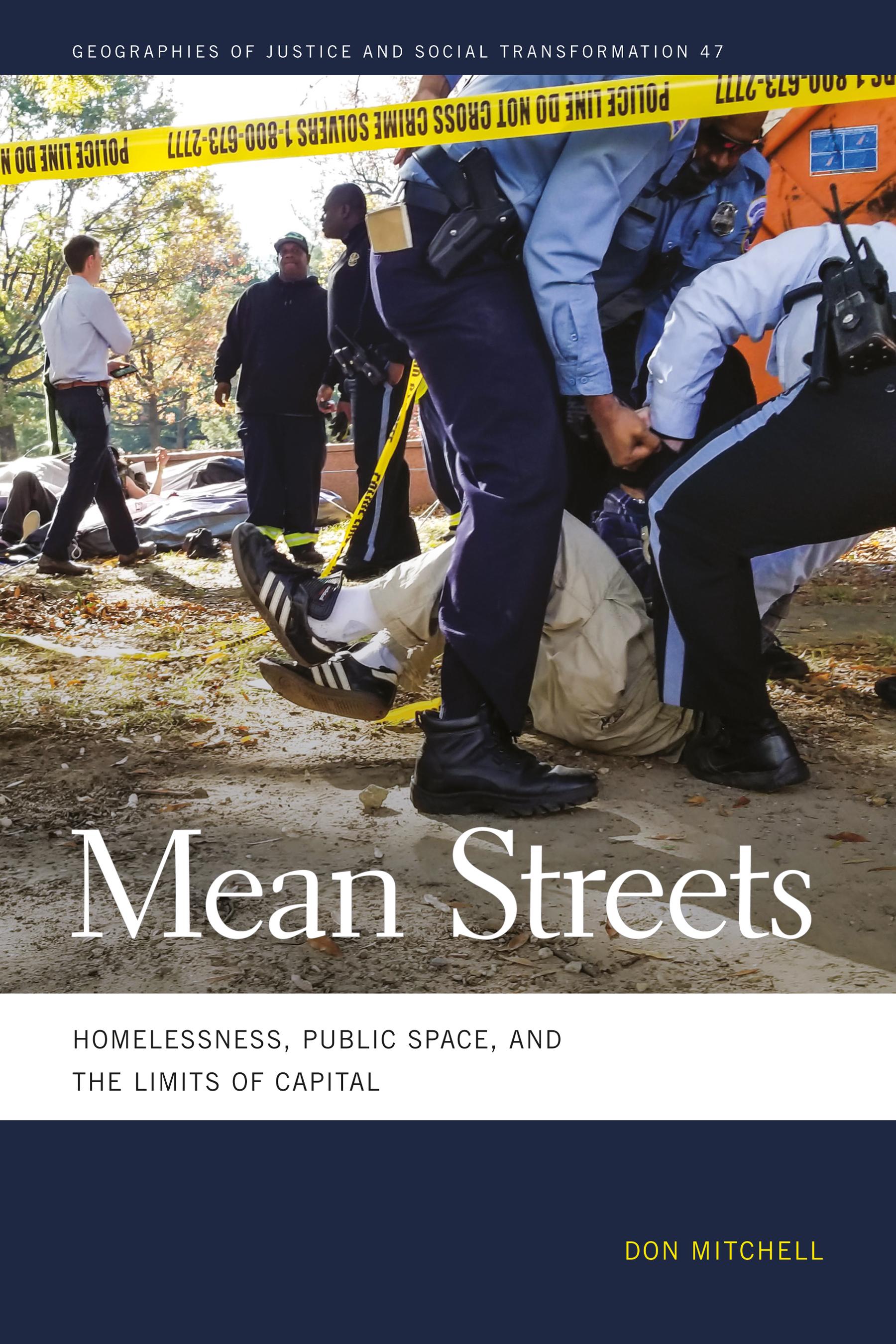
The problem of homelessness in America underpins the definition of an American city: what it is, who it is for, what it does, and why it matters. And the problem of the American city is epitomized in public space. Mean Streets offers, in a single, sustained argument, a theory of the social and economic logic behind the historical development, evolution, and especially the persistence of homelessness in the contemporary American city. By updating and revisiting thirty years of research and thinking on this subject, Don Mitchell explores the conditions that produce and sustain homelessness and how its persistence relates to the way capital works in the urban built environment. He also addresses the historical and social origins that created the boundary between public and private. Consequently, he unpacks the structure, meaning, and governance of urban public space and its uses.
Mitchell traces his argument through two sections: a broadly historical overview of how homelessness has been managed in public spaces, followed by an exploration of recent Supreme Court jurisprudence that expands our national discussion. Beyond the mere regulation of the homeless and the poor, homelessness has metastasized more recently, Mitchell argues, to become a general issue that affects all urbanites.
Betal enkelt med kort, Klarna, Apple Pay eller Google Pay. Ikke fornøyd? Du har alltid 14 dagers angrerett. Les mer i våre vilkår. Har du spørsmål, send oss en e-post på hello@memmo.org.
Memmo gjør det enklere å studere – uansett hvor du er i verden. Hos oss samler du pensumbøker og smarte studieverktøy på ett og samme sted: sammendrag, quizer, podkaster og flashcards. Og så Ted, din studiekompis som svarer på alt du lurer på. Over 50 000 studenter studerer allerede her – bygget for at du skal lære raskere og stresse mindre.