
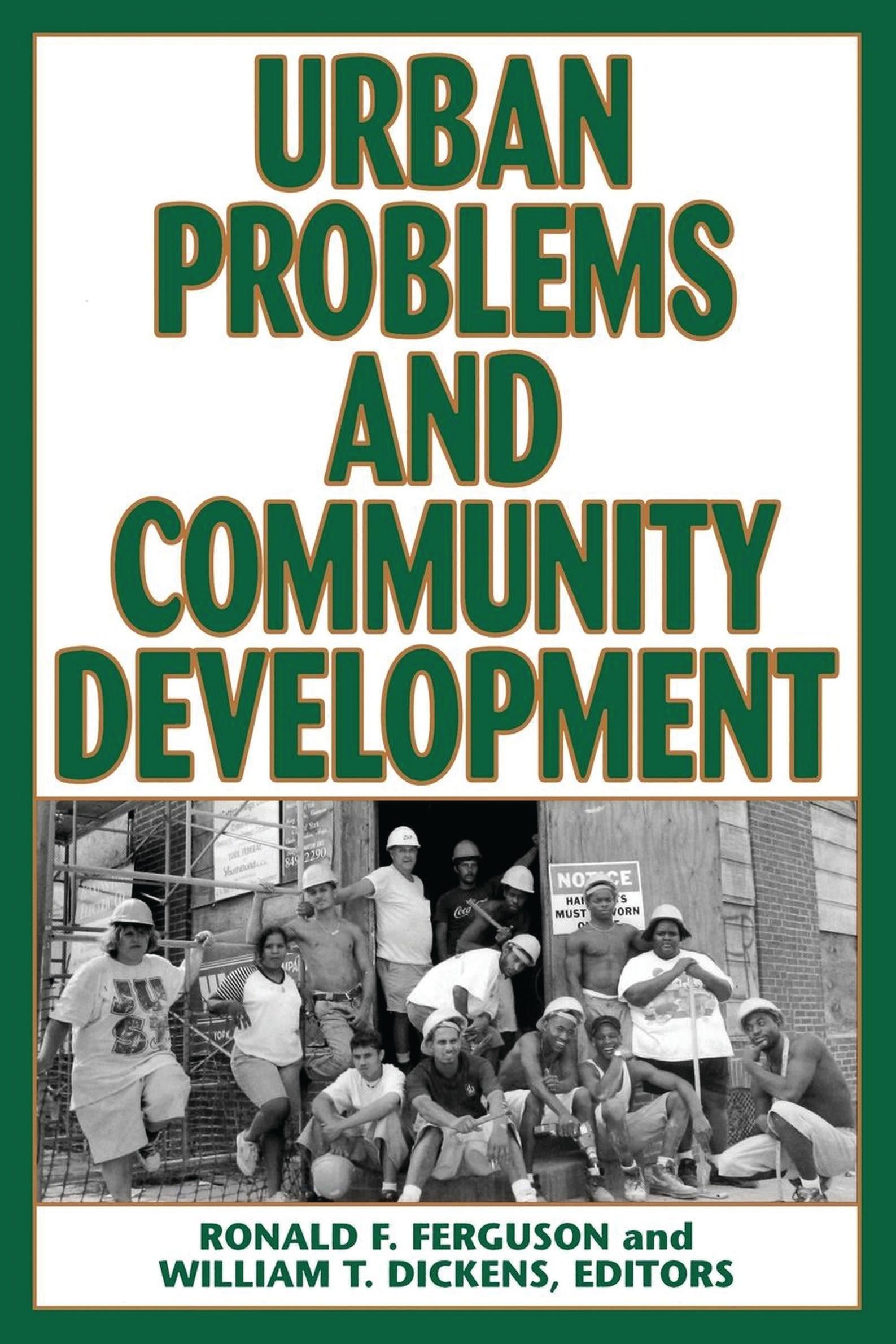
In recent years, concerned governments, businesses, and civic groups have launched ambitious programs of community development designed to halt, and even reverse, decades of urban decline. But while massive amounts of effort and money are being dedicated to improving the inner-cities, two important questions have gone unanswered: Can community development actually help solve long-standing urban problems? And, based on social science analyses, what kinds of initiatives can make a difference? This book surveys what we currently know and what we need to know about community development's past, current, and potential contributions. The authors--economists, sociologists, political scientists, and a historian--define community development broadly to include all capacity building (including social, intellectual, physical, financial, and political assets) aimed at improving the quality of life in low- to moderate-income neighborhoods. The book addresses the history of urban development strategies, the politics of resource allocation, business and workforce development, housing, community development corporations, informal social organizations, schooling, and public security.
Betal enkelt med kort, Klarna, Apple Pay eller Google Pay. Ikke fornøyd? Du har alltid 14 dagers angrerett. Les mer i våre vilkår. Har du spørsmål, send oss en e-post på hello@memmo.org.
Memmo gjør det enklere å studere – uansett hvor du er i verden. Hos oss samler du pensumbøker og smarte studieverktøy på ett og samme sted: sammendrag, quizer, podkaster og flashcards. Og så Ted, din studiekompis som svarer på alt du lurer på. Over 50 000 studenter studerer allerede her – bygget for at du skal lære raskere og stresse mindre.