
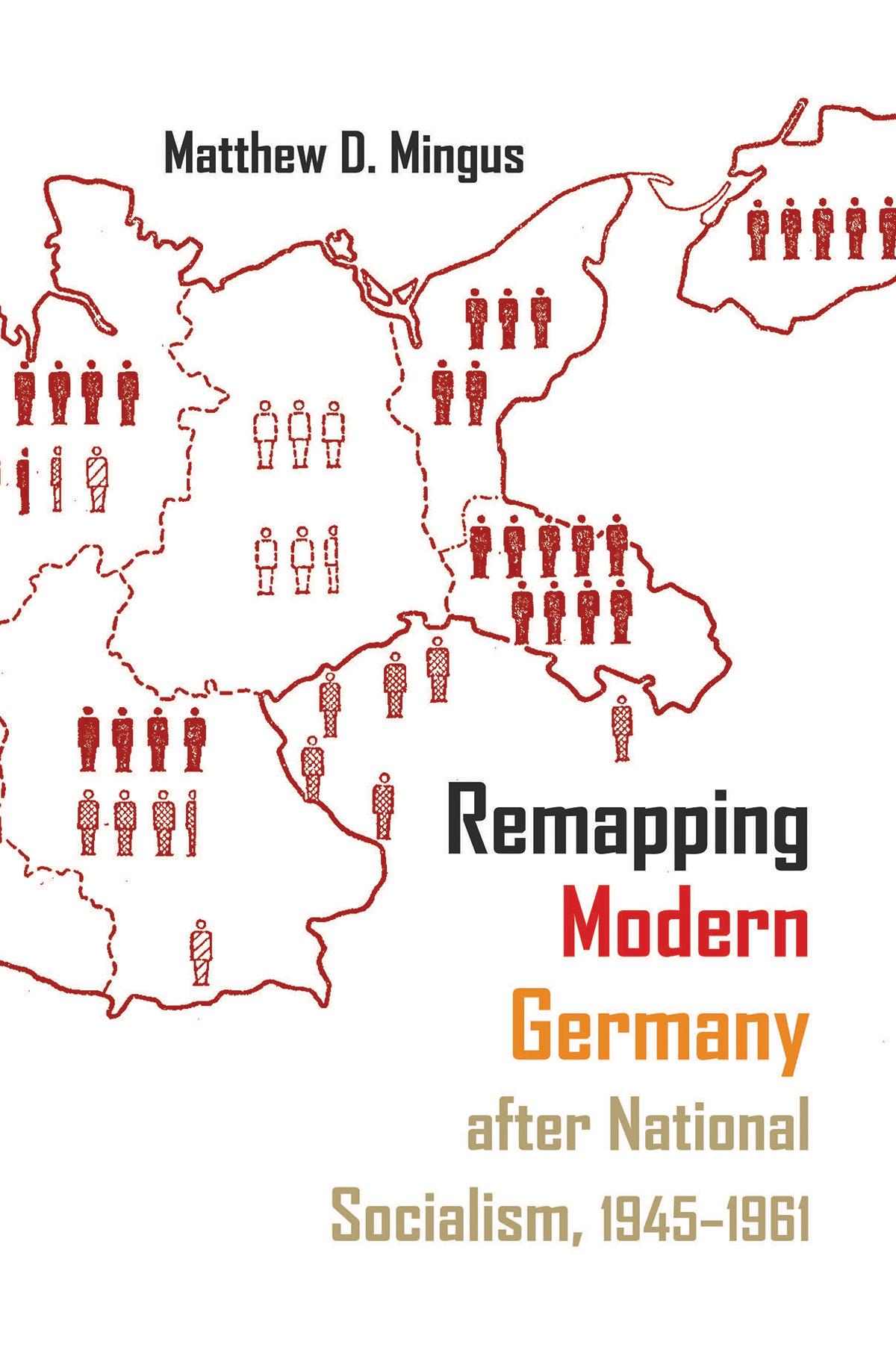
Located in the often-contentious center of the European continent, German territory has regularly served as a primary tool through which to understand and study Germany’s economic, cultural, and political development. Many German geographers throughout the nineteenth and early twentieth centuries became deeply invested in geopolitical determinism—the idea that a nation’s territorial holdings (or losses) dictate every other aspect of its existence. Taking this as his premise, Mingus focuses on the use of maps as mediums through which the United States, Great Britain, and the Soviet Union sought to reshape German national identity after the Second World War. As important as maps and the study of geography have been to the field of European history, few scholars have looked at the postwar development of occupied Germany through the lens of the map—the most effective means to orient German citizens ontologically within a clearly and purposefully delineated spatial framework. Mingus traces the institutions and individuals involved in the massive cartographic overhaul of postwar Germany. In doing so, he explores not only the causes and methods behind the production and reproduction of Germany’s mapped space but also the very real consequences of this practice.
Kategori: Geografi
e-ISBN: 9780815654162
Betal enkelt med kort, Klarna, Apple Pay eller Google Pay. Ikke fornøyd? Du har alltid 14 dagers angrerett. Les mer i våre vilkår. Har du spørsmål, send oss en e-post på hello@memmo.org.
Memmo gjør det enklere å studere – uansett hvor du er i verden. Hos oss samler du pensumbøker og smarte studieverktøy på ett og samme sted: sammendrag, quizer, podkaster og flashcards. Og så Ted, din studiekompis som svarer på alt du lurer på. Over 50 000 studenter studerer allerede her – bygget for at du skal lære raskere og stresse mindre.
Du vil kanskje også like
Kjøp boken0