
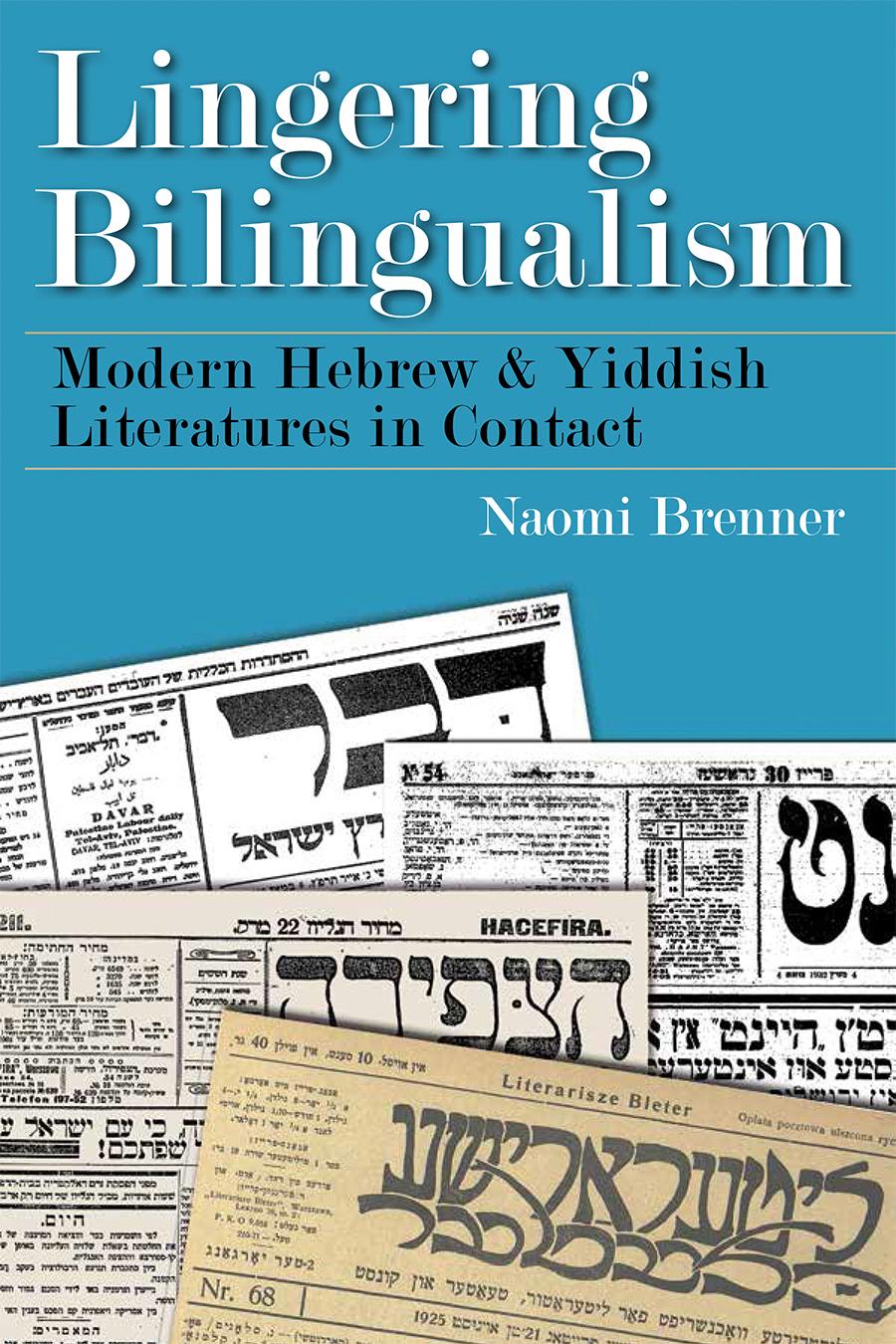
In a famous comment made by the poet Chayim Nachman Bialik, Hebrew—the language of the Jewish religious and intellectual tradition—and Yiddish—the East European Jewish vernacular—were "a match made in heaven that cannot be separated." That marriage, so the story goes, collapsed in the years immediately preceding and following World War I. But did the "exes" really go their separate ways?
Lingering Bilingualism argues that the interwar period represents not an endpoint but rather a new phase in Hebrew-Yiddish linguistic and literary contact. Though the literatures followed different geographic and ideological paths, their writers and readers continued to interact in places like Berlin, Tel Aviv, and New York—and imagined new paradigms for cultural production in Jewish languages. Brenner traces a shift from traditional bilingualism to a new translingualism in response to profound changes in Jewish life and culture. By foregrounding questions of language, she examines both the unique literary-linguistic circumstances of Ashkenazi Jewish writing and the multilingualism that can lurk within national literary canons.
Betal enkelt med kort, Klarna, Apple Pay eller Google Pay. Ikke fornøyd? Du har alltid 14 dagers angrerett. Les mer i våre vilkår. Har du spørsmål, send oss en e-post på hello@memmo.org.
Memmo gjør det enklere å studere – uansett hvor du er i verden. Hos oss samler du pensumbøker og smarte studieverktøy på ett og samme sted: sammendrag, quizer, podkaster og flashcards. Og så Ted, din studiekompis som svarer på alt du lurer på. Over 50 000 studenter studerer allerede her – bygget for at du skal lære raskere og stresse mindre.