
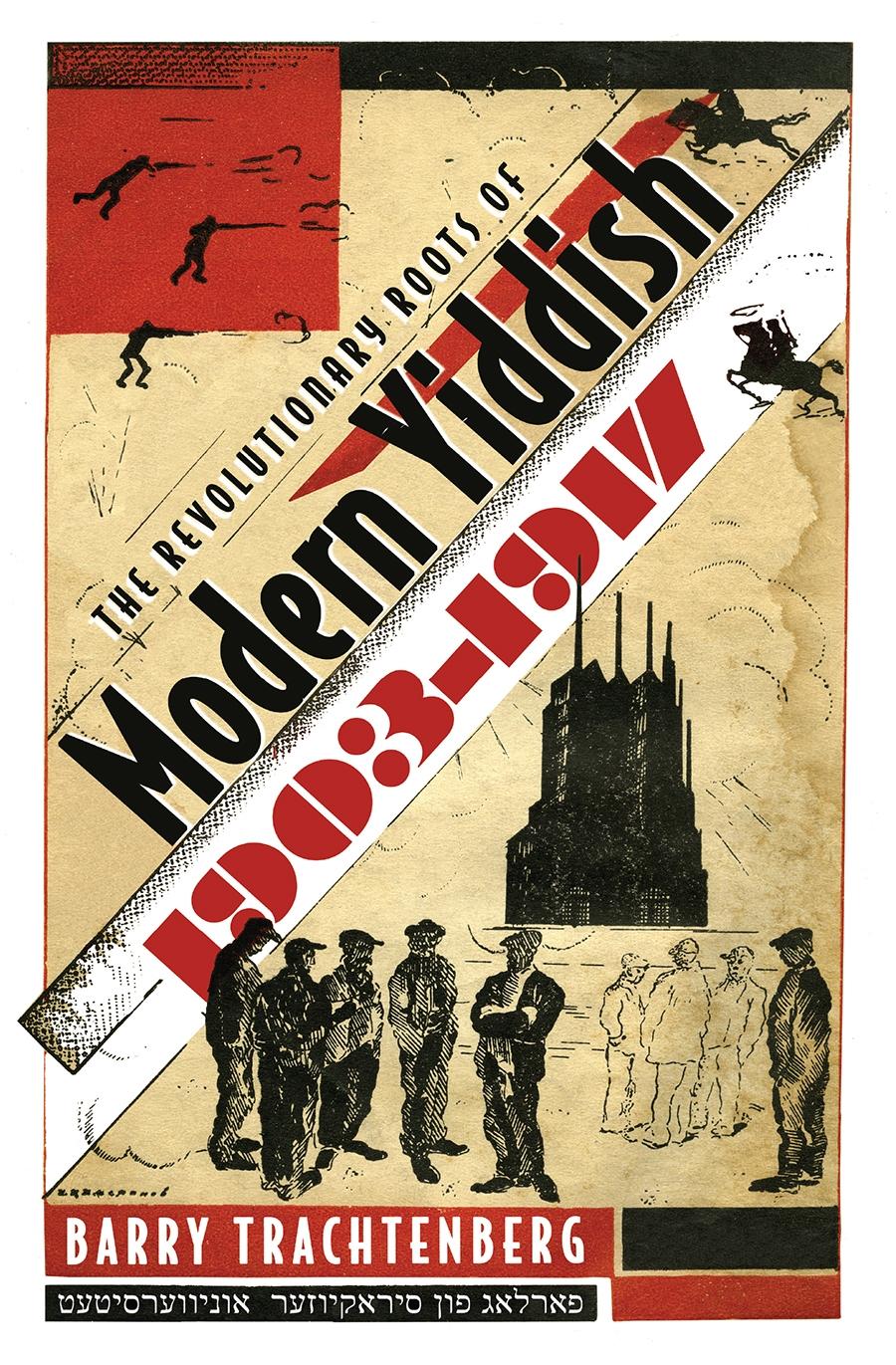
At the beginning of the twentieth century, Yiddish was widely viewed, even by many of its speakers, as a corrupt form of German that Jews had to abandon if they hoped to engage in serious intellectual, cultural, or political work. Yet, by 1917, it was the dominant language of the Russian Jewish press, a medium for modern literary criticism, a vehicle for science and learning, and the foundation of an ideology of Jewish liberation. Challenging many longstanding historical conceptions about the founding of modern Yiddish, The Revolutionary Roots of Yiddish Scholarship, 1903-1917 investigates the origins of contemporary Yiddish scholarship.
Trachtenberg reveals how, following the model set by other nationalist movements that were developing in the Russian empire, one-time revolutionaries such as the literary critic Shmuel Niger, the Marxist Zionist leader Ber Borochov, and the linguist Nokhem Shtif, dedicated themselves to the creation of a new branch of Jewish scholarship dedicated to their native language. The new "Yiddish science" was concerned with the tasks of standardizing Yiddish grammar, orthography, and word corpus, establishing a Yiddish literary tradition, exploring Jewish folk traditions, and creating an institutional structure to support their language's development. In doing so, the author argues, they hoped to reimagine Russian Jewry as a modern nation with a mature language and culture, and which deserved the same collective rights and autonomy that were being demanded by other nations in the empire.
Betal enkelt med kort, Klarna, Apple Pay eller Google Pay. Ikke fornøyd? Du har alltid 14 dagers angrerett. Les mer i våre vilkår. Har du spørsmål, send oss en e-post på hello@memmo.org.
Memmo gjør det enklere å studere – uansett hvor du er i verden. Hos oss samler du pensumbøker og smarte studieverktøy på ett og samme sted: sammendrag, quizer, podkaster og flashcards. Og så Ted, din studiekompis som svarer på alt du lurer på. Over 50 000 studenter studerer allerede her – bygget for at du skal lære raskere og stresse mindre.