
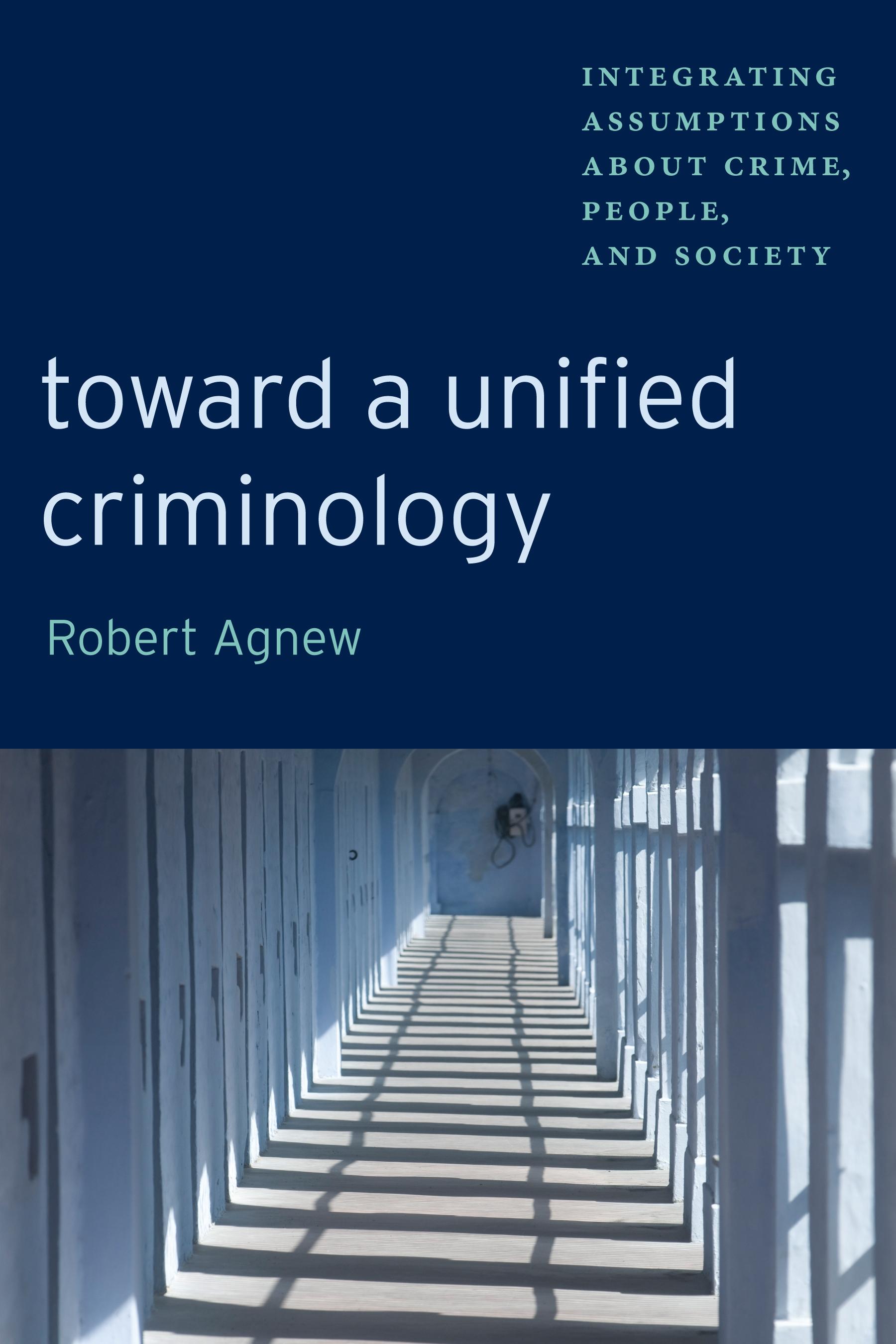
Why do people commit crimes? How do we control crime? The theories that criminologists use to answer these questions are built on a number of underlying assumptions, including those about the nature of crime, free will, human nature, and society. These assumptions have a fundamental impact on criminology: they largely determine what criminologists study, the causes they examine, the control strategies they recommend, and how they test their theories and evaluate crime-control strategies.
In Toward a Unified Criminology, noted criminologist Robert Agnew provides a critical examination of these assumptions, drawing on a range of research and perspectives to argue that these assumptions are too restrictive, unduly limiting the types of "crime" that are explored, the causes that are considered, and the methods of data collection and analysis that are employed. As such, they undermine our ability to explain and control crime. Agnew then proposes an alternative set of assumptions, drawing heavily on both mainstream and critical theories of criminology, with the goal of laying the foundation for a unified criminology that is better able to explain a broader range of crimes.
Betal enkelt med kort, Klarna, Apple Pay eller Google Pay. Ikke fornøyd? Du har alltid 14 dagers angrerett. Les mer i våre vilkår. Har du spørsmål, send oss en e-post på hello@memmo.org.
Memmo gjør det enklere å studere – uansett hvor du er i verden. Hos oss samler du pensumbøker og smarte studieverktøy på ett og samme sted: sammendrag, quizer, podkaster og flashcards. Og så Ted, din studiekompis som svarer på alt du lurer på. Over 50 000 studenter studerer allerede her – bygget for at du skal lære raskere og stresse mindre.