
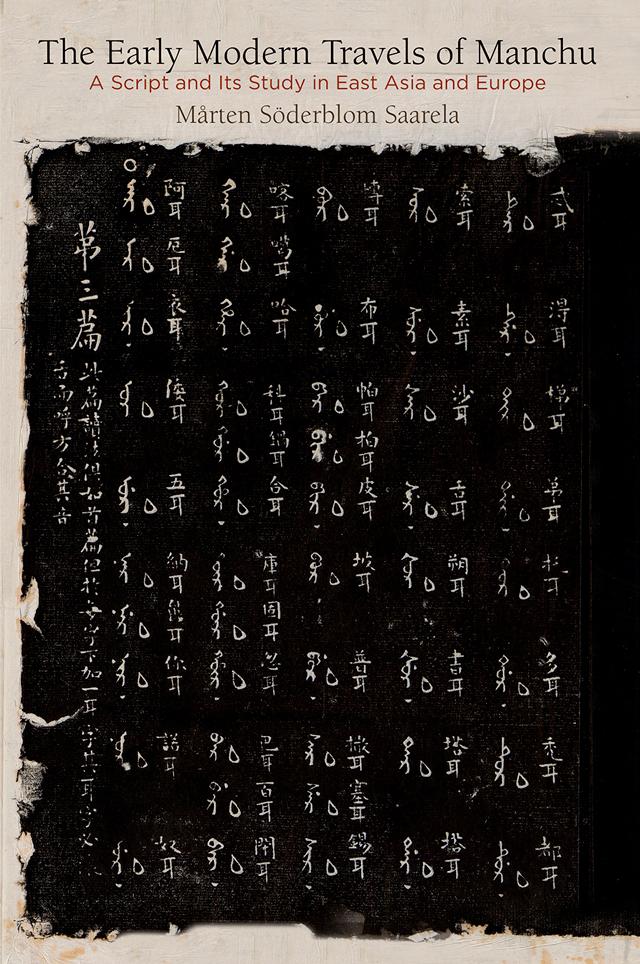
A linguistic and historical study of the Manchu script in the early modern world
Manchu was a language first written down as part of the Qing state-building project in Northeast Asia in the early seventeenth century. After the Qing invasion of China in 1644, and for the next two and a half centuries, Manchu was the language of state in one of the early modern world's great powers. Its prominence and novelty attracted the interest of not only Chinese literati but also foreign scholars. Yet scholars in Europe and Japan, and occasionally even within China itself, were compelled to study the language without access to a native speaker. Jesuit missionaries in Beijing sent Chinese books on Manchu to Europe, where scholars struggled to represent it in an alphabet compatible with Western pedagogy and printing technology. In southern China, meanwhile, an isolated phonologist with access to Jesuit books relied on expositions of the Roman alphabet to make sense of the Manchu script. When Chinese textbooks and dictionaries of Manchu eventually reached Japan, scholars there used their knowledge of Dutch to understand Manchu.
In The Early Modern Travels of Manchu, Mårten Söderblom Saarela focuses on outsiders both within and beyond the Qing empire who had little interaction with Manchu speakers but took an interest in the strange, new language of a rising world power. He shows how—through observation, inference, and reference to received ideas on language and writing—intellectuals in southern China, Russia, France, Chosŏn Korea, and Tokugawa Japan deciphered the Manchu script and explores the uses to which it was put for recording sounds and arranging words.
Betal enkelt med kort, Klarna, Apple Pay eller Google Pay. Ikke fornøyd? Du har alltid 14 dagers angrerett. Les mer i våre vilkår. Har du spørsmål, send oss en e-post på hello@memmo.org.
Memmo gjør det enklere å studere – uansett hvor du er i verden. Hos oss samler du pensumbøker og smarte studieverktøy på ett og samme sted: sammendrag, quizer, podkaster og flashcards. Og så Ted, din studiekompis som svarer på alt du lurer på. Over 50 000 studenter studerer allerede her – bygget for at du skal lære raskere og stresse mindre.