
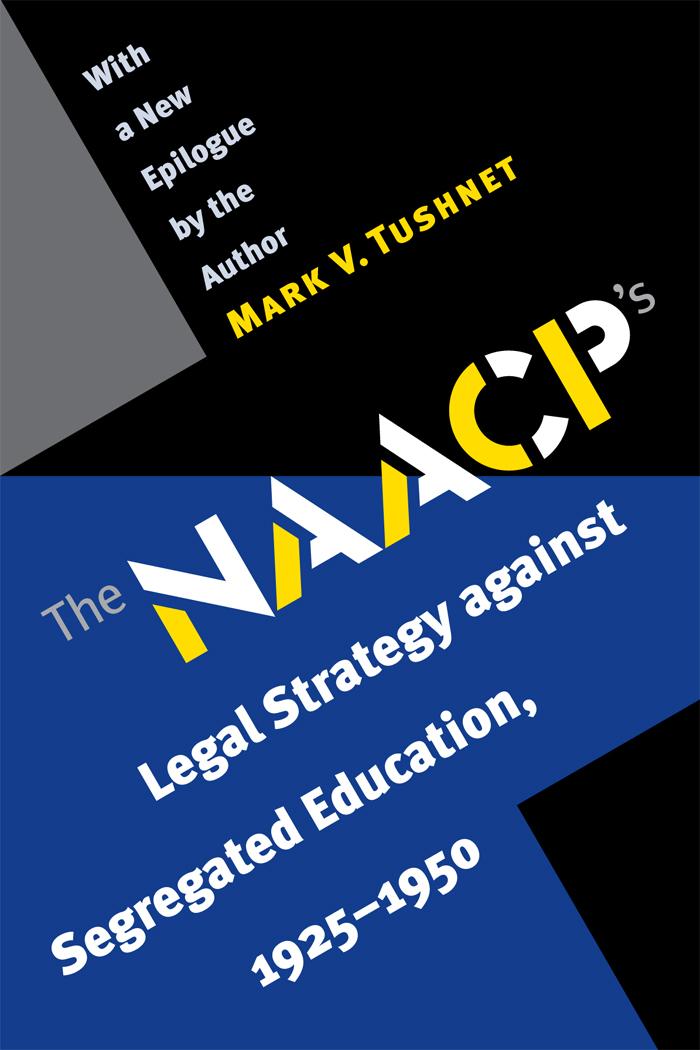
The NAACP’s fight against segregated education — the first public interest litigation campaign — culminated in the 1954 Brown decision. While touching on the general social, political, and economic climate in which the NAACP acted, Mark V. Tushnet emphasizes the internal workings of the organization as revealed in its own documents. He argues that the dedication and the political and legal skills of staff members such as Walter White, Charles Hamilton Houston, and Thurgood Marshall were responsible for the ultimate success of public interest law. This edition contains a new epilogue by the author that addresses general questions of litigation strategy, the persistent question of whether the Brown decision mattered, and the legacy of Brown through the Burger and Rehnquist courts.
Betal enkelt med kort, Klarna, Apple Pay eller Google Pay. Ikke fornøyd? Du har alltid 14 dagers angrerett. Les mer i våre vilkår. Har du spørsmål, send oss en e-post på hello@memmo.org.
Memmo gjør det enklere å studere – uansett hvor du er i verden. Hos oss samler du pensumbøker og smarte studieverktøy på ett og samme sted: sammendrag, quizer, podkaster og flashcards. Og så Ted, din studiekompis som svarer på alt du lurer på. Over 50 000 studenter studerer allerede her – bygget for at du skal lære raskere og stresse mindre.