
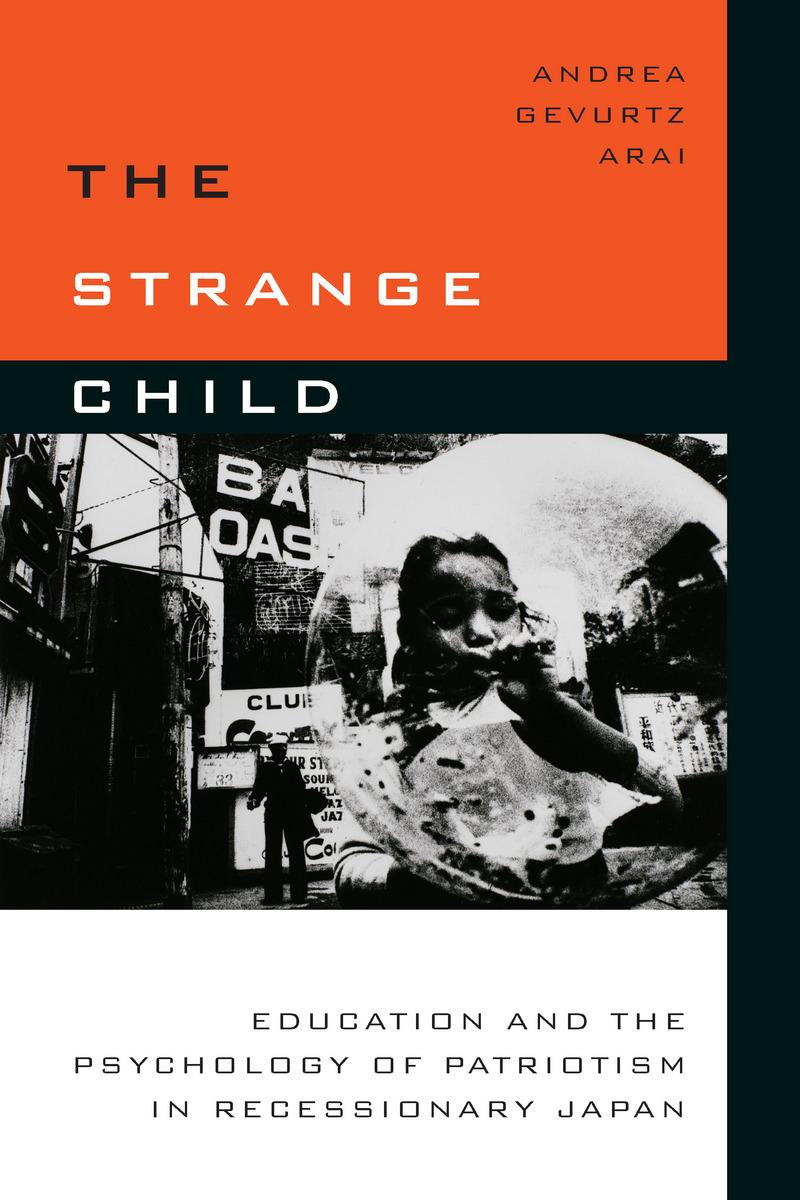
The Strange Child examines how the Japanese financial crisis of the 1990s gave rise to "the child problem," a powerful discourse of social anxiety that refocused concerns about precarious economic futures and shifting ideologies of national identity onto the young.
Andrea Gevurtz Arai's ethnography details the different forms of social and cultural dislocation that erupted in Japan starting in the late 1990s. Arai reveals the effects of shifting educational practices; increased privatization of social services; recessionary vocabulary of self-development and independence; and the neoliberalization of patriotism. Arai argues that the child problem and the social unease out of which it emerged provided a rationale for reimagining governance in education, liberalizing the job market, and a new role for psychology in the overturning of national-cultural ideologies. The Strange Child uncovers the state of nationalism in contemporary Japan, the politics of distraction around the child, and the altered life conditions of—and alternatives created by—the recessionary generation.
Betal enkelt med kort, Klarna, Apple Pay eller Google Pay. Ikke fornøyd? Du har alltid 14 dagers angrerett. Les mer i våre vilkår. Har du spørsmål, send oss en e-post på hello@memmo.org.
Memmo gjør det enklere å studere – uansett hvor du er i verden. Hos oss samler du pensumbøker og smarte studieverktøy på ett og samme sted: sammendrag, quizer, podkaster og flashcards. Og så Ted, din studiekompis som svarer på alt du lurer på. Over 50 000 studenter studerer allerede her – bygget for at du skal lære raskere og stresse mindre.