
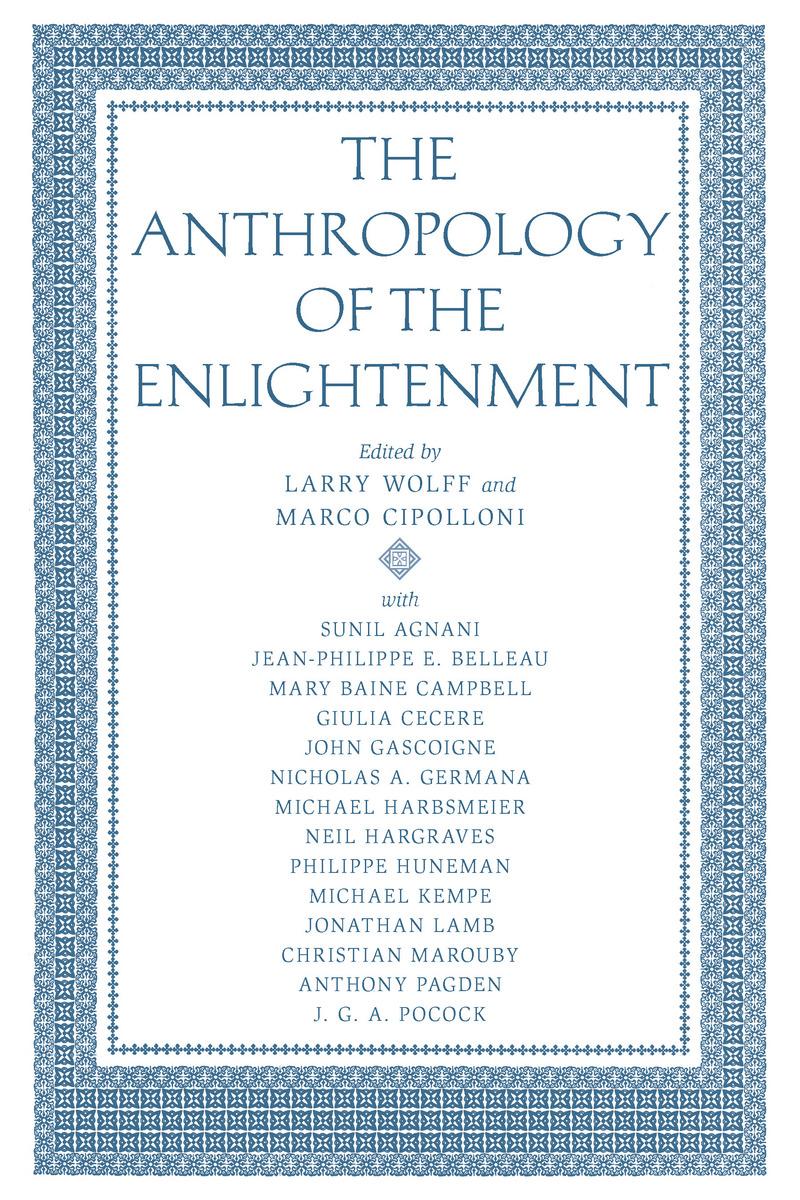
The modern enterprise of anthropology, with all of its important implications for cross-cultural perceptions, perspectives, and self-consciousness emerged from the eighteenth-century intellectual context of the Enlightenment. If the Renaissance discovered perspective in art, it was the Enlightenment that articulated and explored the problem of perspective in viewing history, culture, and society. If the Renaissance was the age of oceanic discovery—most dramatically the discovery of the New World of America—the critical reflections of the Enlightenment brought about an intellectual rediscovery of the New World and thus laid the foundations for modern anthropology. The contributions that constitute this book present the multiple anthropological facets of the Enlightenment, and suggest that the character of its intellectual engagements—acknowledging global diversity, interpreting human societies, and bridging cultural difference—must be understood as a whole to be fundamentally anthropological.
Betal enkelt med kort, Klarna, Apple Pay eller Google Pay. Ikke fornøyd? Du har alltid 14 dagers angrerett. Les mer i våre vilkår. Har du spørsmål, send oss en e-post på hello@memmo.org.
Memmo gjør det enklere å studere – uansett hvor du er i verden. Hos oss samler du pensumbøker og smarte studieverktøy på ett og samme sted: sammendrag, quizer, podkaster og flashcards. Og så Ted, din studiekompis som svarer på alt du lurer på. Over 50 000 studenter studerer allerede her – bygget for at du skal lære raskere og stresse mindre.