
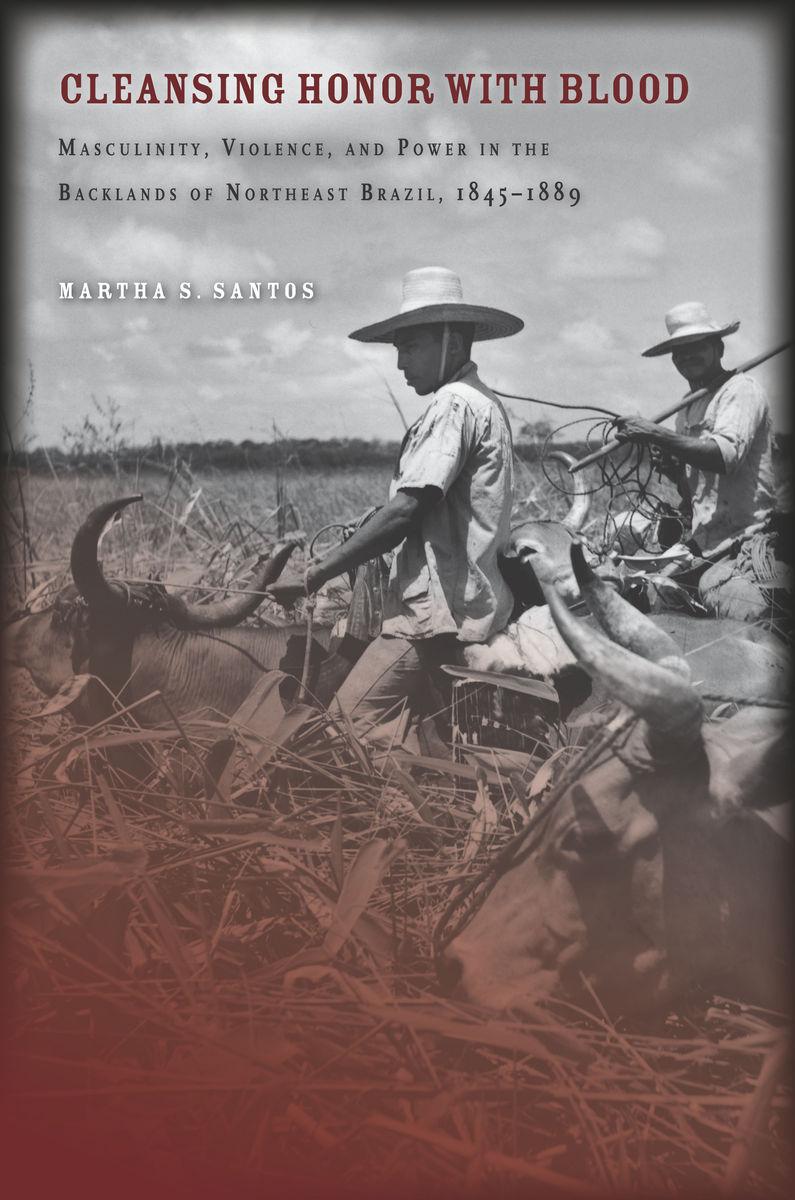
This book offers a critical reinterpretation of male violence, patriarchy, and machismo in rural Latin America. It focuses on the lives of lower-class men and women, known as sertanejo/as, in the hinterlands of the northeastern Brazilian province of Ceará between 1845 and 1889. Challenging the widely accepted depiction of sertanejos as conditioned to violence by nature, culture, and climate, Santos argues that their concern with maintaining an honorable manly reputation and the use of violence were historically contingent strategies employed to resolve conflicts over scant resources and to establish power over women and other men. She also traces a shift in the functioning of patriarchy that coincided with changes in the material fortunes of sertanejo families. As economic dislocation, environmental calamity, and family separation led to greater female autonomy and an erosion of patriarchal authority in the home, public—and often violent—enforcement of male power maintained patriarchal order in these communities.
Betal enkelt med kort, Klarna, Apple Pay eller Google Pay. Ikke fornøyd? Du har alltid 14 dagers angrerett. Les mer i våre vilkår. Har du spørsmål, send oss en e-post på hello@memmo.org.
Memmo gjør det enklere å studere – uansett hvor du er i verden. Hos oss samler du pensumbøker og smarte studieverktøy på ett og samme sted: sammendrag, quizer, podkaster og flashcards. Og så Ted, din studiekompis som svarer på alt du lurer på. Over 50 000 studenter studerer allerede her – bygget for at du skal lære raskere og stresse mindre.