
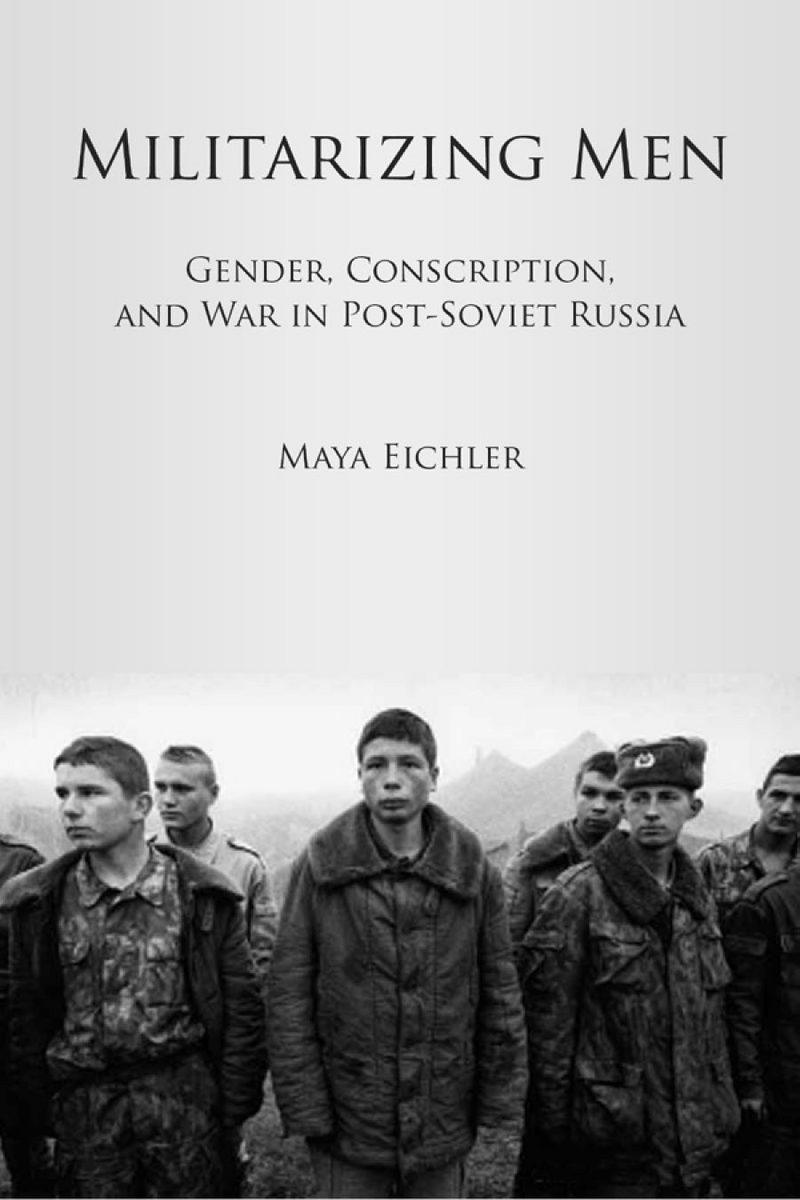
A state's ability to maintain mandatory conscription and wage war rests on the idea that a "real man" is one who has served in the military. Yet masculinity has no inherent ties to militarism. The link between men and the military, argues Maya Eichler, must be produced and reproduced in order to fill the ranks, engage in combat, and mobilize the population behind war.
In the context of Russia's post-communist transition and the Chechen wars, men's militarization has been challenged and reinforced. Eichler uncovers the challenges by exploring widespread draft evasion and desertion, anti-draft and anti-war activism led by soldiers' mothers, and the general lack of popular support for the Chechen wars. However, the book also identifies channels through which militarized gender identities have been reproduced. Eichler's empirical and theoretical study of masculinities in international relations applies for the first time the concept of "militarized masculinity," developed by feminist IR scholars, to the case of Russia.
Betal enkelt med kort, Klarna, Apple Pay eller Google Pay. Ikke fornøyd? Du har alltid 14 dagers angrerett. Les mer i våre vilkår. Har du spørsmål, send oss en e-post på hello@memmo.org.
Memmo gjør det enklere å studere – uansett hvor du er i verden. Hos oss samler du pensumbøker og smarte studieverktøy på ett og samme sted: sammendrag, quizer, podkaster og flashcards. Og så Ted, din studiekompis som svarer på alt du lurer på. Over 50 000 studenter studerer allerede her – bygget for at du skal lære raskere og stresse mindre.