
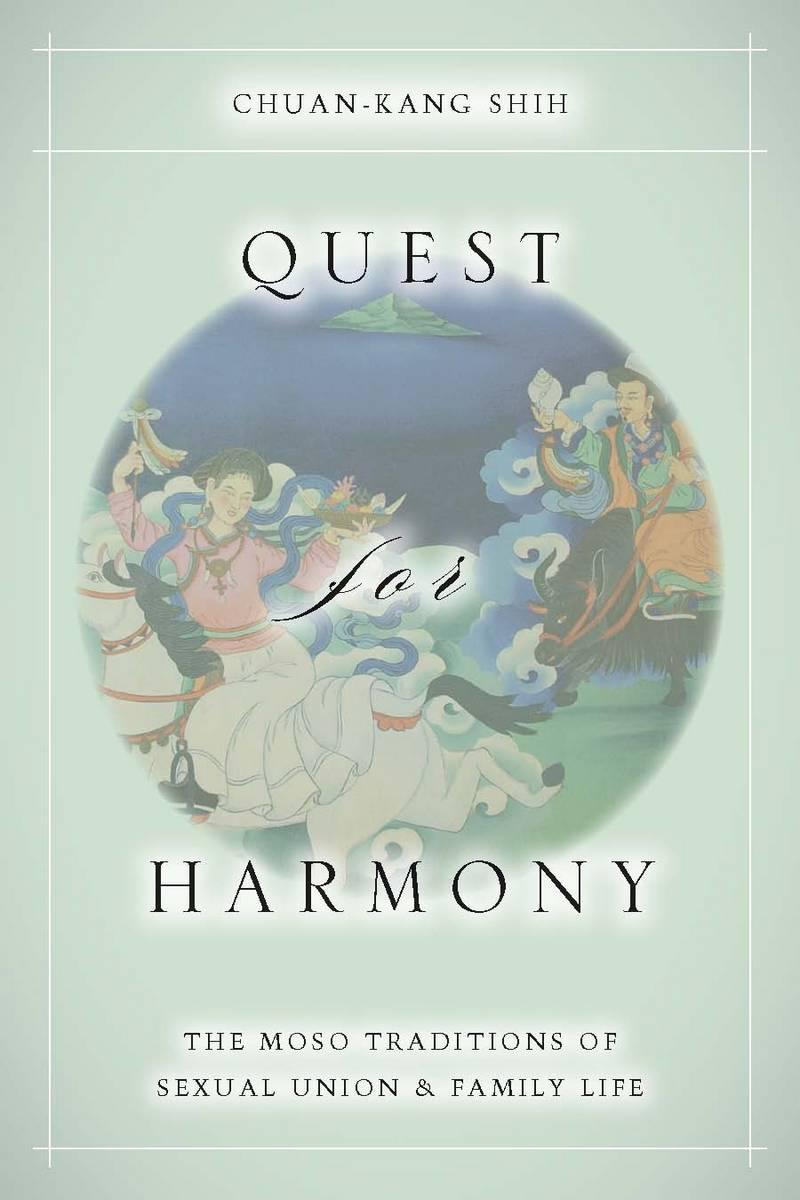
In this long-awaited ethnography, Chuan-kang Shih details the traditional social and cultural conditions of the Moso, a matrilineal group living on the border of Yunnan and Sichuan Provinces in southwest China. Among the Moso, a majority of the adult population practice a visiting system called tisese instead of marriage as the normal sexual and reproductive institution. Until recently, tisese was noncontractual, nonobligatory, and nonexclusive. Partners lived and worked in separate households. The only prerequisite for a tisese relationship was a mutual agreement between the man and the woman to allow sexual access to each other. In a comprehensive account, Quest for Harmony explores this unique practice specifically, and offers thorough documentation, fine-grained analysis, and an engaging discussion of the people, history, and structure of Moso society. Drawing on the author's extensive fieldwork, conducted from 1987 to 2006, this is the first ethnography of the Moso written in English.
Betal enkelt med kort, Klarna, Apple Pay eller Google Pay. Ikke fornøyd? Du har alltid 14 dagers angrerett. Les mer i våre vilkår. Har du spørsmål, send oss en e-post på hello@memmo.org.
Memmo gjør det enklere å studere – uansett hvor du er i verden. Hos oss samler du pensumbøker og smarte studieverktøy på ett og samme sted: sammendrag, quizer, podkaster og flashcards. Og så Ted, din studiekompis som svarer på alt du lurer på. Over 50 000 studenter studerer allerede her – bygget for at du skal lære raskere og stresse mindre.