
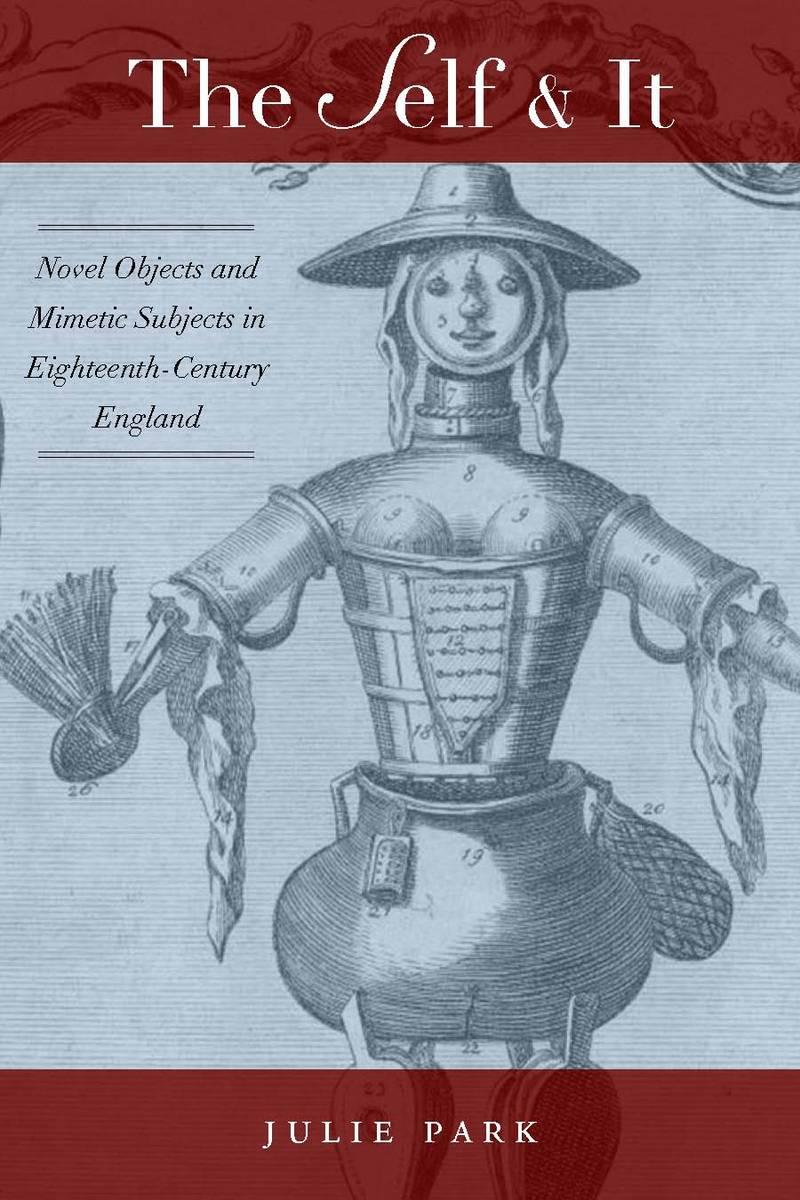
Objects we traditionally regard as "mere" imitations of the human—dolls, automata, puppets—proliferated in eighteenth-century England's rapidly expanding market culture. During the same period, there arose a literary genre called "the novel" that turned the experience of life into a narrated object of psychological plausibility. Park makes a bold intervention in histories of the rise of the novel by arguing that the material objects abounding in eighteenth-century England's consumer markets worked in conjunction with the novel, itself a commodity fetish, as vital tools for fashioning the modern self. As it constructs a history for the psychology of objects, The Self and It revises a story that others have viewed as originating later: in an age of Enlightenment, things have the power to move, affect people's lives, and most of all, enable a fictional genre of selfhood. The book demonstrates just how much the modern psyche—and its thrilling projections of "artificial life"—derive from the formation of the early novel, and the reciprocal activity between made things and invented identities that underlie it.
Betal enkelt med kort, Klarna, Apple Pay eller Google Pay. Ikke fornøyd? Du har alltid 14 dagers angrerett. Les mer i våre vilkår. Har du spørsmål, send oss en e-post på hello@memmo.org.
Memmo gjør det enklere å studere – uansett hvor du er i verden. Hos oss samler du pensumbøker og smarte studieverktøy på ett og samme sted: sammendrag, quizer, podkaster og flashcards. Og så Ted, din studiekompis som svarer på alt du lurer på. Over 50 000 studenter studerer allerede her – bygget for at du skal lære raskere og stresse mindre.