
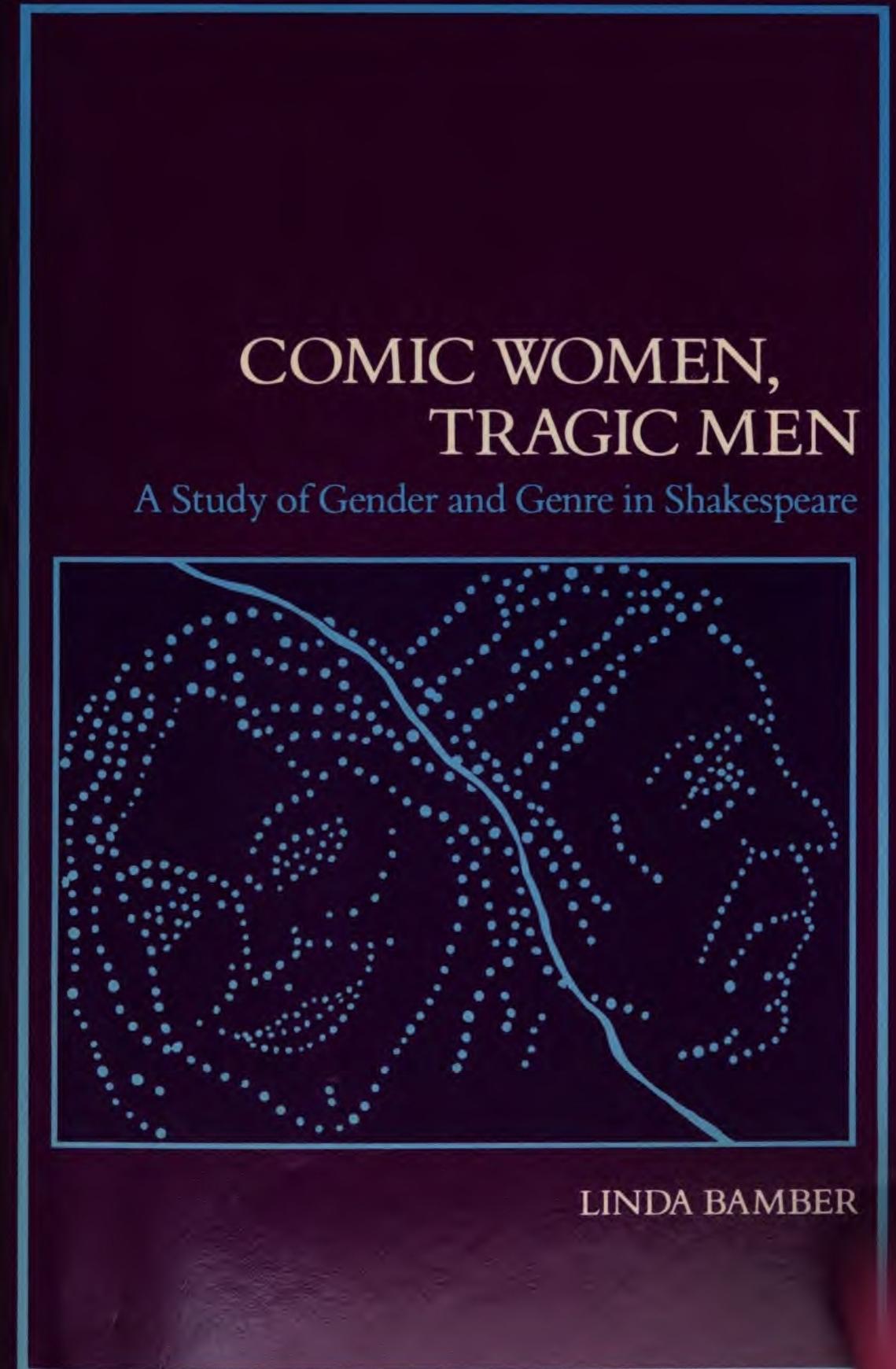
This book proceeds from the assumption that Shakespeare, so often perceived as the one writer who appears to have transcended the limits of gender, inevitably writes from the perspective of his own gender. From this perspective, whatever represents the Self is necessarily male; and the Other, which challenges the Self, is female. The author's approach gives us a fresh understanding of both Shakespeare's characters and the structure of the plays. The author defines genre in terms of the nature of the challenge offered by the Other to the Self. Using specific plays and characters of Shakespeare, the author shows how in tragedy the Other betrays or appears to betray the Self; in comedy the Other evades the social hierarchies dominated by versions of the male Self; in romance the Other comes and goes, leaving the Self bereft when she is gone and astounding him with happiness when she reappears. History is defined as a genre in which the masculine heroes confront no challenge from the Other but only from each other, from other versions of the Self. The book consists of a long theoretical introduction followed by chapters on comedy, history, and some individual plays: Hamlet, Antony and Cleopatra, Macbeth, Coriolanus, and The Tempest.
Betal enkelt med kort, Klarna, Apple Pay eller Google Pay. Ikke fornøyd? Du har alltid 14 dagers angrerett. Les mer i våre vilkår. Har du spørsmål, send oss en e-post på hello@memmo.org.
Memmo gjør det enklere å studere – uansett hvor du er i verden. Hos oss samler du pensumbøker og smarte studieverktøy på ett og samme sted: sammendrag, quizer, podkaster og flashcards. Og så Ted, din studiekompis som svarer på alt du lurer på. Over 50 000 studenter studerer allerede her – bygget for at du skal lære raskere og stresse mindre.
Du vil kanskje også like
Kjøp boken0