
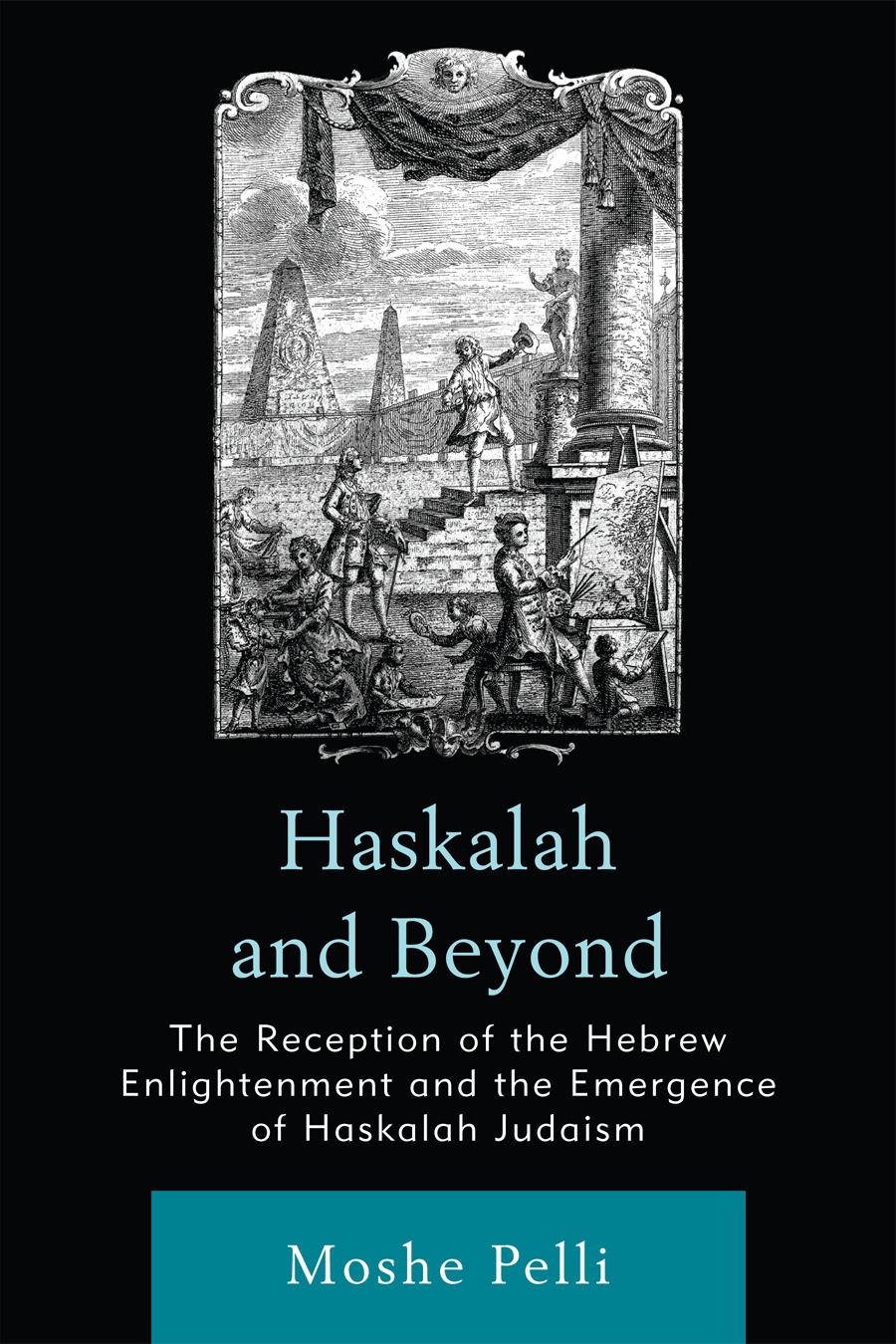
Haskalah and Beyond deals with the Hebrew Haskalah (Enlightenment) - the literary, cultural, and social movement in the 18th and 19th centuries in Europe.
It represents the emergence of modernism and perhaps the budding of some aspects of secularism in Jewish society, following the efforts of the Hebrew and Jewish enlighteners to introduce changes into Jewish culture and Jewish life, and to revitalize the Hebrew language and literature.
The author classifies these activities as a "cultural revolution." In effect, the Haskalah was a counter-culture intended to modify or replace some of the contemporary rabbinic cultural framework, institutions, and practices and adopt them for its own envisioned "Judaism of the Haskalah."
The pioneering work of the "founding fathers" of the early Haskalah had greatly impacted the later developments of the Haskalah in the 19th century. Its reception in that century is studied as is the reception of one of the major figures of the early Haskalah, Isaac Euchel, and of one of the important German Enlightenment poets and philosophers, Johann Gottfried Herder, in the 19th-century Haskalah.
The study of reception continues on the language of the sublime and the poetic imagery used in Haskalah, melitzah, as well as on the three major journals of Haskalah as instruments of change and of disseminating the Haskalah ideology. Finally, the aftermath of the Haskalah is addressed.
It represents the emergence of modernism and perhaps the budding of some aspects of secularism in Jewish society, following the efforts of the Hebrew and Jewish enlighteners to introduce changes into Jewish culture and Jewish life, and to revitalize the Hebrew language and literature.
The author classifies these activities as a "cultural revolution." In effect, the Haskalah was a counter-culture intended to modify or replace some of the contemporary rabbinic cultural framework, institutions, and practices and adopt them for its own envisioned "Judaism of the Haskalah."
The pioneering work of the "founding fathers" of the early Haskalah had greatly impacted the later developments of the Haskalah in the 19th century. Its reception in that century is studied as is the reception of one of the major figures of the early Haskalah, Isaac Euchel, and of one of the important German Enlightenment poets and philosophers, Johann Gottfried Herder, in the 19th-century Haskalah.
The study of reception continues on the language of the sublime and the poetic imagery used in Haskalah, melitzah, as well as on the three major journals of Haskalah as instruments of change and of disseminating the Haskalah ideology. Finally, the aftermath of the Haskalah is addressed.
Sider: 266
Kategori: Litteraturvetenskap & Teori
e-ISBN: 9780761852049
Fraktvekt: 1.2 kg
Sendes innen: 1-2 dager
Betal enkelt med kort, Klarna, Apple Pay eller Google Pay. Ikke fornøyd? Du har alltid 14 dagers angrerett. Les mer i våre vilkår. Har du spørsmål, send oss en e-post på hello@memmo.org.
Memmo gjør det enklere å studere – uansett hvor du er i verden. Hos oss samler du pensumbøker og smarte studieverktøy på ett og samme sted: sammendrag, quizer, podkaster og flashcards. Og så Ted, din studiekompis som svarer på alt du lurer på. Over 50 000 studenter studerer allerede her – bygget for at du skal lære raskere og stresse mindre.