
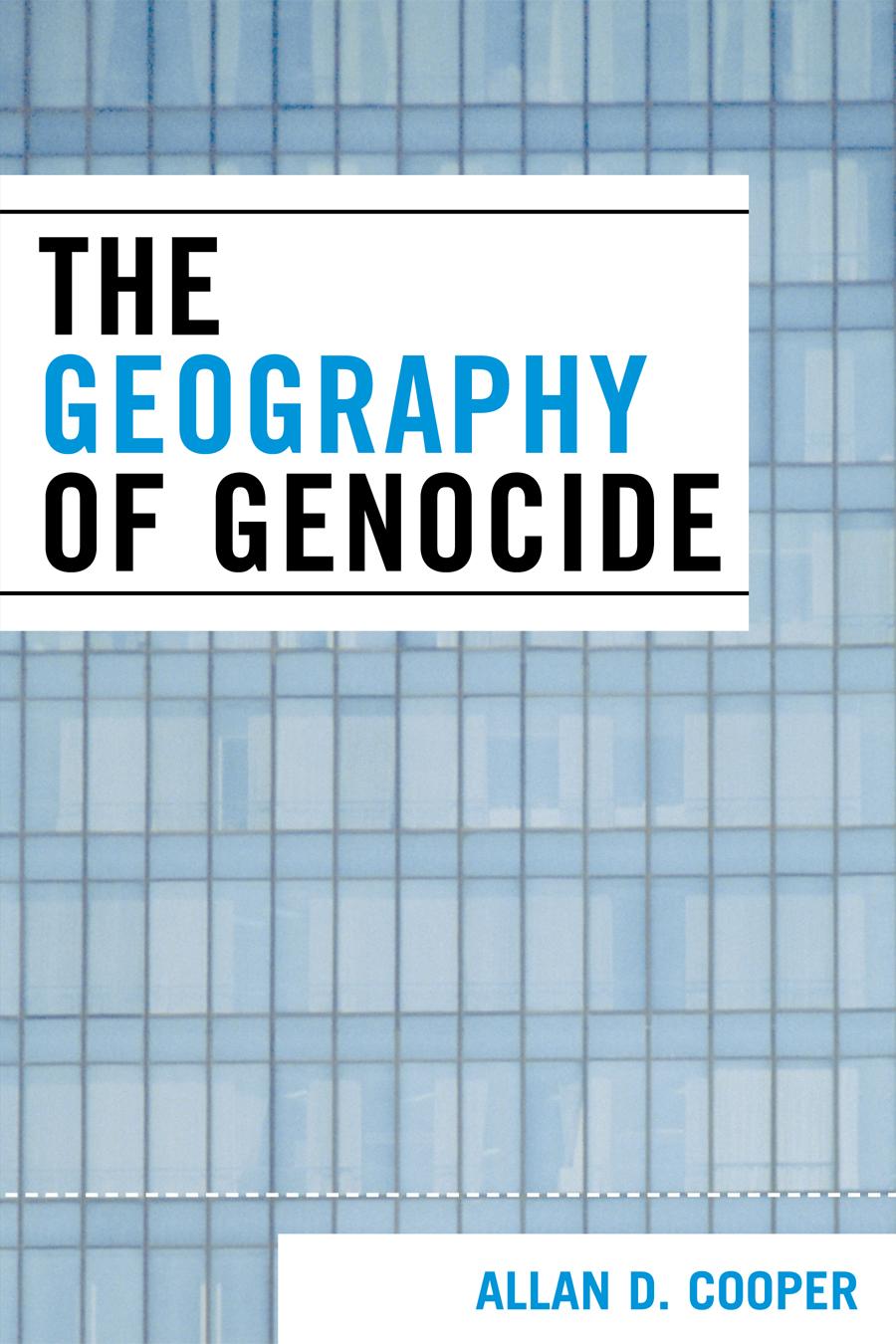
The Geography of Genocide offers a unique analysis of over sixty genocides in world history, explaining why genocides only occur in territorial interiors and never originate from cosmopolitan urban centers. This study explores why genocides tend to result from emasculating political defeats experienced by perpetrator groups and examines whether such extreme political violence is the product of a masculine identity crisis. Author Allan D. Cooper notes that genocides are most often organized and implemented by individuals who have experienced traumatic childhood events involving the abandonment or abuse by their father. Although genocides target religious groups, nations, races or ethnic groups, these identity structures are rarely at the heart of the war crimes that ensue. Cooper integrates research derived from the study of serial killing and rape to show certain commonalities with the phenomenon of genocide. The Geography of Genocide presents various strategies for responding to genocide and introduces Cooper's groundbreaking alternatives for ultimately inhibiting the occurrence of genocide.
Betal enkelt med kort, Klarna, Apple Pay eller Google Pay. Ikke fornøyd? Du har alltid 14 dagers angrerett. Les mer i våre vilkår. Har du spørsmål, send oss en e-post på hello@memmo.org.
Memmo gjør det enklere å studere – uansett hvor du er i verden. Hos oss samler du pensumbøker og smarte studieverktøy på ett og samme sted: sammendrag, quizer, podkaster og flashcards. Og så Ted, din studiekompis som svarer på alt du lurer på. Over 50 000 studenter studerer allerede her – bygget for at du skal lære raskere og stresse mindre.