
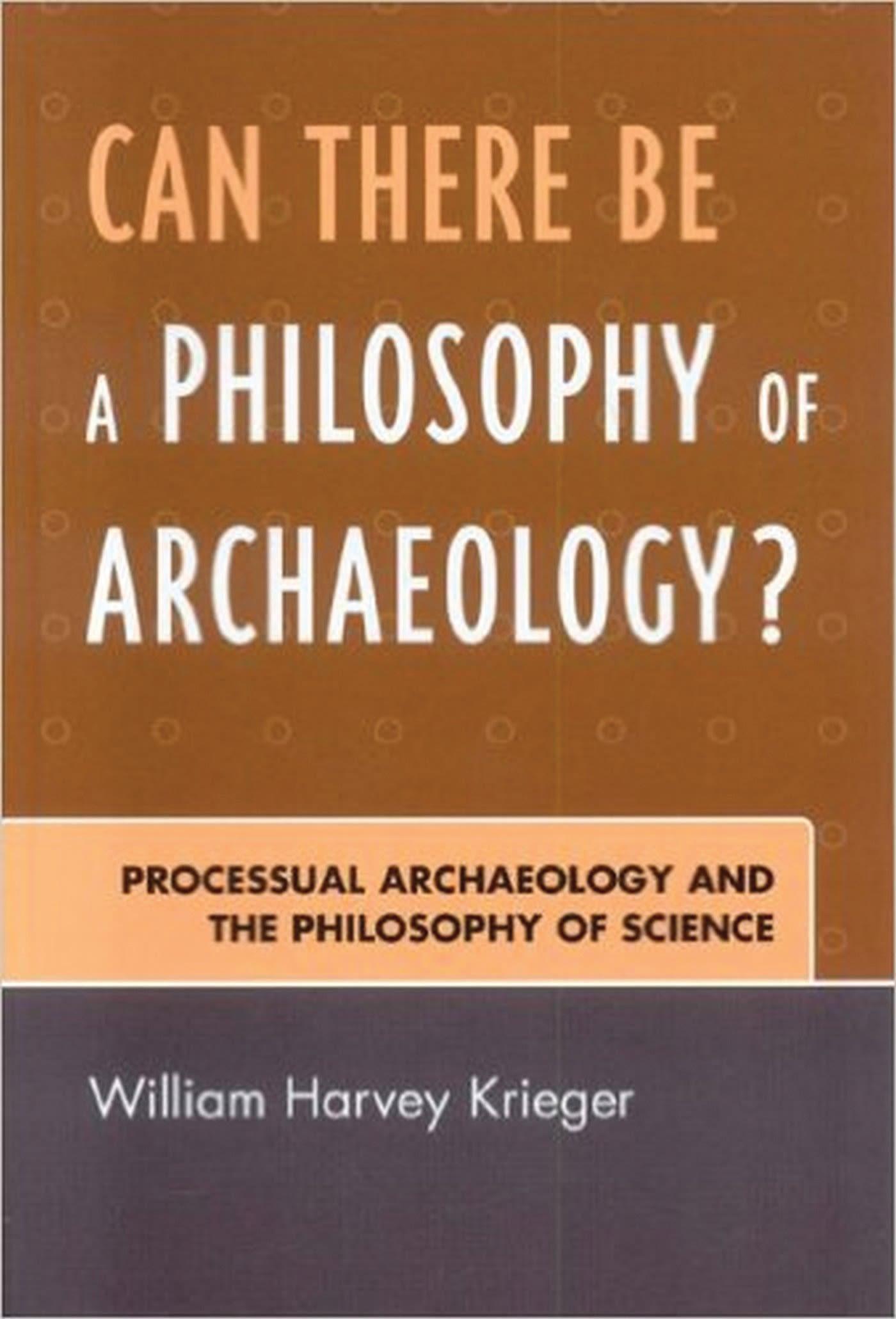
Can There Be a Philosophy of Archaeology? provides a historical and philosophical analysis of the rise and fall of the philosophical movement know as logical positivism, focusing on the effect of that movement on the budding science of archaeology. Significant problems resulted from the grafting of logical positivism onto what became known as processual, or new archaeology, and as a result of this failure, archaeologists distanced themselves from philosophers of science, believing that archaeology would be best served by a return to the dirt. By means of a thorough analysis of the real reasons for failures of logical empiricism and the new archaeology, as well as a series of archaeological case studies, Krieger shows the need for the resumption of dialogue and collaboration between the two groups. In an age where philosophers of science are just beginning to look beyond the standard examples of scientific practice, this book demonstrates that archaeological science can hold its own with other sciences and will be of interest to archaeologists and philosophers of science alike.
Betal enkelt med kort, Klarna, Apple Pay eller Google Pay. Ikke fornøyd? Du har alltid 14 dagers angrerett. Les mer i våre vilkår. Har du spørsmål, send oss en e-post på hello@memmo.org.
Memmo gjør det enklere å studere – uansett hvor du er i verden. Hos oss samler du pensumbøker og smarte studieverktøy på ett og samme sted: sammendrag, quizer, podkaster og flashcards. Og så Ted, din studiekompis som svarer på alt du lurer på. Over 50 000 studenter studerer allerede her – bygget for at du skal lære raskere og stresse mindre.