
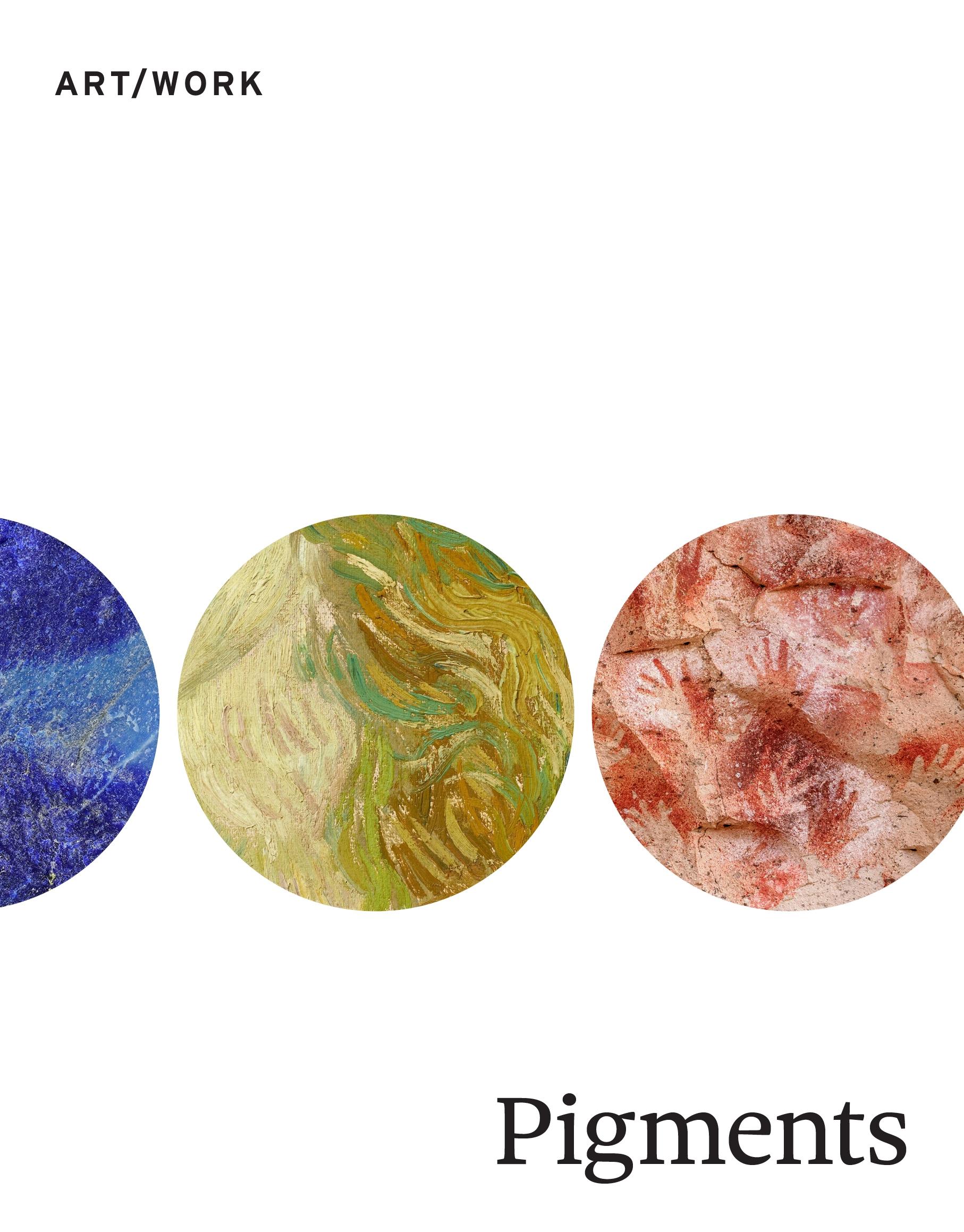
A concise illustrated history of one of art’s most important and elusive elements
Over the millennia, humans have used pigments to decorate, narrate, and instruct. Charred bone, ground earth, stones, bugs, and blood were the first pigments. New pigments were manufactured by simple processes such as corrosion and calcination until the Industrial Revolution introduced colors outside the spectrum of the natural world. Pigments brings together leading art historians and conservators to trace the history of the materials used to create color and their invention across diverse cultures and time periods. This richly illustrated book features incisive historical essays and case studies that shed light on the many forms of pigments—the organic and inorganic; the edible and the toxic; and those that are more precious than gold. It shows how pigments were as central to the earliest art forms and global trade networks as they are to commerce, ornamentation, and artistic expression today. The book reveals the innate instability and mutability of most pigments and discusses how few artworks or objects look as they did when they were first created.
From cave paintings to contemporary art, Pigments demonstrates how a material understanding of color opens new perspectives on visual culture and the history of art.
Betal enkelt med kort, Klarna, Apple Pay eller Google Pay. Ikke fornøyd? Du har alltid 14 dagers angrerett. Les mer i våre vilkår. Har du spørsmål, send oss en e-post på hello@memmo.org.
Memmo gjør det enklere å studere – uansett hvor du er i verden. Hos oss samler du pensumbøker og smarte studieverktøy på ett og samme sted: sammendrag, quizer, podkaster og flashcards. Og så Ted, din studiekompis som svarer på alt du lurer på. Over 50 000 studenter studerer allerede her – bygget for at du skal lære raskere og stresse mindre.