
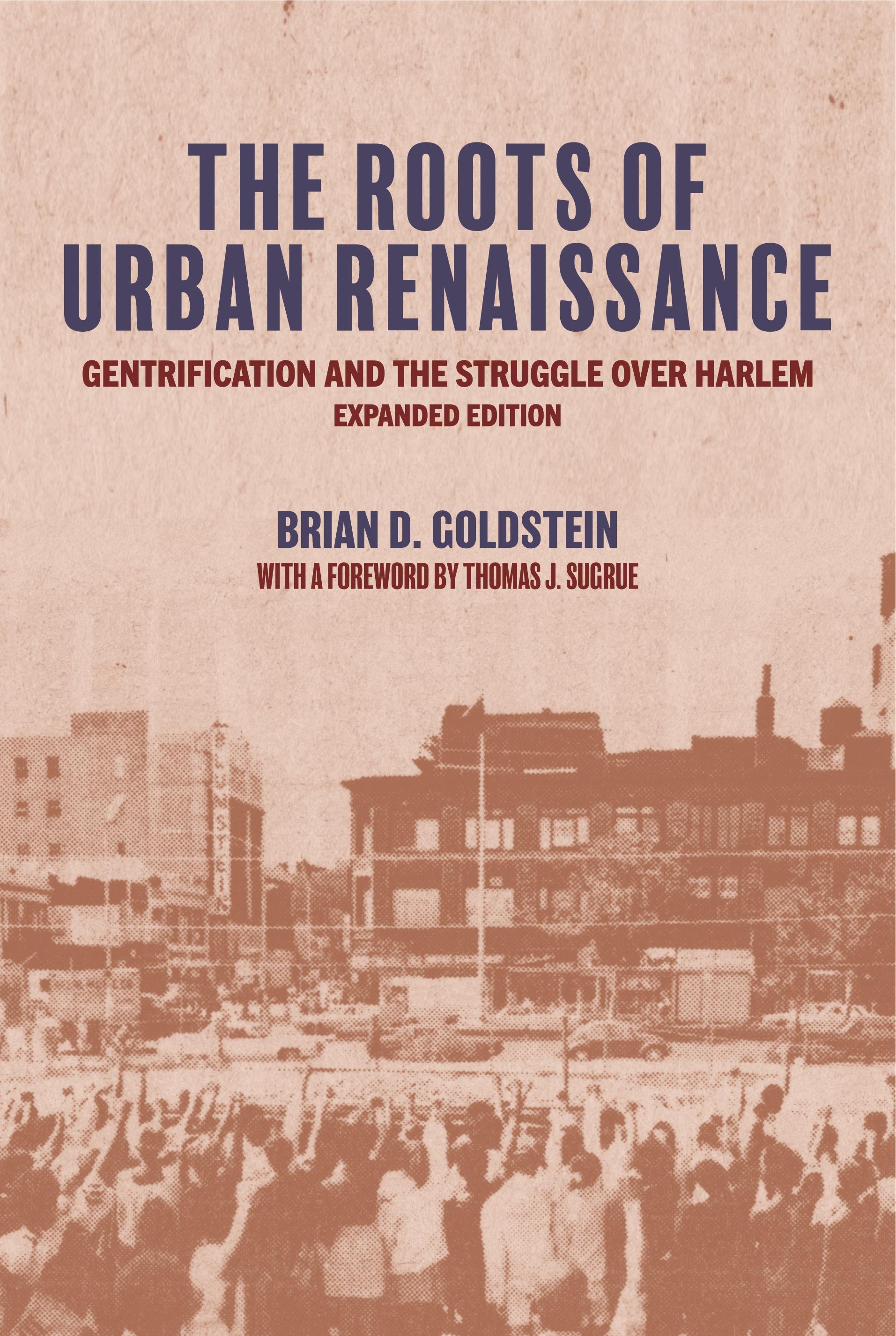
An acclaimed history of Harlem’s journey from urban crisis to urban renaissance
With its gleaming shopping centers and refurbished row houses, today’s Harlem bears little resemblance to the neighborhood of the midcentury urban crisis. Brian Goldstein traces Harlem’s Second Renaissance to a surprising source: the radical social movements of the 1960s that resisted city officials and fought to give Harlemites control of their own destiny. Young Harlem activists, inspired by the civil rights movement, envisioned a Harlem built by and for its low-income, predominantly African American population. In the succeeding decades, however, the community-based organizations they founded came to pursue a very different goal: a neighborhood with national retailers and increasingly affluent residents. The Roots of Urban Renaissance demonstrates that gentrification was not imposed on an unwitting community by unscrupulous developers or opportunistic outsiders. Rather, it grew from the neighborhood’s grassroots, producing a legacy that benefited some longtime residents and threatened others.
Betal enkelt med kort, Klarna, Apple Pay eller Google Pay. Ikke fornøyd? Du har alltid 14 dagers angrerett. Les mer i våre vilkår. Har du spørsmål, send oss en e-post på hello@memmo.org.
Memmo gjør det enklere å studere – uansett hvor du er i verden. Hos oss samler du pensumbøker og smarte studieverktøy på ett og samme sted: sammendrag, quizer, podkaster og flashcards. Og så Ted, din studiekompis som svarer på alt du lurer på. Over 50 000 studenter studerer allerede her – bygget for at du skal lære raskere og stresse mindre.