
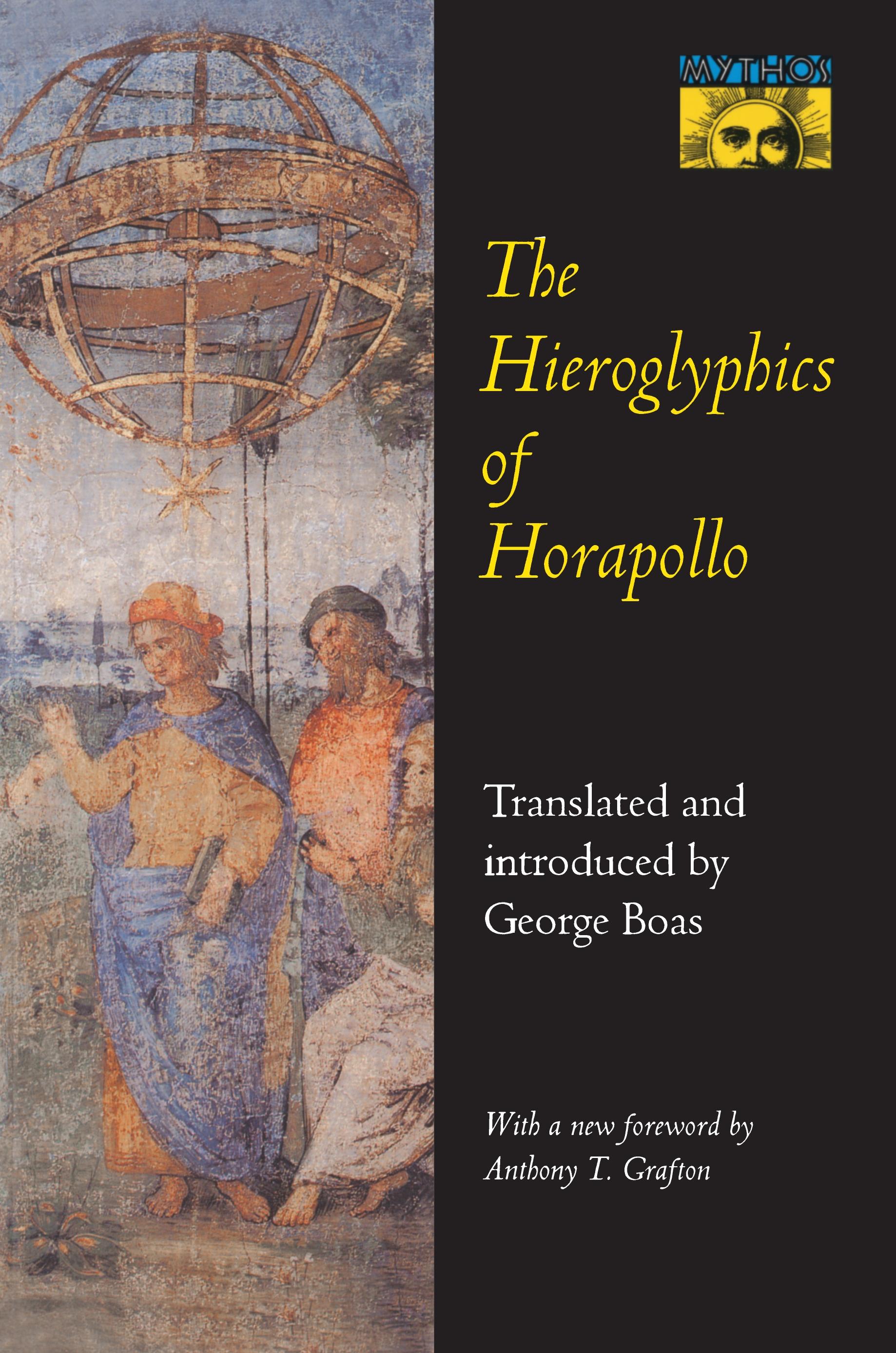
Written reputedly by an Egyptian magus, Horapollo Niliacus, in the fourth century C.E., The Hieroglyphics of Horapollo is an anthology of nearly two hundred "hieroglyphics," or allegorical emblems, said to have been used by the Pharaonic scribes in describing natural and moral aspects of the world. Translated into Greek in 1505, it informed much of Western iconography from the sixteenth through the nineteenth centuries. This work not only tells how various types of natural phenomena, emotions, virtues, philosophical concepts, and human character-types were symbolized, but also explains why, for example, the universe is represented by a serpent swallowing its tail, filial affection by a stork, education by the heavens dropping dew, and a horoscopist by a person eating an hourglass.
In his introduction Boas explores the influence of The Hieroglyphics and the causes behind the rebirth of interest in symbolism in the sixteenth century. The illustrations to this edition were drawn by Albrecht Dürer on the verso pages of his copy of a Latin translation.
Betal enkelt med kort, Klarna, Apple Pay eller Google Pay. Ikke fornøyd? Du har alltid 14 dagers angrerett. Les mer i våre vilkår. Har du spørsmål, send oss en e-post på hello@memmo.org.
Memmo gjør det enklere å studere – uansett hvor du er i verden. Hos oss samler du pensumbøker og smarte studieverktøy på ett og samme sted: sammendrag, quizer, podkaster og flashcards. Og så Ted, din studiekompis som svarer på alt du lurer på. Over 50 000 studenter studerer allerede her – bygget for at du skal lære raskere og stresse mindre.