
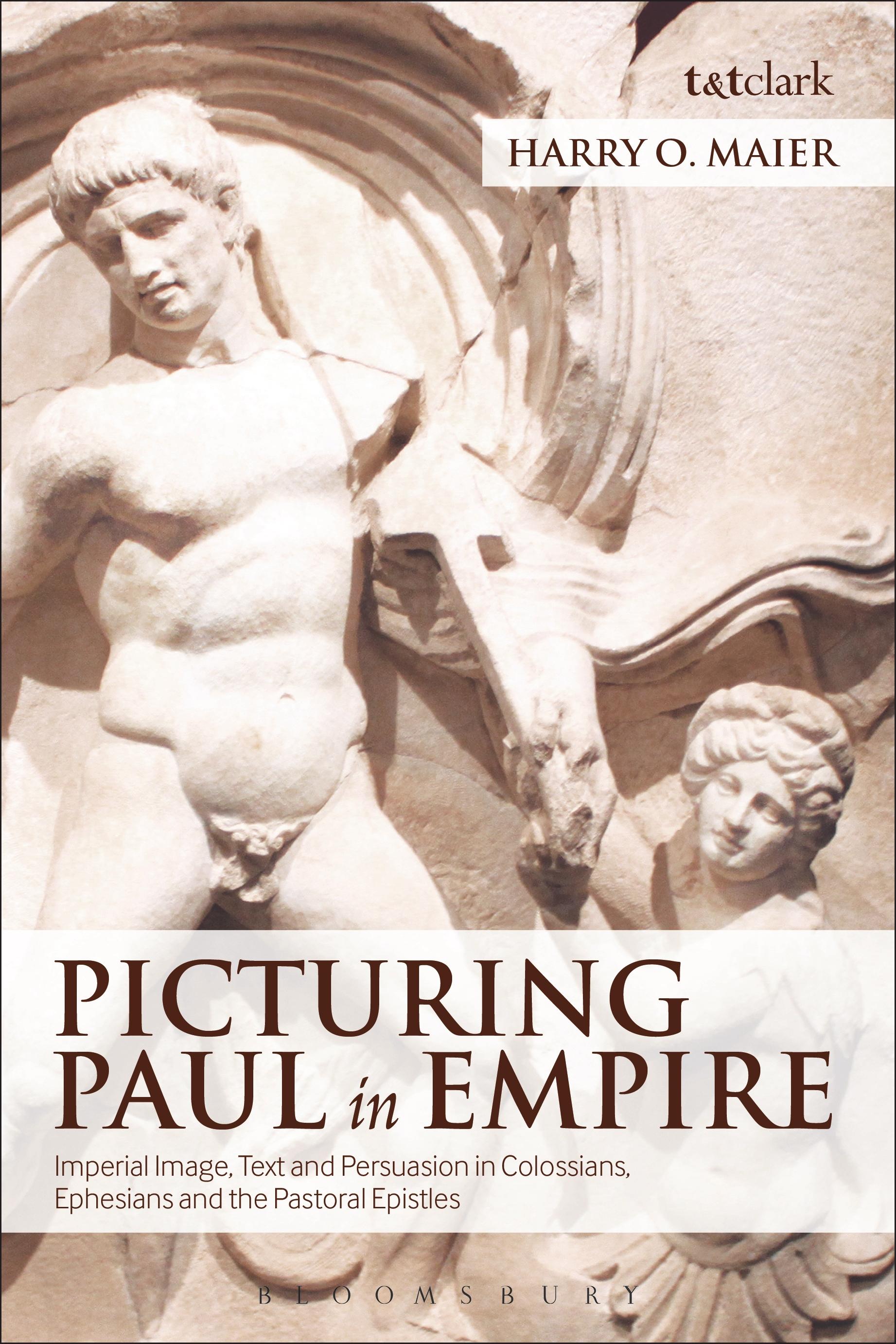
Pauline Christianity sprang to life in a world of imperial imagery. In the streets and at the thoroughfares, in the market places and on its public buildings and monuments, and especially on its coins the Roman Empire's imperial iconographers displayed imagery that aimed to persuade the Empire's diverse and mostly illiterate inhabitants that Rome had a divinely appointed right to rule the world and to be honoured and celebrated for its dominion.
Harry O. Maier places the later, often contested, letters and theology associated with Paul in the social and political context of the Roman Empire's visual culture of politics and persuasion to show how followers of the apostle visualized the reign of Christ in ways consistent with central themes of imperial iconography. They drew on the Empire's picture language to celebrate the dominion and victory of the divine Son, Jesus, to persuade their audiences to honour his dominion with praise and thanksgiving.
Key to this imperial embrace were Colossians, Ephesians, and the Pastoral Epistles. Yet these letters remain neglected territory in consideration of engagement with and reflection of imperial political ideals and goals amongst Paul and his followers. This book fills a gap in scholarly work on Paul and Empire by taking up each contested letter in turn to investigate how several of its main themes reflect motifs found in imperial images.
Harry O. Maier places the later, often contested, letters and theology associated with Paul in the social and political context of the Roman Empire's visual culture of politics and persuasion to show how followers of the apostle visualized the reign of Christ in ways consistent with central themes of imperial iconography. They drew on the Empire's picture language to celebrate the dominion and victory of the divine Son, Jesus, to persuade their audiences to honour his dominion with praise and thanksgiving.
Key to this imperial embrace were Colossians, Ephesians, and the Pastoral Epistles. Yet these letters remain neglected territory in consideration of engagement with and reflection of imperial political ideals and goals amongst Paul and his followers. This book fills a gap in scholarly work on Paul and Empire by taking up each contested letter in turn to investigate how several of its main themes reflect motifs found in imperial images.
Betal enkelt med kort, Klarna, Apple Pay eller Google Pay. Ikke fornøyd? Du har alltid 14 dagers angrerett. Les mer i våre vilkår. Har du spørsmål, send oss en e-post på hello@memmo.org.
Memmo gjør det enklere å studere – uansett hvor du er i verden. Hos oss samler du pensumbøker og smarte studieverktøy på ett og samme sted: sammendrag, quizer, podkaster og flashcards. Og så Ted, din studiekompis som svarer på alt du lurer på. Over 50 000 studenter studerer allerede her – bygget for at du skal lære raskere og stresse mindre.