
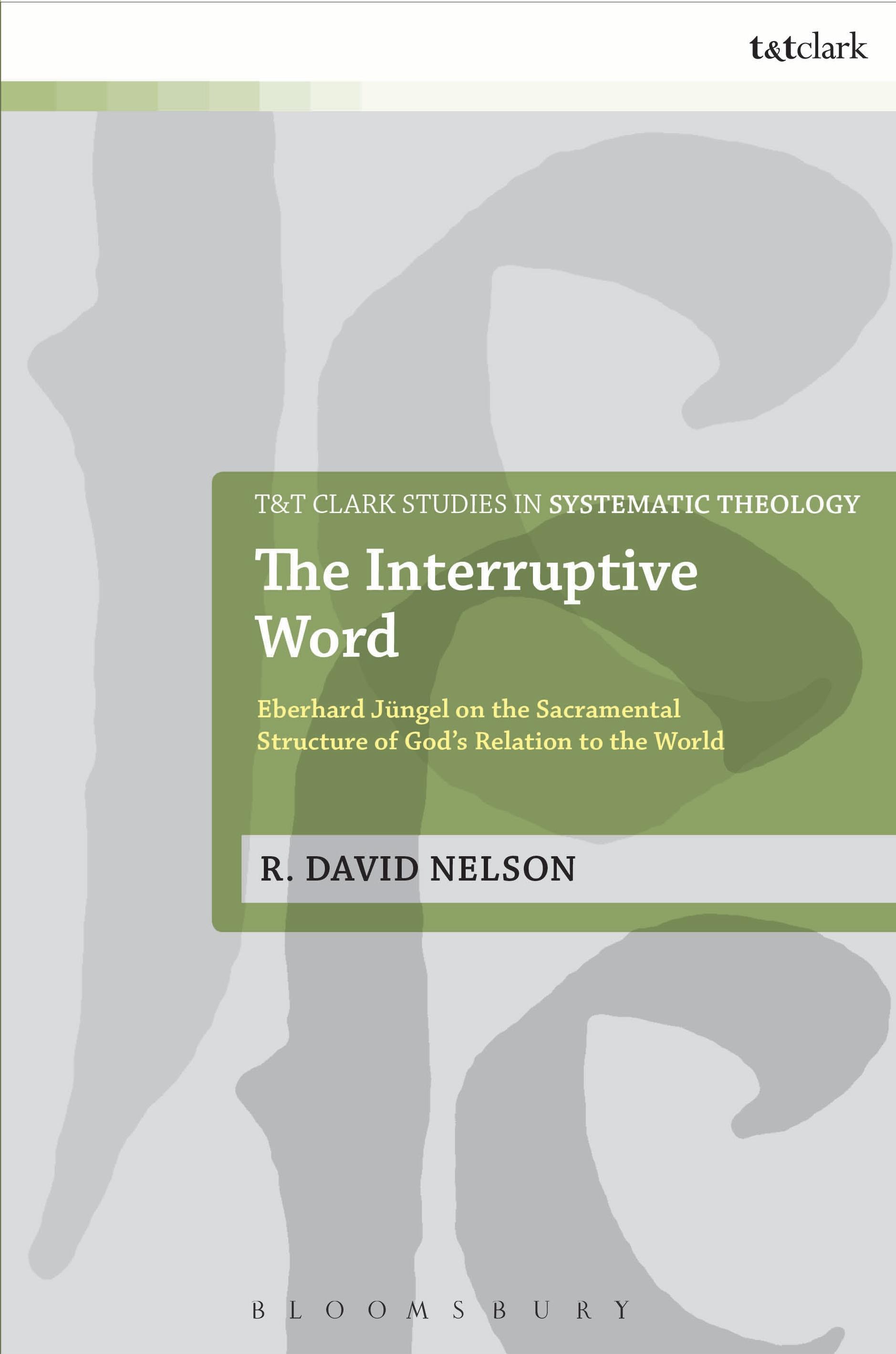
While German Lutheran theologian Eberhard Jüngel (1934-) has made a number of significant contributions to contemporaneous discussions of sacramental theology, this topic has largely been ignored by interpreters of his thought. This study summarizes and evaluates, through a close reading of primary and secondary source materials, Jüngel's approach to the problem of sacrament. R. David Nelson considers Jüngel's claim that the word of God functions sacramentally as it addresses its hearer, and analyses his assertion that Jesus Christ is the unique and preeminent sacrament of God for the world. Progressing to an exploration of Jüngel's ecclesiology, Nelson reveals Jüngel's interesting approach to the question of the church's sacramentality. The volume concludes with an investigation into Jüngel's doctrines of baptism and the Lord's Supper.
The Interruptive Word demonstrates that Jüngel consistently appeals to the category of 'interruption' for describing God's sacramental relation to the world and its actualities, concluding that the hegemony of the category of 'interruption' in Jüngel's theology of sacrament raises important questions concerning its coherence and tenability.
The Interruptive Word demonstrates that Jüngel consistently appeals to the category of 'interruption' for describing God's sacramental relation to the world and its actualities, concluding that the hegemony of the category of 'interruption' in Jüngel's theology of sacrament raises important questions concerning its coherence and tenability.
Betal enkelt med kort, Klarna, Apple Pay eller Google Pay. Ikke fornøyd? Du har alltid 14 dagers angrerett. Les mer i våre vilkår. Har du spørsmål, send oss en e-post på hello@memmo.org.
Memmo gjør det enklere å studere – uansett hvor du er i verden. Hos oss samler du pensumbøker og smarte studieverktøy på ett og samme sted: sammendrag, quizer, podkaster og flashcards. Og så Ted, din studiekompis som svarer på alt du lurer på. Over 50 000 studenter studerer allerede her – bygget for at du skal lære raskere og stresse mindre.