
“This book was written late in the North American night, with the rumbling thuds and booming train horns of the nearby rail yard echoing through my windows, reminding me of the train hoppers and gutter punks out there rolling through the darkness.”
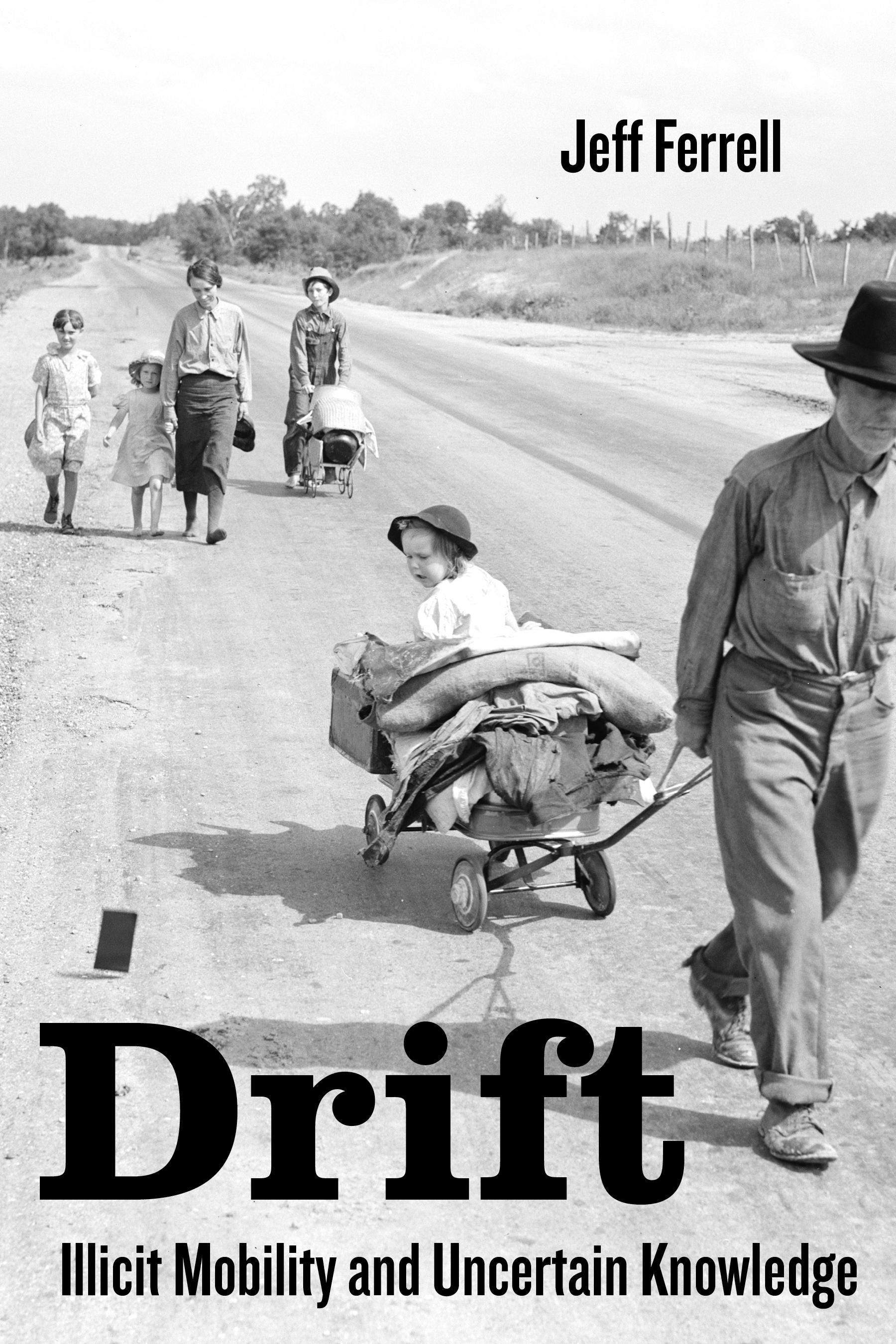
In Drift, Jeff Ferrell shows how dislocation and disorientation can become phenomena in their own right. Examining the history of drifting, he situates contemporary drift within today’s economic, legal, and cultural dynamics. He also highlights a distinctly North American form of drift—that of the train-hopping hobo—by tracing the hobo’s legal and political history and by detailing his own immersion in the world of contemporary train-hoppers. Along the way, Ferrell sheds light on the ephemeral intensity of drifting communities and explores the contested politics of drift: the strategies that legal authorities employ to control drifters in the interest of economic development, the social and spatial dislocations that these strategies ironically exacerbate, and the ways in which drifters create their own slippery forms of resistance. Ferrell concludes that drift constitutes a necessary subject of social inquiry and a way of revitalizing social inquiry itself, offering as it does new models for knowing and engaging with the contemporary world.
In Drift, Jeff Ferrell shows how dislocation and disorientation can become phenomena in their own right. Examining the history of drifting, he situates contemporary drift within today’s economic, legal, and cultural dynamics. He also highlights a distinctly North American form of drift—that of the train-hopping hobo—by tracing the hobo’s legal and political history and by detailing his own immersion in the world of contemporary train-hoppers. Along the way, Ferrell sheds light on the ephemeral intensity of drifting communities and explores the contested politics of drift: the strategies that legal authorities employ to control drifters in the interest of economic development, the social and spatial dislocations that these strategies ironically exacerbate, and the ways in which drifters create their own slippery forms of resistance. Ferrell concludes that drift constitutes a necessary subject of social inquiry and a way of revitalizing social inquiry itself, offering as it does new models for knowing and engaging with the contemporary world.
Betal enkelt med kort, Klarna, Apple Pay eller Google Pay. Ikke fornøyd? Du har alltid 14 dagers angrerett. Les mer i våre vilkår. Har du spørsmål, send oss en e-post på hello@memmo.org.
Memmo gjør det enklere å studere – uansett hvor du er i verden. Hos oss samler du pensumbøker og smarte studieverktøy på ett og samme sted: sammendrag, quizer, podkaster og flashcards. Og så Ted, din studiekompis som svarer på alt du lurer på. Over 50 000 studenter studerer allerede her – bygget for at du skal lære raskere og stresse mindre.
Du vil kanskje også like
Kjøp boken0